The Winkowski experience
Erick Winkowski goes upside down in numerous and prolonged ways, some SLS slop, Vincent Milou's peace of mind, an approximately $199.36 trick, and more.

The definitive weekly ranking and analysis of all the skateboarding and other things online that I cannot stop consuming and how it makes me feel, personally.

The Winkowski experience
Rank: 1
Mood: 😎
If you skateboard for long enough and follow its strains of media along the way, like most any culture or pastime you immerse yourself in, you'll learn a new language. Whether it's the shared cultural shorthand or the somewhat confusing and often juvenile taxonomy of tricks, skateboarders have invented their own, often primitive means of communication.
Kick... flip. Yes. The words match the meatspace act. A Crooked Grind is a description of a grind that is crooked. A Noseslide is, well, on-the-nose. There's an elegance to that ramrod simplicity, which we veer away from in the same breath. Hardflip? That's a little more conceptual and perhaps calls into question the notion of labour and effort and what constitutes both. Christ Air is maybe a bit insensitive to those who have been crucified. An Eggplant? Sure. The Ho-Ho? I refuse to look up that one's etymology.
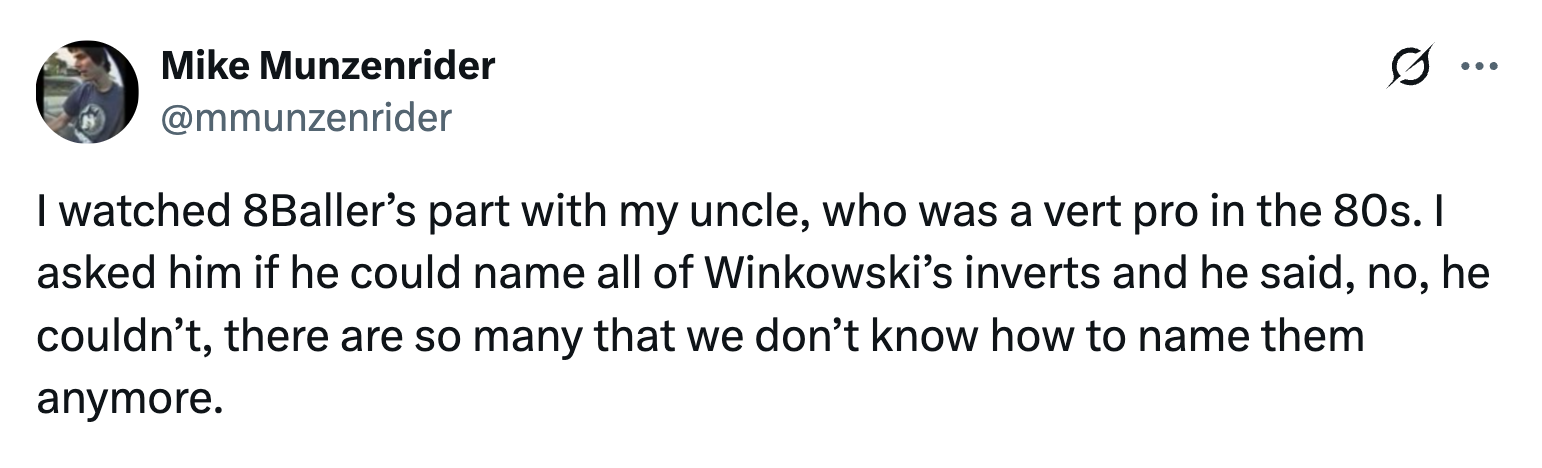
However direct, odd, or stilted, skateboard trick taxonomy maintains a general sense of order. An arithmetic, if you will. You can Kickflip into a Crooked Grind and Hardflip into a Christ Air. Probably. The language builds on itself and evolves. An experienced skateboarder doesn't often come across a trick they cannot name — until Erick Winkowski puts out a new video.
I understood roughly 62% of what Winkowski was putting down in Hyperspace, which Thrasher Magazine published under the Santa Cruz Skateboards banner on Wednesday. It's a fantastic effort, made all the more entertaining by how indecipherable the on-screen action is.
What would you call this?
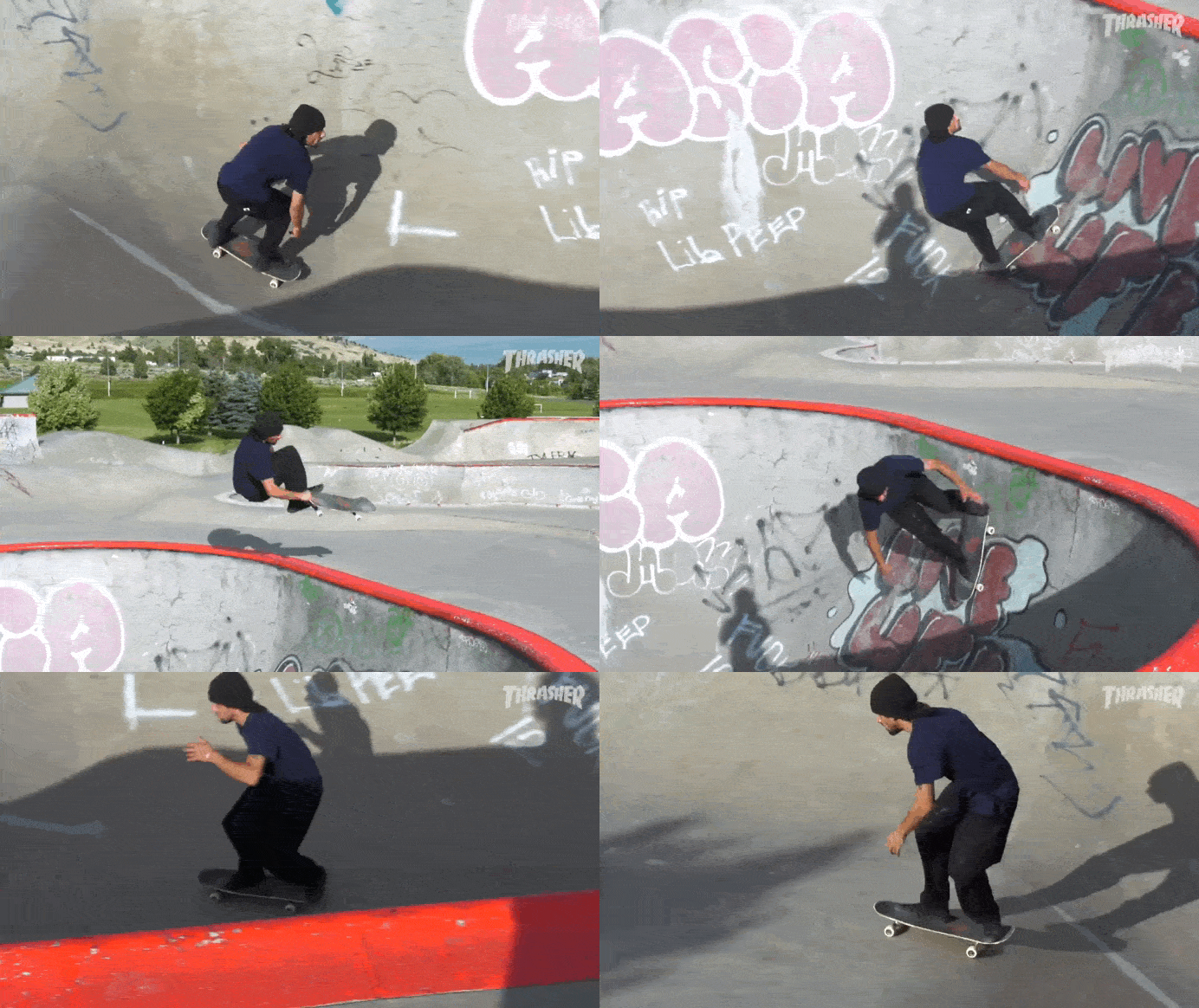
Or this?
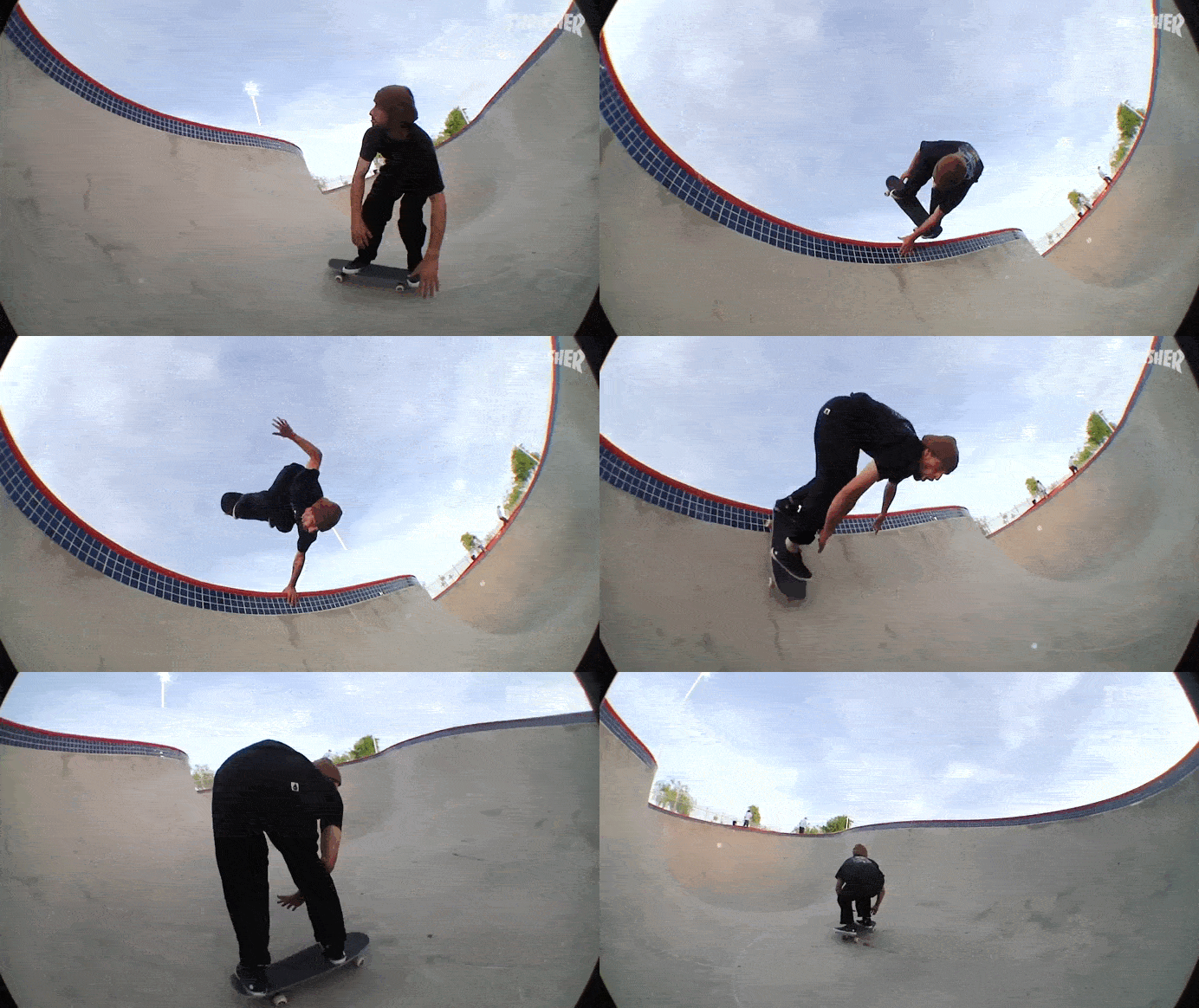
This is just cool as hell.
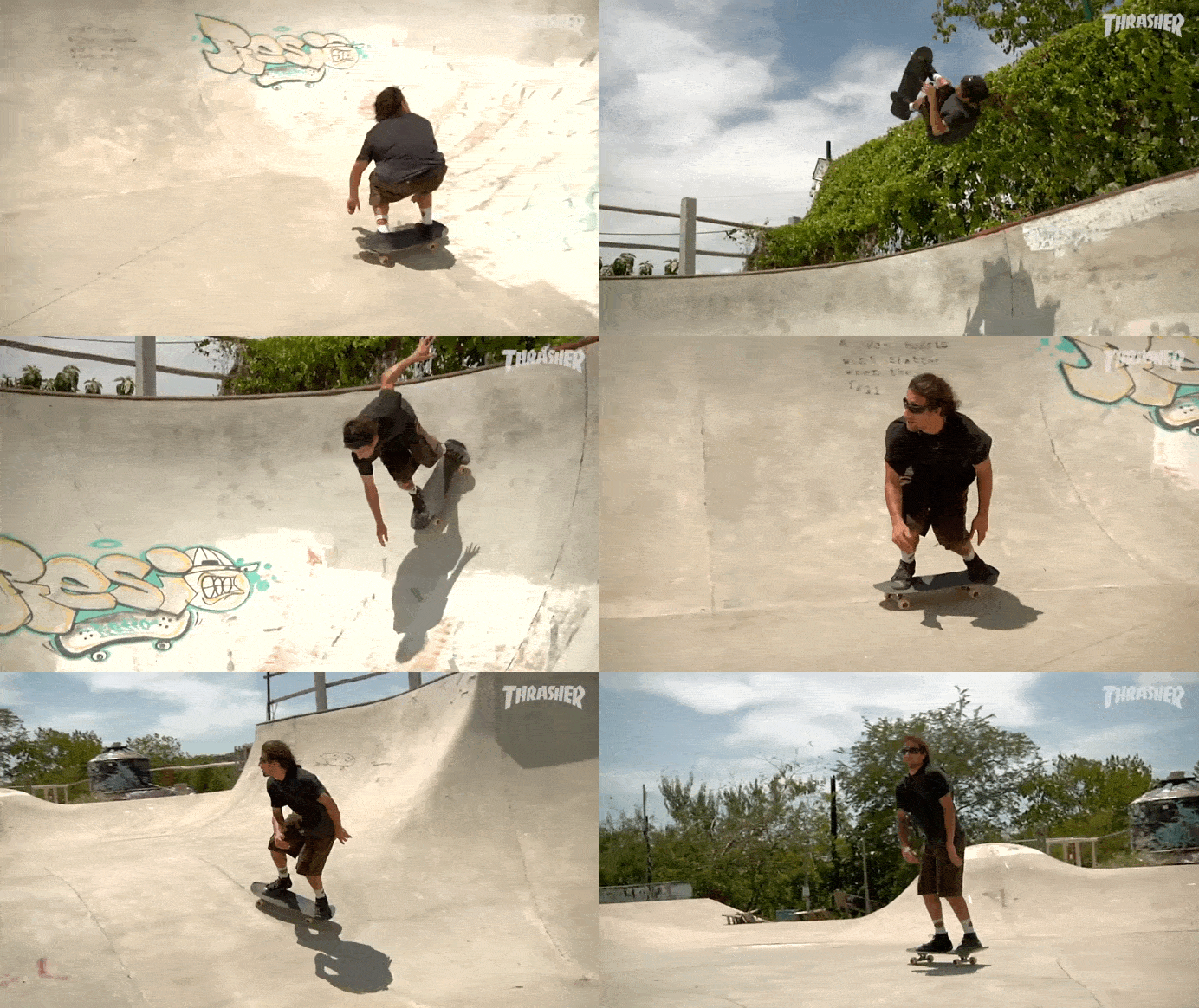
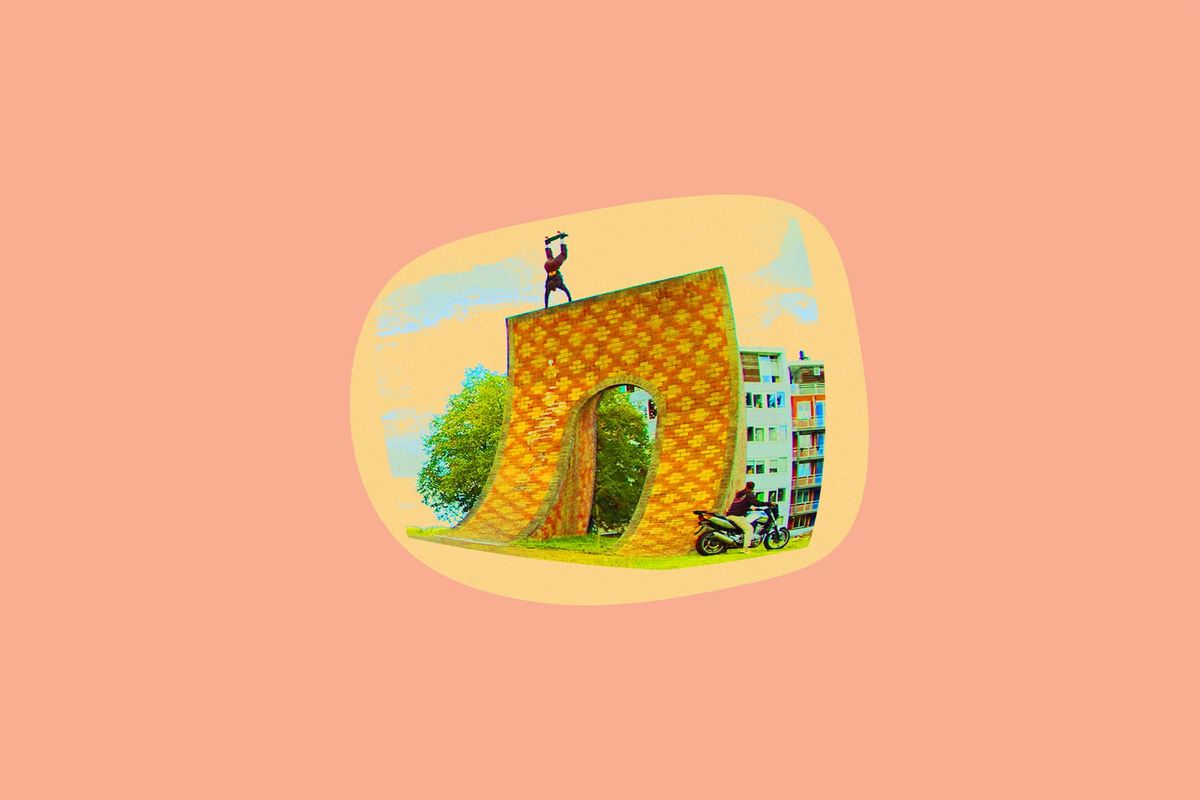
And as he's been wont to do in recent years, when Winkowski ventures into the traditional taxonomic trick brackets, it adds a new dimension to previously staid, well-understood maneuvers. A Fakie-Inward-Heelflip over that SK8MAFIA rail into the bank? On that board? Done by that skater whose body contracts like a dying star before exploding in an unexpected physical flash? It almost becomes a different trick. That kinked-rail 50-50 where he touches seemingly every part of his body against the adjacent wall is both an early-aughts throwback and something else entirely for this thoroughly tactile skater. And his ender, which under normal circumstances would leave one to wonder if a Ho-Ho plant has a time limit, ceases to matter when performed on some gigantic, and I'd like to believe, ancient brick archway-quarterpipe.
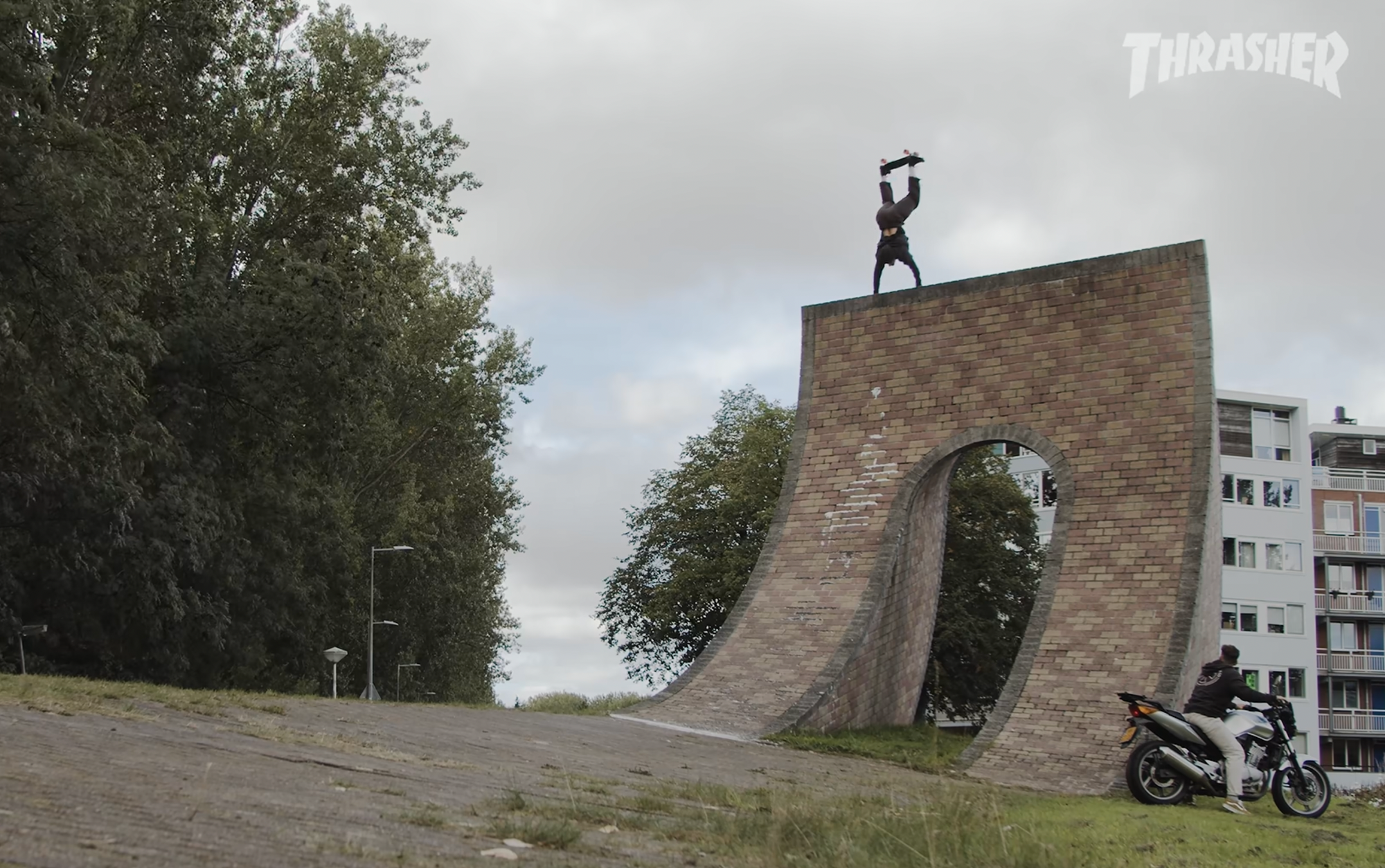
That is the Winkowski experience. He leaves you questioning what you know, curious about what you don't, and content with the mystery as long as you get to watch.

Take a piece of skate culture home
Rank: ...
Mood: 🚫🤖
A couple of weekends back while catching up on the finals of Street League Skateboarding's Tokyo stop, I was, once again, in awe of Chloe Covell. At just 16 years old, Covell has not just established herself as a force on the competitive circuit (she'd take the Tokyo stop with another dominating victory, her third of the year in SLS), but just days later she graced the cover of Thrasher with a kickflip down Wallenberg, and her forthcoming video part in Red Bull's Cannonball already has the internet rumbling that it's a standout of the production. Her level of progression is something to behold, and it was on display in Tokyo.
Ultimately, those are the results, and really, a celebration of all the work and effort skateboarders like Covell put in. When it comes to SLS itself, it should also be noted that it takes an incredible amount of work from the production and broadcast staff to make these events happen and happen smoothly in locations around the world, where they provide a legitimate platform for competitors to shine. All of this is built on people trying really, really hard, which is part of why SLS' continued reliance on generative AI to promote its events does such a disservice to the athletes and people behind the scenes — it's the opposite of putting in the work. It's a shortcut, lazy and offensive in its laziness.
No one was ever going to accuse SLS of being a purveyor of good taste, especially under the stewardship of Thrill Sports, which has under its umbrella, among other properties, Power Slap.
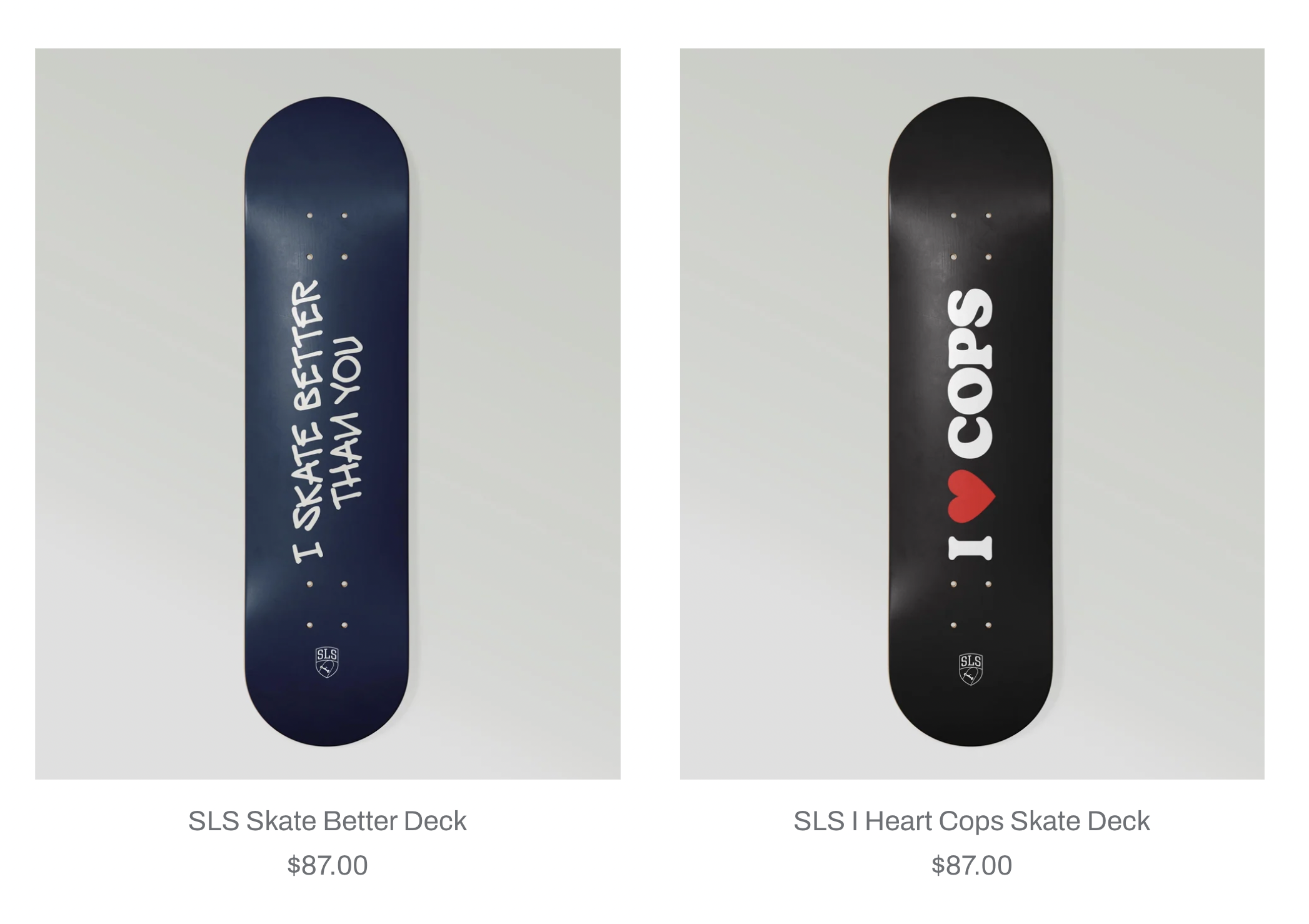
But the outright disrespect SLS' marketing team has shown fans in recent months feels almost sinister. Ahead of the Tokyo stop, SLS promoted a run of, for lack of a better description, Japanese-themed products, most of which appeared to be generated by AI, and extremely poorly at that, including this board, which first crossed my feed thanks to Watson of You Will Soon.
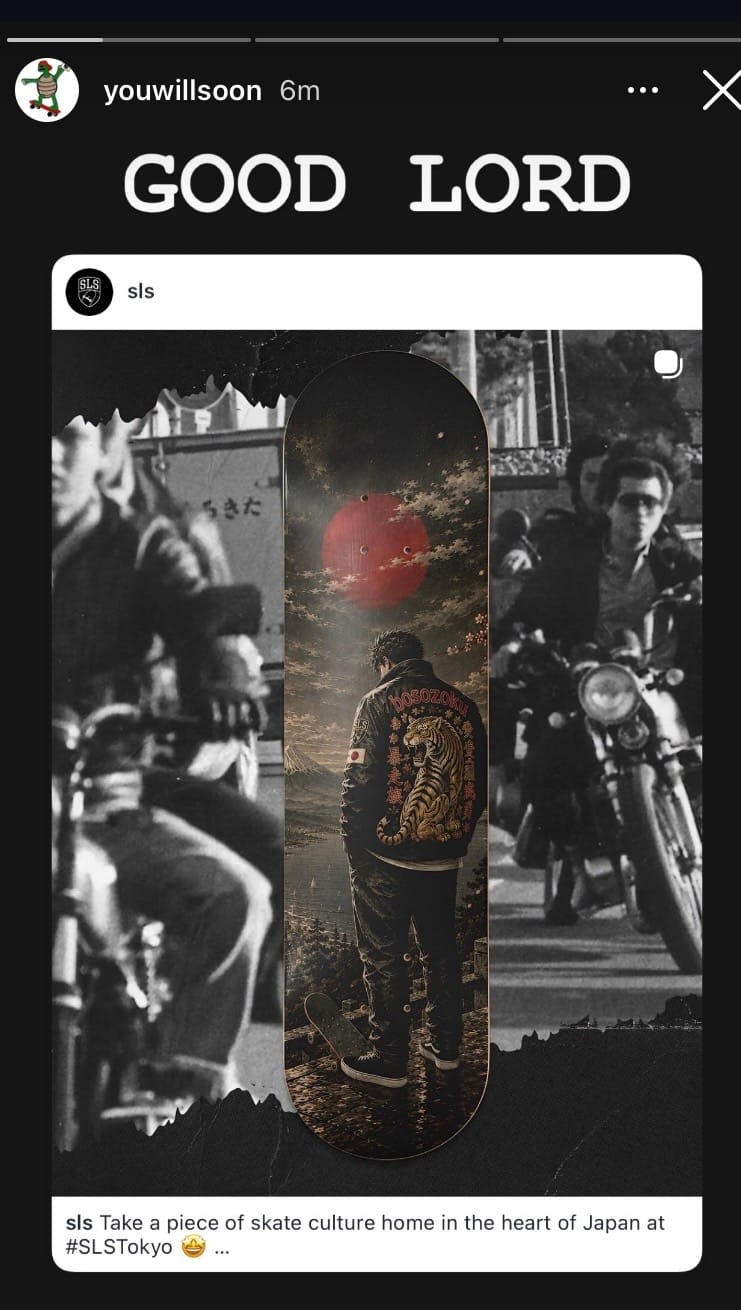
Take a moment to drink it in. The tiger on the jacket with its head on backward, the mini(?) skateboard with excess hardware, the different shoes, the general awfulness of it all that SLS advertises as "a piece of skate culture" one can "take home." This only gets approved for public consumption if you think your audience are pigs at the trough, willing to slurp down whatever slop you give them. That is par for the course for everything owned by Dana White.
I've had my fair share of criticisms of generative AI and various "AI" products in this newsletter, which I try to frame with nuance but am aware are primarily driven by my abject disdain for how these models are trained, used, and the harms the companies behind this technology and industry are wreaking on the world. But what, if anything, is a regular person to do in the face of it? The fervour around generative AI may fade, the AI bubble might mercifully pop, but this technology is very likely not going away. It brought to mind a recent essay by video game researcher and critic Brendan Keogh, published after prominent indie game developers House House and Molleindustria disclosed their use of generative AI earlier this month.
All of which is essentially to say that I think any robust critique of generative AI use in game development (or indeed any field) needs to be situated within history and not outside of history. It needs to recognise when its critiques of generative AI are actually just deflected critiques of the capitalist relations of technology and labour. It needs to consider what is a criticism of the ‘technology itself’ and what is a criticism of how this technology is used and shaped by capital to exploit labour and increase profit at any cost — the way that capital has always used every technology available to it. Once this distinction is clarified, then a conversation about the actual potential uses of generative AI (if indeed there are any) can be had.
What Molleindustria and House House have each done is what game businesses operating under capitalism have always done: using the available morally-compromised technologies of capitalism to help the current team overcome problems so that no one else needs to be hired.
Is there an ethical way to employ generative AI in creative work? Personally, I don't think so (Keogh also isn't convinced), but he argues that disclosure and acknowledging the technology's place in history is, at the very least, helpful.
I ultimately believe the main lesson here is thus to encourage more disclosure systems that are open, clear, and precise in ways that encourage an even wider group of game developers to be just as reflective and open on their own practices and entanglements. What individuals do with that information to determine their own ethical consumption behaviours is up to them. Personally I would prefer if it wasn’t a witch hunt but instead a nuanced consideration of how direct and indirect entanglements with generative AI differ from each other materially and ideologically.
Of course, there is a difference between House House disclosing the very limited use of an LLM to help solve a technical issue in their game engine and SLS not even bothering to note that their trash graphics were AI-generated — because everyone could tell just by looking at them and were rightfully upset. There was no "entanglement" to consider, just another poor choice made by the marketing department, who were then reprimanded by their audience for treating them like fools. And maybe there is a lesson in the fallout, because SLS was hounded so mercilessly online for their AI slop that they deleted the promotional posts and don't seem to have ever produced the boards. If shame can still put a check on the worst tendencies of the managerial class, great. It is heartening that the ever-growing consensus is this shit sucks, get it away from me.
People are increasingly repulsed by this technology being jammed down their throats in a desperate hunt for profit. What truly speaks to the heart of a living, breathing person is seeing and experiencing something that requires genuine human labour, craft, and creativity. A showcase of progression and one's best work. Is that not what SLS is all about?

Tiers of access
Rank: 3
Mood: 🤕
I'd rather not watch Vincent Milou crack his skull. That is the fortunate position one can stake out as an audience member: for the most part, you control what you see. As the professional athlete on our screens, you have dominion over your board up until it decides to toss you on your head. That is the reality of skateboarding and especially so at the professional level, where, with some regularity, the sport's biggest names render themselves unconscious via self-inflicted blunt force trauma, their lives left in the hands of nervous filmers and photographers and the nearest medical professionals. They do this for our entertainment and to advance their careers, such as those are here.
We've seen Milou crack his skull before. On San Francisco's Clipper hubba back in 2021, when he rode for Pizza Skateboards and Globe Shoes. Now he rides for Element Skateboards and adidas Footwear, an upgrade by any measure. The backing of a global megacorporation (not to mention France's universal healthcare system) surely helped Milou in his most recent recovery process; this project being released in the wake of another concussive blow sustained earlier this year, which was shared in graphic detail in a Thrasher "Hall of Meat" installment last week. Others in his field aren't as fortunate. That's not an odd-angled slight; that's just the reality of professional skateboarding. There are tiers of financial success, access to care, and general stability. Some exist and fluctuate within one or two, but three is rare.
To produce a video as incredible as Milou's Peace of Mind demands all the skill, ability, style, and discernment he possesses, but those demands can be heavy and come with serious risk. Access to those tiers lightens that load when needed. But what about the career skateboarders who will never touch them? This is skateboarding, is a common refrain, or simply, that's life. Skateboarding owes you nothing but yada yada yada. But what about life for those professionals after their careers are done? Are they better left as memories of being talented promotional vectors rather than people with families?
You can't take the risk out of skateboarding. Risk is integral to it. To a degree, it's what makes it special. Putting it all on the line for one rapturous moment is as stupid as it is beautiful. However, if that risk is taken under the auspices of a company and its promotion, that company should be ready and willing to care for those in its employ when needed — independent contractor or not. That is understood as unrealistic or even undesirable in an industry like this, one seemingly held together with duct tape and a righteous if porous notion of cultural purity.
Perhaps that's because it's also an argument for greater corporate involvement. Toyota, Visa, and adidas help Milou live the life he does so he can perform (and mend) at his best. Red Bull has an Athlete Performance Centre where their sponsored skaters can train and recover. Nike SB provides access to dedicated athletic trainers for their talent. It's no pension but it's better than a GoFundMe. What professional skateboarder wouldn't want that peace of mind?

A (approximately) $199.36 trick
Rank: 00.64
Mood: 🏎️💸
Last month, I whinged at length about an international conspiracy aimed against me.
Despite what that might sound like, this is not conspiratorial thinking. There is now what could be called a "pattern." It started in Portland this summer.
For months I've been searching for and dreaming of a bank-to-ledge that I can get a particular trick on for a video my friends and I are making. Vancouver suffers from a dearth of decent banks-to-ledges. Most are too rugged, or more wall than ledge, more flat than bank. Some are workable dimension-wise, but physically too close to a neighbouring building, eliminating entire classes of tricks.
A week before Adjacent, I remembered that there was a perfect-looking bank-to-ledge in Portland. I reached out to friends in the area to see if it was still a go. They said it had been skatestopped, but apparently freed, although they couldn't be sure without checking themselves. That was all I needed. I booked a flight.
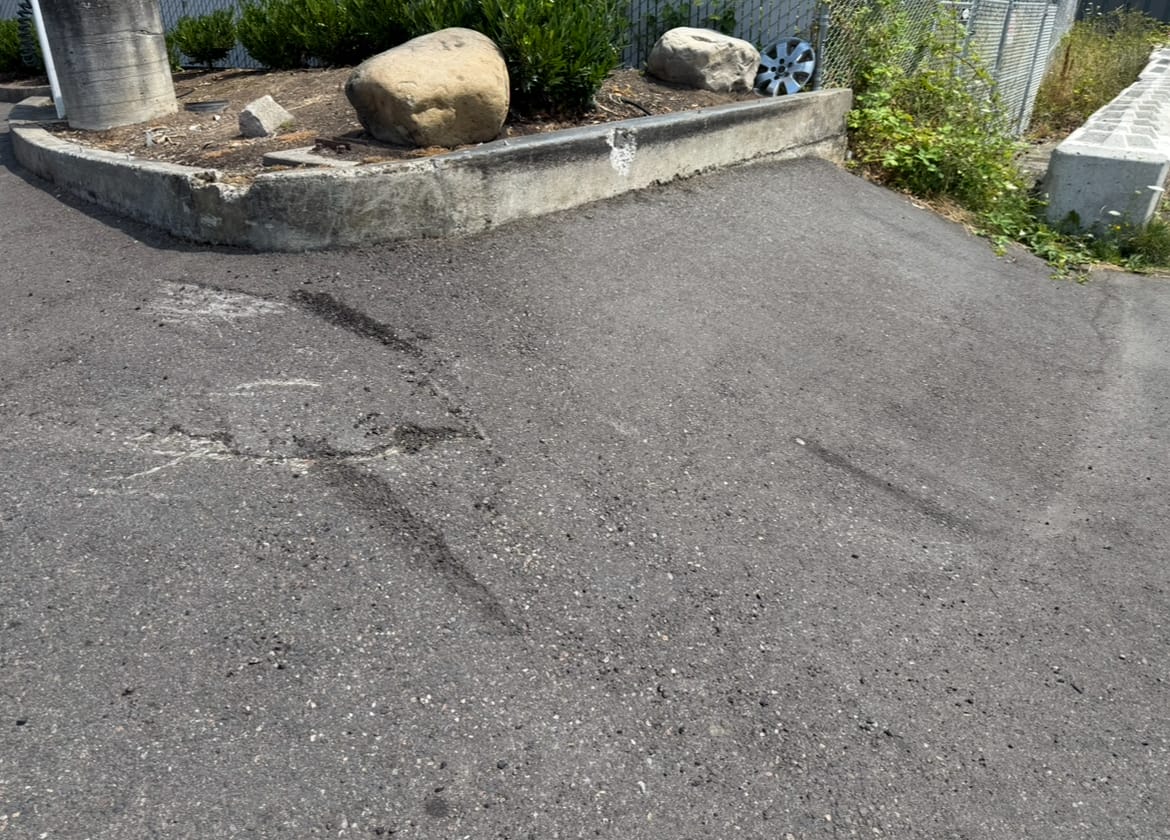
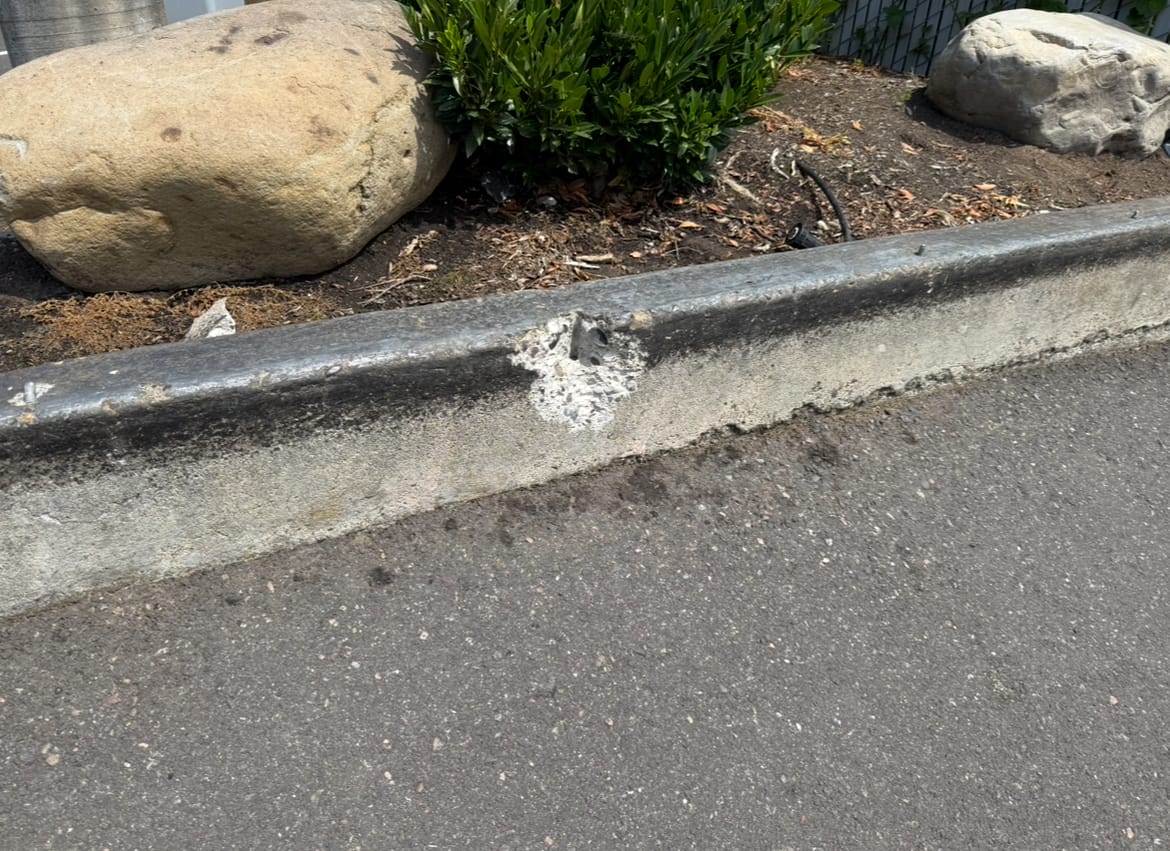
RIP | Photos: George Cutright
The day before I was to fly out, a friend texted a series of photos. Not only was the spot still stopped, but it looked like someone broke a chunk out of it while attempting to remove a stopper.
It was a heartbreaking development and only increased my desperation. Last weekend, my friends and I drove out to Surrey, British Columbia, to check out a bank-to-barrier that I thought would make sense for the trick. We knew it wasn't perfect and might need a bit of work, but the hope was still there — until we pulled into the parking lot.
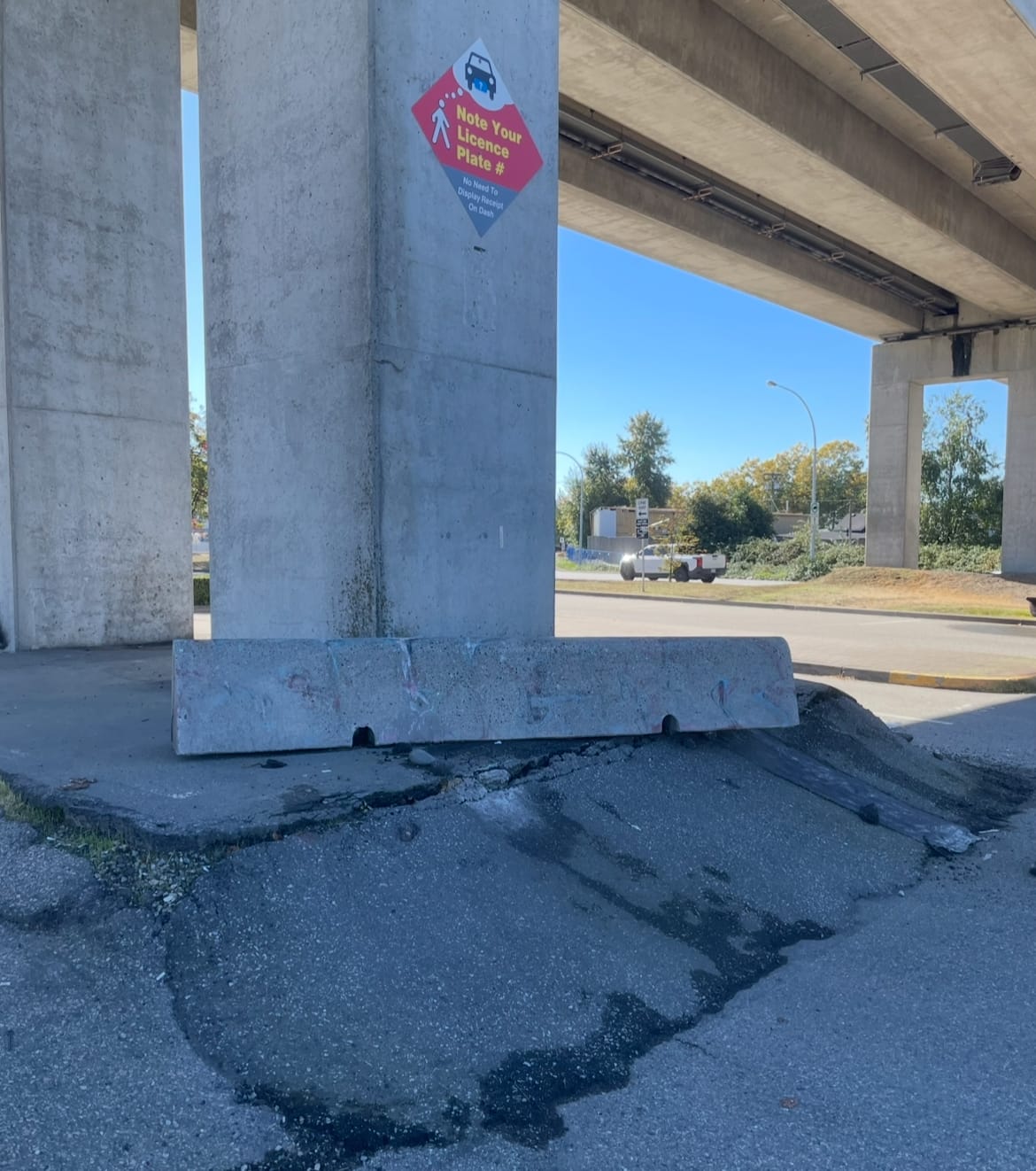
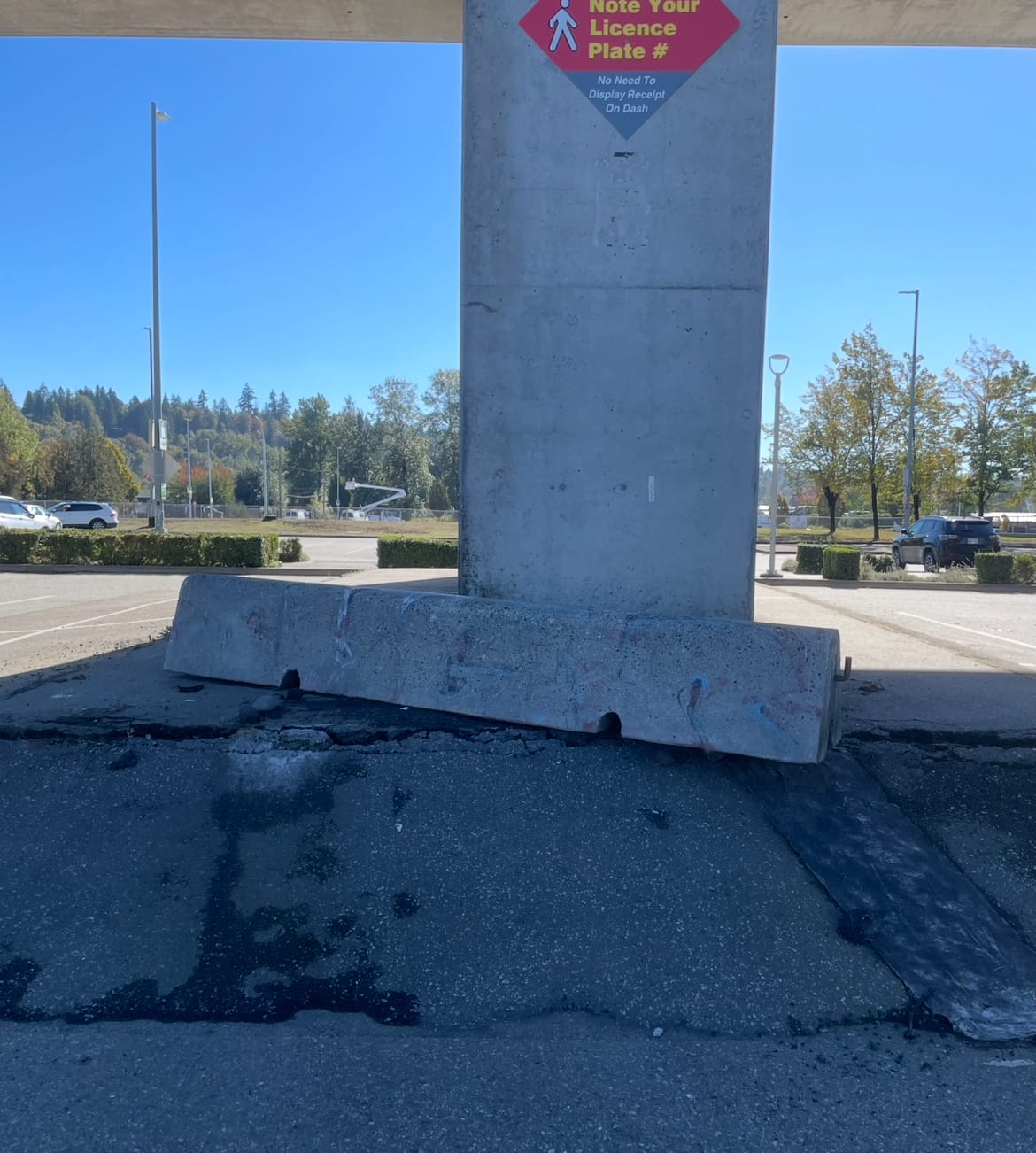
Bro...
What happened here to push the barrier out of alignment with the bank it sits on is unclear, but whatever it was, it had to be significant. If it were an inattentive driver, one assumes they suffered a medical episode and have tragically perished, which I forgive them for. The only other option is that some unearthly force is committed to preventing me from getting my ender. This demonic entity has now crossed international borders to put a stick in my spokes and I don't appreciate it.
After I published those tears, Carter Spinks tipped me off to the Marshalltown Big Monster Pry Bar that he and his crew use to move heavy concrete objects of all shapes and sizes. After a few weeks of sourcing, and just shy of $200 CAD spent, I secured a Big Bad Monster Pry Bar. It worked even better than anticipated.
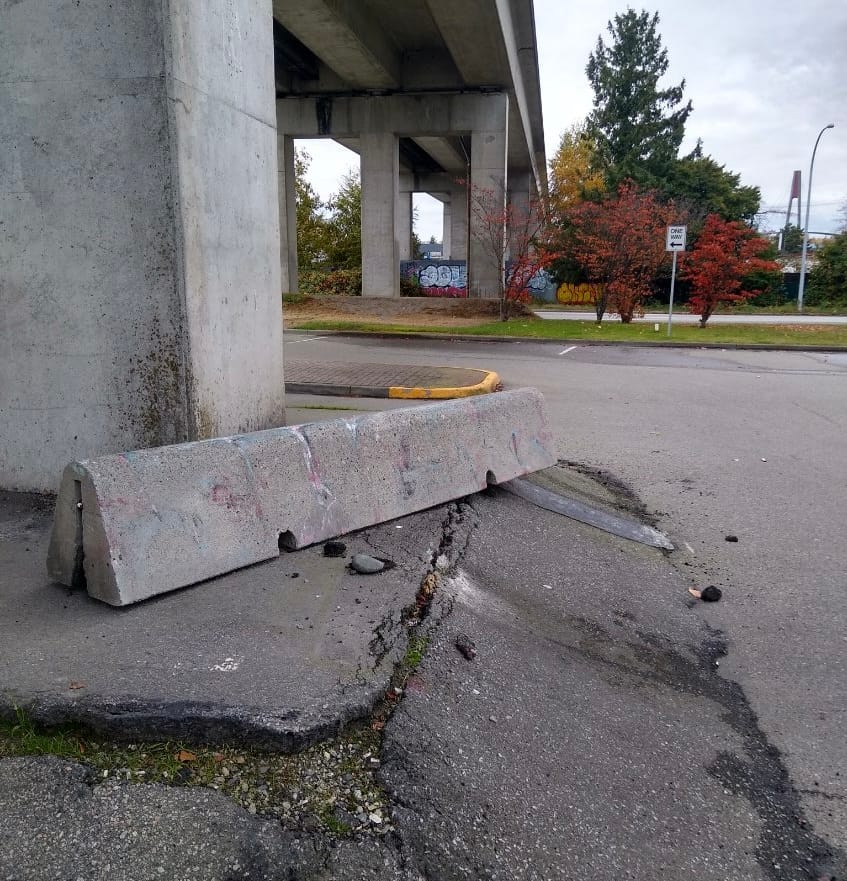
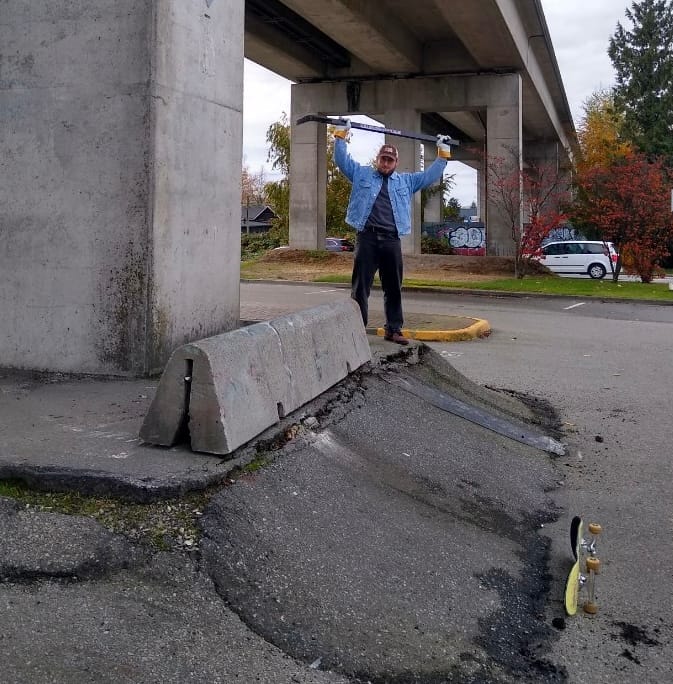
Photos: Will Pearson
Following the purchase, we drove out to Surrey three times. During the first excursion, we repositioned the barrier before I battled the trick and failed. On the second trip, nearly the entire parking lot was dry except for the run-up, which was spoiled by puddles. We sat around for hours, pushing the water around and waiting for the sun to do its thing to no avail. Thankfully, last Saturday was a crisp bluebird morning that bled into a grey afternoon, where I came close, struggled, and finally rode away after roughly three hours of running at this thing. To celebrate, we went go-karting at nearby Surrey Fun Park. Between the Big Bad Monster Pry Bar, gas, food, and arcade games, that is without a doubt the most expensive skateboarding trick I've ever done — and it was worth every dollar of my tenuous freelancer's coffers.
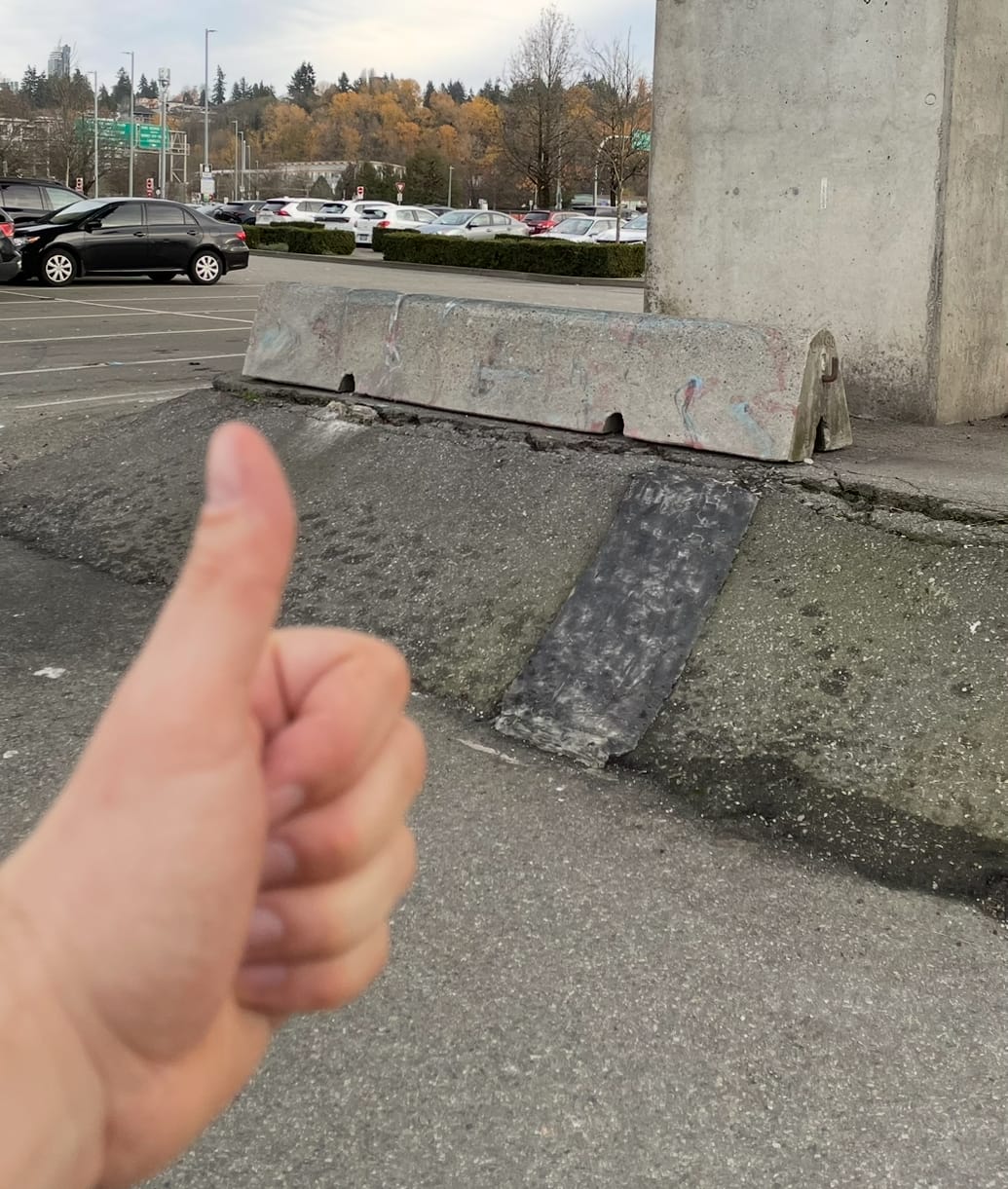
There's probably something more fertile and interesting to explore about the near primitive pleasure derived from chasing and suffering in this way in the pursuit of a clip, particularly as a person whose livelihood does not depend on it, and is perhaps even at odds with it, and especially for someone who is not even very good at skateboarding. But really, all of this is to say, now the video my friends and I have been working on is done. A beautiful, if perverse, and self-indulgent joy pursued with friends.


This is what it feels like to become a paid subscriber. Nothing on Simple Magic is behind a paywall, but your money will get you stickers and merch, go towards paying contributors for their great work, and put some dough in my pocket as I write these each week. You can also leave a one-time tip.
Screenshot via Sam Tabor on YouTube
Something to consider: Submitting to Slow Impact 2027's Paper Sessions.

Once again, Slow Impact invites proposals from scholars, artists, poets, organizers, activists, and anyone working within the broad landscape of skateboarding for presentation at our 2027 Paper Sessions. This year's sessions will be held on the mornings of February 19 and 20, in Tempe, AZ.
Presentations are strictly limited to ten minutes, generally include a slideshow or visual component, and will be followed by a period of discussion. We encourage proposals from all corners of skateboarding, including the archival, theoretical, and the strange. We especially encourage individuals who push against the borders of skateboarding and those from underrepresented groups to submit.
I just bought my flight to Tempe this week. Hopefully I'll see you there.
Good thing:
 SAUCE
Another good thing:
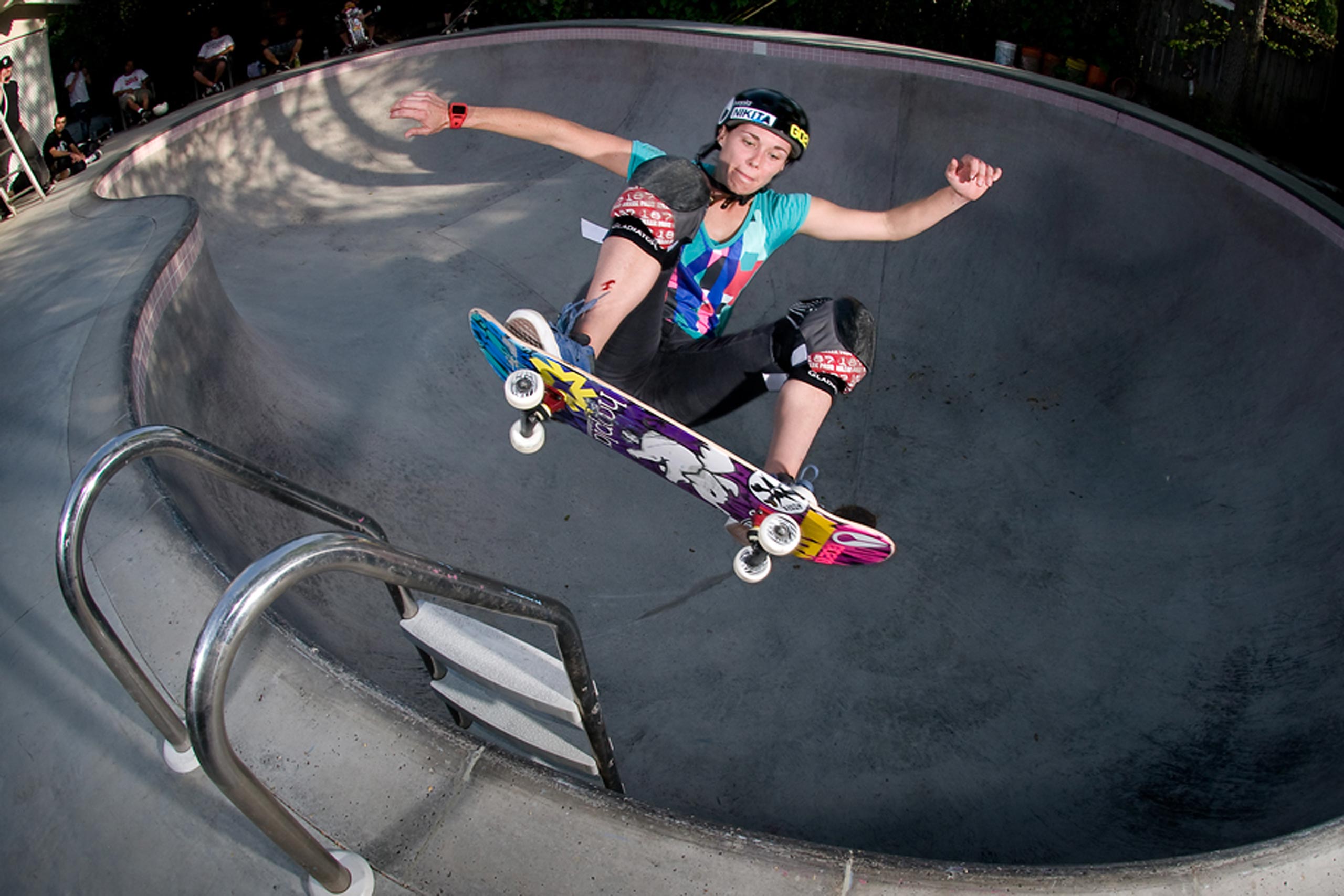
 Sarah
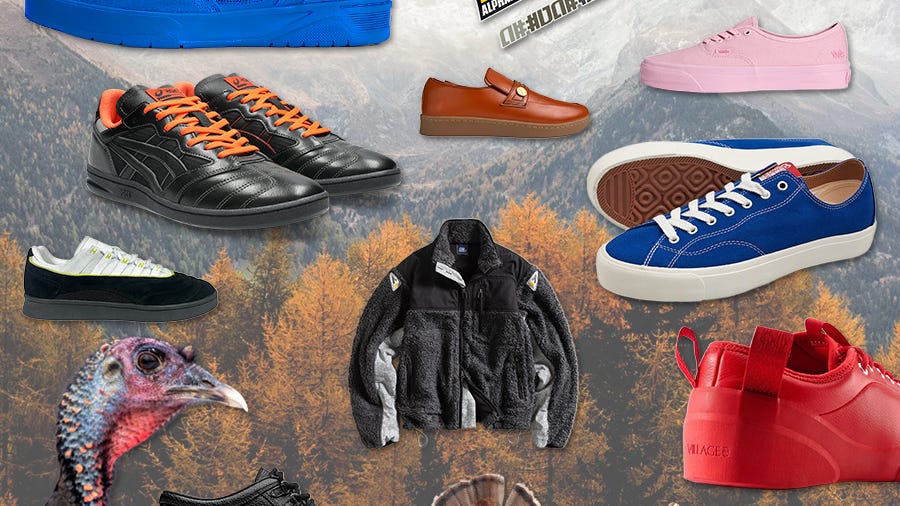
Good shoe thing:
 Village Psychic
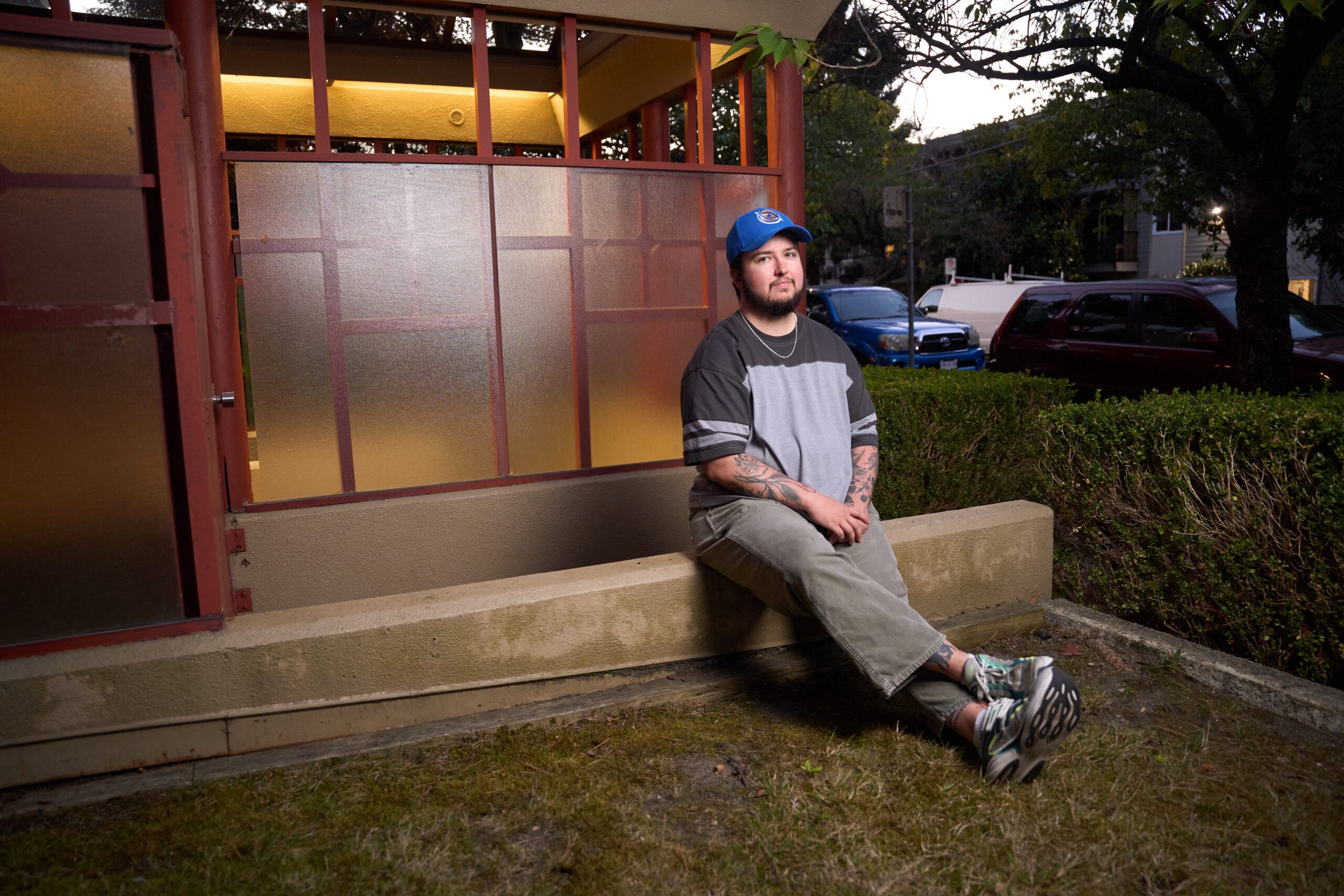
More good thing:
 Mel Woods
Good UNC thing:
 Murrell

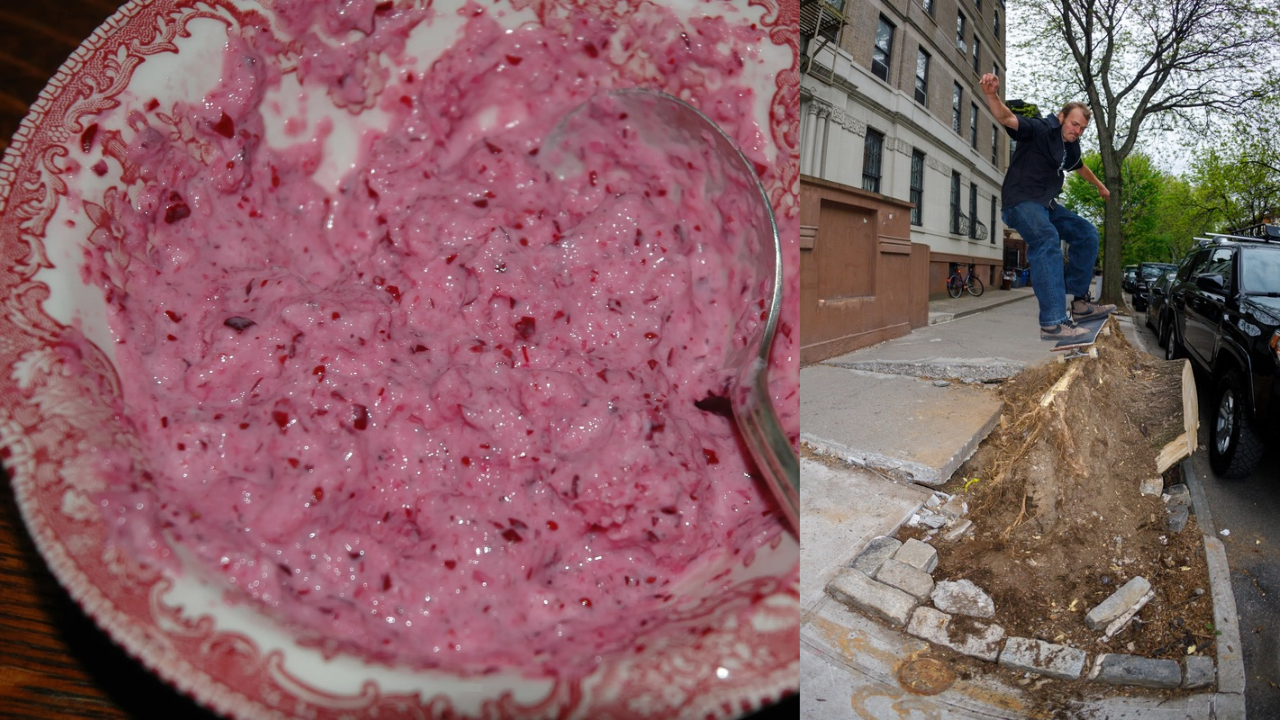
Good tasting thing:
 Marcus Waldron
Five good things:
 Snack
Good thing about a bad thing:
 Lucy Bloom
Good pod round-up:
New Good Luck With That.
 Posted by Templeton

Some good things about the big game:
 Pedro L. Gonzalez

Until next week… skateboarding owes you nothing but a good time with your friends.


Looking to adorn yourself with the merchandise of a hyper-niche special-interest newsletter?