
Aiding history
Mike Munzenrider talks to the creator of the original Wallenberg roll-in ramp, Daiki Hoshino shines, Kyle Beachy reads, and more.


The definitive weekly ranking and analysis of all the skateboarding and other things online that I cannot stop consuming and how it makes me feel, personally.


Aiding history
A special correspondence by Mike Munzenrider
Skateboarding is hard. How should we treat the things that make it just a little bit easier? Debates about waxing seem to be settled. Same with rubbricks and lacquer. Doing away with cracks using Bondo and signs isn't a hot-button issue. However, if you really want to get people fired up, talk about using ramps in the streets. Maybe the most notorious ramp of all is the roll-in used to skate a ridiculously large four-block at a famous school in San Francisco, CA.
It was this week that we learned about more tricks landed at that famous school, Raoul Wallenberg High, via an unprecedented triple Thrasher Magazine cover unveiling — three for a single month. Wallenberg's big four was kickflipped by a groundbreaking Chloe Covell, laser-flipped by Dashawn Jordan, and switch-360-flipped by Dylan Jaeb. While the internet rumour mill says Jordan threw down and pushed at the imposing four [editor's note: it has since been confirmed, no roll-in], there's no question Jaeb used the roll-in, since it's visible in the background of his cover photo.
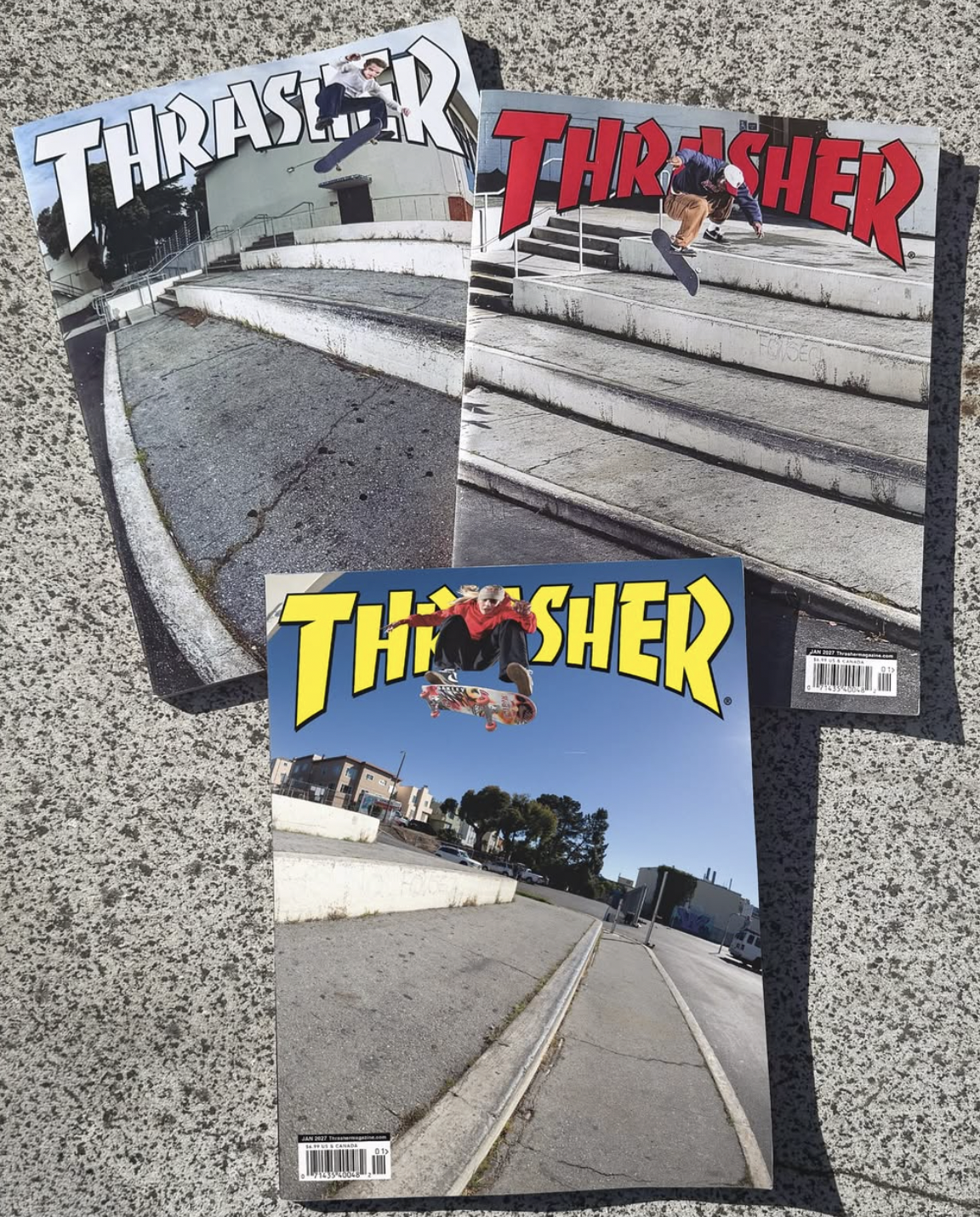
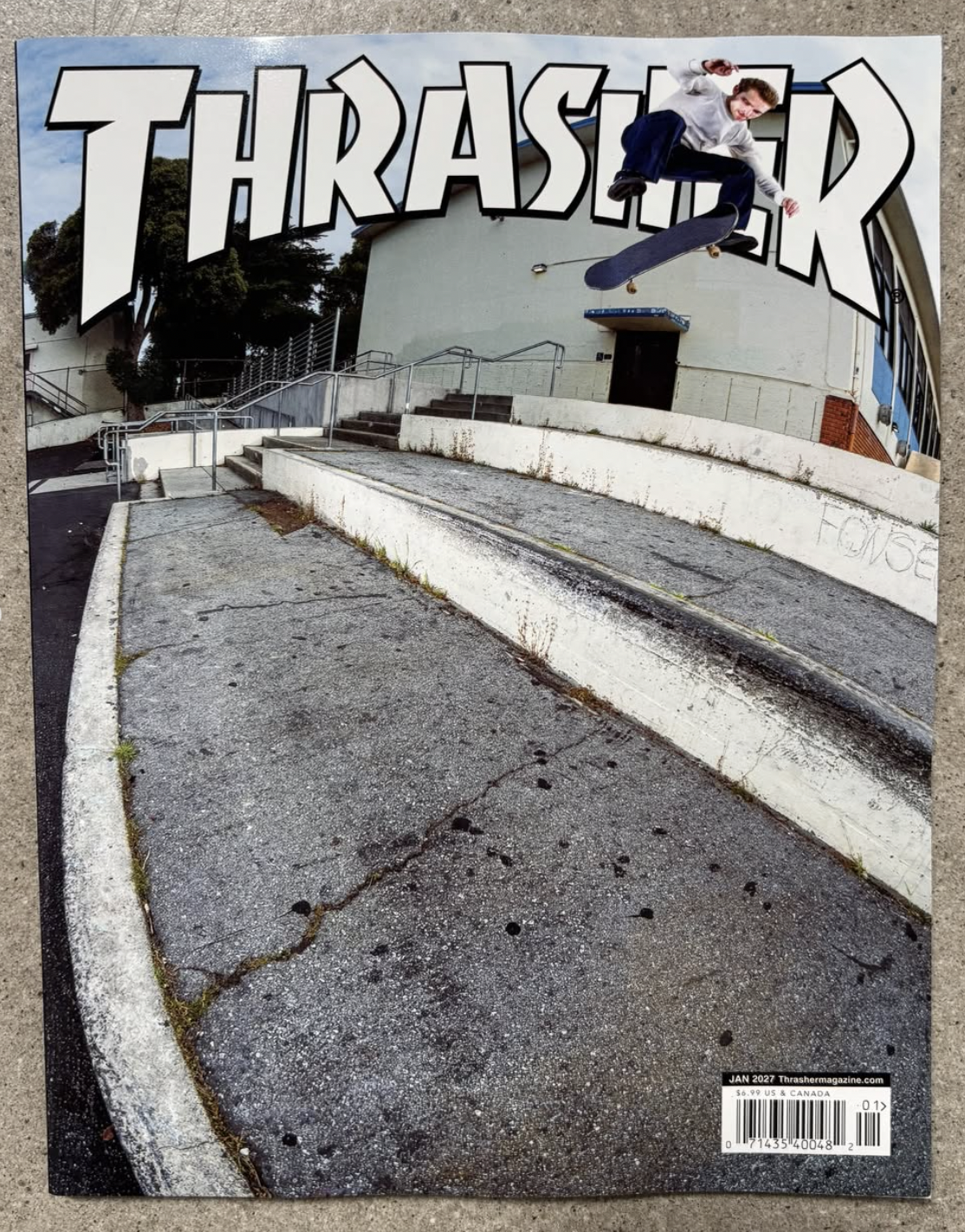
Images via Thrasher Magazine on Instagram
Contrary to my memory of how things went down, the Wallenberg roll-in didn’t become a thing because of a schoolyard remodelling that changed the run-up to the steps. That came later. Instead, the first roll-in was commissioned 22 years ago for High Noon at the Big Four, a chaotic cash-for-tricks event that saw Andrew Reynolds frontside-flip the steps in a cocked Atlanta Braves New Era baseball cap. That first roll-in was built to make the contest plausible with its expected large number of spectators, and subsequent ramps opened up Wallenberg for ever more difficult tricks. I was thinking about the triple cover when I remembered I know the guy who built the first roll-in.
On Wednesday, I met Mark Leski at a pool hall just north of Minneapolis. He was there for league play with a couple of other old skate heads. Long ago he'd told me about Wallenberg's dimensions, 17.5 feet long by 5.5 feet high, while skating a private bowl or some backyard mini. Nowadays, Leski works at a Twin Cities architectural firm, but back in 2004 he was a warehouse guy at Deluxe Distribution in SF. Leski says it was fellow Deluxe denizens Max Schaaf and the late Micky Reyes who gave him the nickname "Wizard" due to his small-framed yellow glasses. He built ramps too, having worked on the Double Rock skatepark and Jim Thiebaud's famous miniramp.
Leski says Thiebaud, head of Deluxe, approached him to build a roll-in for the Wallenberg contest, without saying how it should be made. "I had a good enough skate background that I knew how to build the right roll-in," Leski says. There was a similar ramp at Double Rock that he didn't outright copy, but used as a test ramp. A short distance beyond the bottom of that roll-in were two seams in the concrete floor, which created a 12-foot gap. "I figured if I could roll in on that thing at speed, snap an ollie, clear that thing, I could feel the amount of steam you'd need to get down Wallenberg."
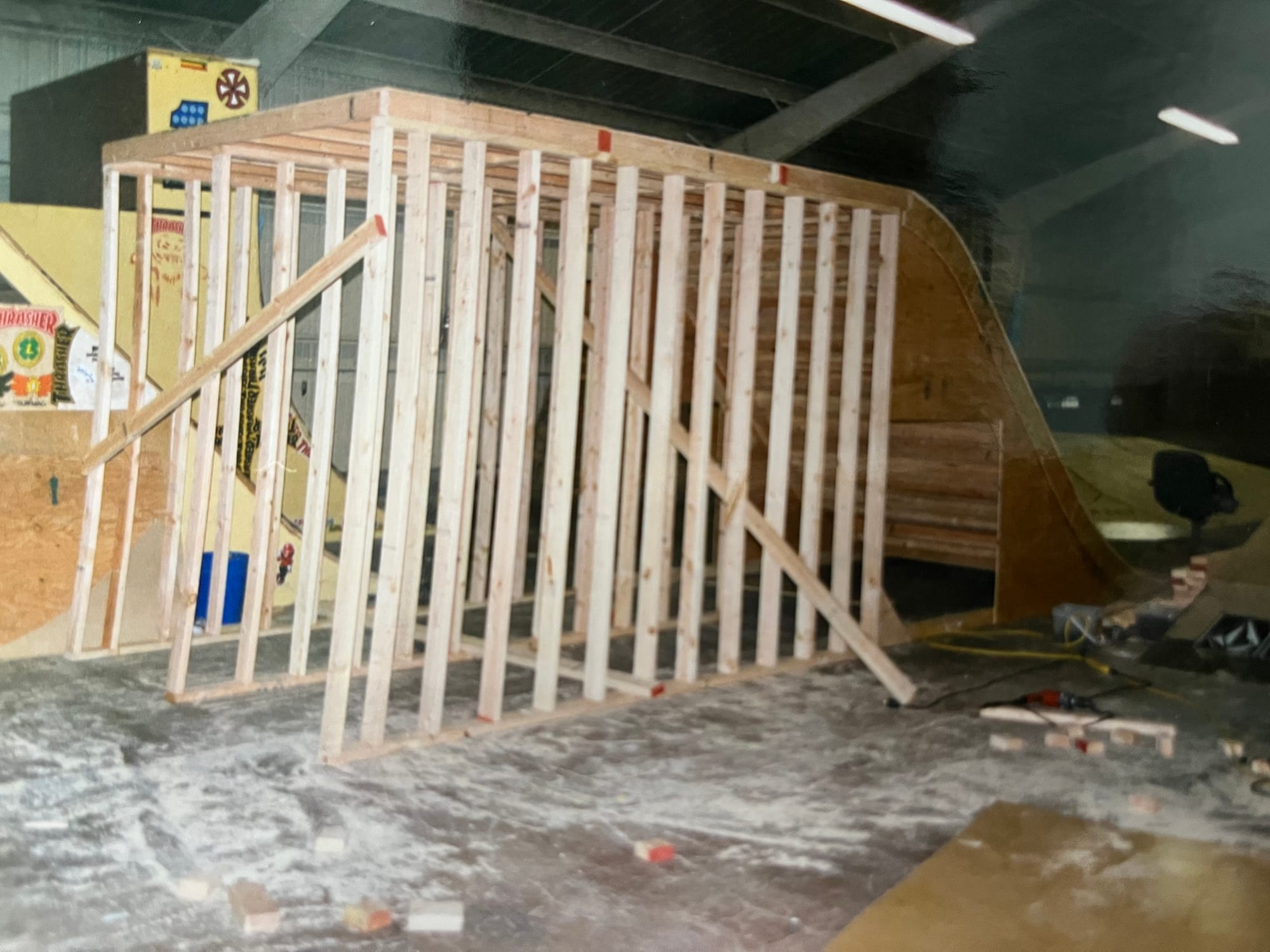
The ramp he built was 9 feet tall with 12 feet of decking to accommodate a bunch of skaters. Leski says he built it in a modular style he learned from ramp builders back in Minnesota, who constantly had ramps on the move. It could be set up or taken down by a single person. He says he doesn't remember exactly how the conversation happened, but a week before the contest, Thiebaud and the late Jake Phelps, then editor-in-chief of Thrasher, told him he needed to change it. "Ultimately, it was more Jake than Jim: 'It's too big,'" Leski says. "'It needs to be gnarlier so it needs to be lower, we need to cut this thing down.'"
"They want a smaller ramp so [the skaters] have to struggle for it," he says, "I got that whole point, but I didn't know if the show was what they'd want if I cut it down." He asked other skaters in the mix for input, and they agreed a bigger roll-in would work best. But then again, ignoring the wishes of his boss and other San Francisco fixtures, he says, was a dicey proposition. "These guys trusted me so much." He was torn. "It was like disagreeing with your parents."
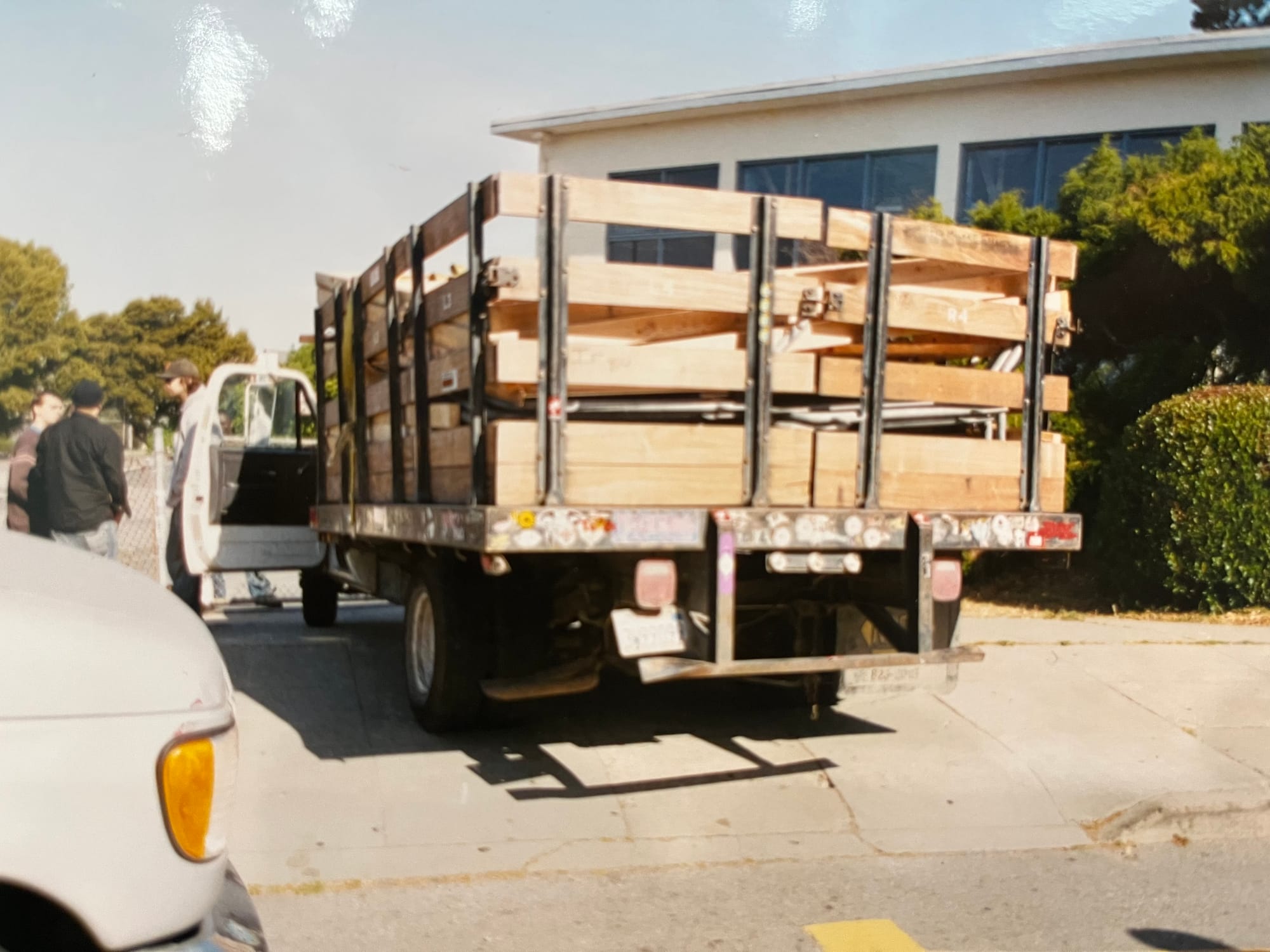
The contest used the bigger ramp. "I had the courage the day-of to load up the 9-foot roll-in and not say a word to anybody," Leski says. He drove it over to the school, set it up with some slight difficulty that got his adrenaline pumping, and then settled in along the school wall under an awning. "I got front row seats for that shit show," Leski says. He marvelled at Darrell Stanton going at the steps backwards — he got a switch backside 180 that day. The ramp was positioned as far back as possible; if it had been a little closer to the steps, one more trick might have gone down. "I really wanted Elissa Steamer to make [an ollie]… she was so close."
Even if the people in charge had noticed the taller ramp, they never said anything about it, Leski says. "I wasn't sure if I was going to have a job on Monday but once I saw what went down, [I felt better]." He got further assurance, he says, when a week later, the late founder of Thrasher, Fausto Vitello, sent him box seat tickets for the San Francisco Giants. Later that year, Leski quit Deluxe to build skateparks full time.

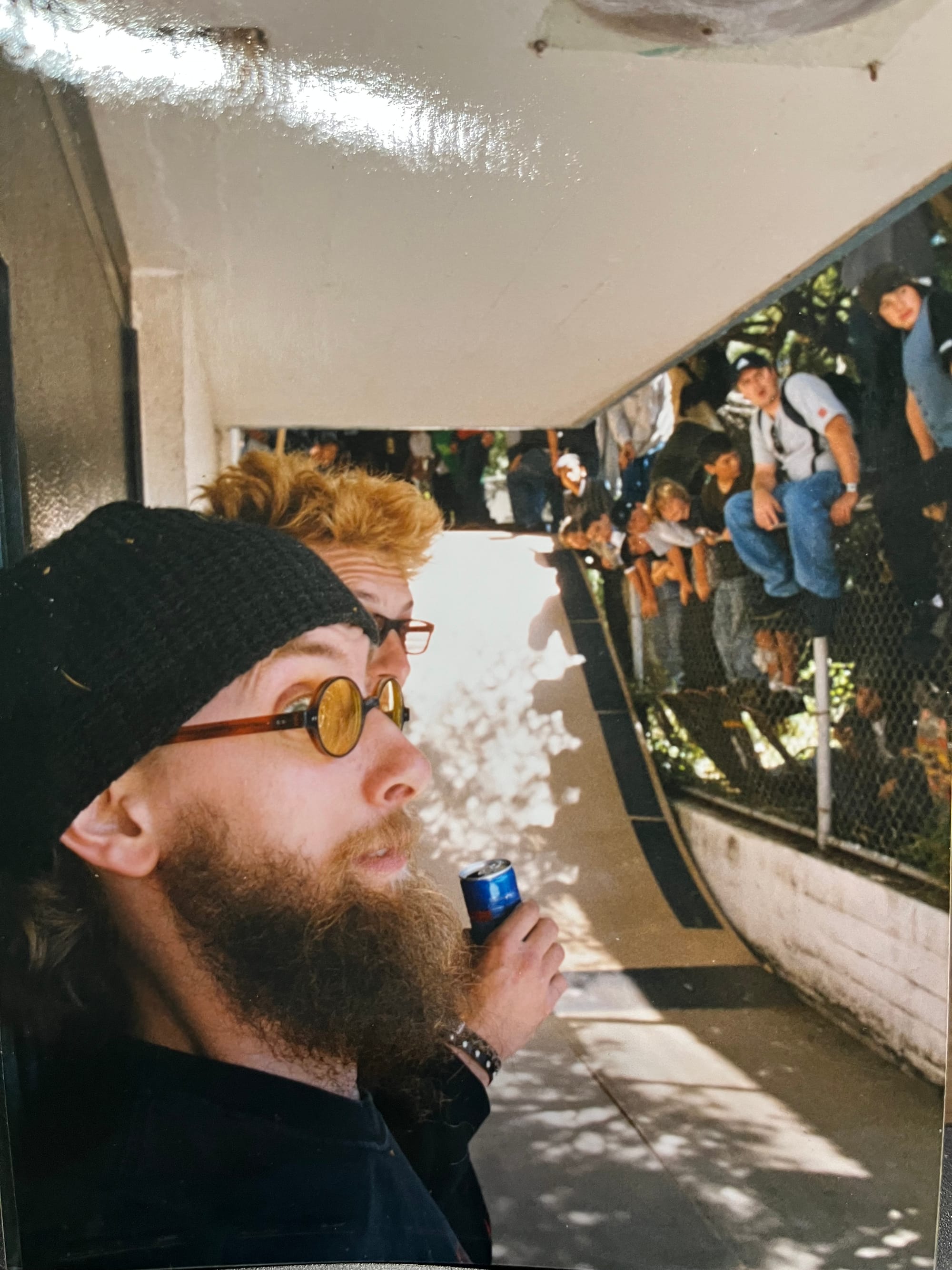
The roll-in being assembled and a selfie featuring the roll-in in use. | Photos: Mark Leski
That first roll-in was soon replaced. Leski says the subsequent ramps you see in clips were obviously not as tall as his. Nowadays skaters use the awning as a deck, riding directly onto a smaller ramp closer to the steps.
I wonder why we, as skaters, think easier can make things worse. I'm guilty of that train of thought. Talking to Leski, I pressed for certain details. If they were sketchy, he'd say, "It was 22 years ago!" After the interview we watched some pool and chatted some more about skating and how our bodies are holding up. Skateboarding only gets harder. It's probably OK when we choose to make it less so.

Elemental style
Rank: 35
Mood: ❤️
An authentic personal style, some might say, is no longer possible. Writing for Artforum in 1984, Kate Linker quotes Jean Baudrillard.
"The era of simulation begins with the commutability of terms that were once contradictory or dialectically opposed.... In politics, of the left and the right; in the media, of true and false; in objects, of utility and uselessness, and of nature and culture on every level of signification. All the great humanist criteria... have been effaced in our system of images and signs. Everything becomes undecidable — this is the characteristic effect of domination by the code, which rests on a principle of neutralization and indifference."
Linker goes on to write:
Within such “decentered” production, it is no longer possible to envision an expressive self as referent for a private, personal style. Nor is it possible to entertain once-elemental distinctions between authentic and inauthentic, original arid copy. “Reality” is constructed by the codes of society, by the “already written,” by the received languages and conventions that assume the subject’s place.
To watch Daiki Hoshino, Krooked Skateboards' latest star, is, most superficially, to see a skateboarder who has informed his own personal aesthetic style with signifiers based on dated signifiers that are based on other, more dated signifiers. He stands out in the contemporary era of skateboarding for dressing in tight, form-fitting clothing that resembles the early-aughts of Art Bars; Subtitles and Seagulls, that cast of skateboarders sartorially influenced by the contemporary music acts of their time, whose signifiers were even earlier acts and flattened fashion trends.
However, that "simulation" is part of what makes Hoshino such a compelling watch; it helps him stand out among the modern others and their loose-fitting signifiers. But what really does the heavy lifting is what was assumed extinct: the elemental.
To jump with two feet into the trite and cliché: it is not what you do, but how you do it. That's the common assumption regarding style, anyhow. With Hoshino, however, it is what he does and how he does it. There are the spots and trick selection, which are impressive and refined, but the magic lives in the shape of his body on the board. How his corporeal self remains tight and poised yet flowing in its reactions to impacts and rideaways. These are things that can't really be taught or trained. Look at Hoshino's kickflip, which he does into, out of, over, up, and across things as fast and controlled as an ollie. It is immediately recognizable as beautiful whether you're familiar with skateboarding or not, like a sky bruised and burning at dusk.
It's what you do and how you do it. Perhaps it's a stretch to connect that broken axiom on "style" in some hazy Baudrillardian semiotic sense — which I'm frankly just talking out of my ass about — to the "style" with which a person carries themself through life, but bear with me for a moment. We are nothing but a collection of moments and decisions, most of which are beyond our control. How we handle them may be the last remaining vector of "personal style," but instead of flared jeans or puffy DCs, it's gauged by kindness, ethics, and morals — how a person moves through a world designed to tear us down.
This is a long-winded and overcooked way to lead into the genuinely seismic news that Jim Thiebaud is retiring from Deluxe Distribution, where he has served as "janitor" for 35 years.
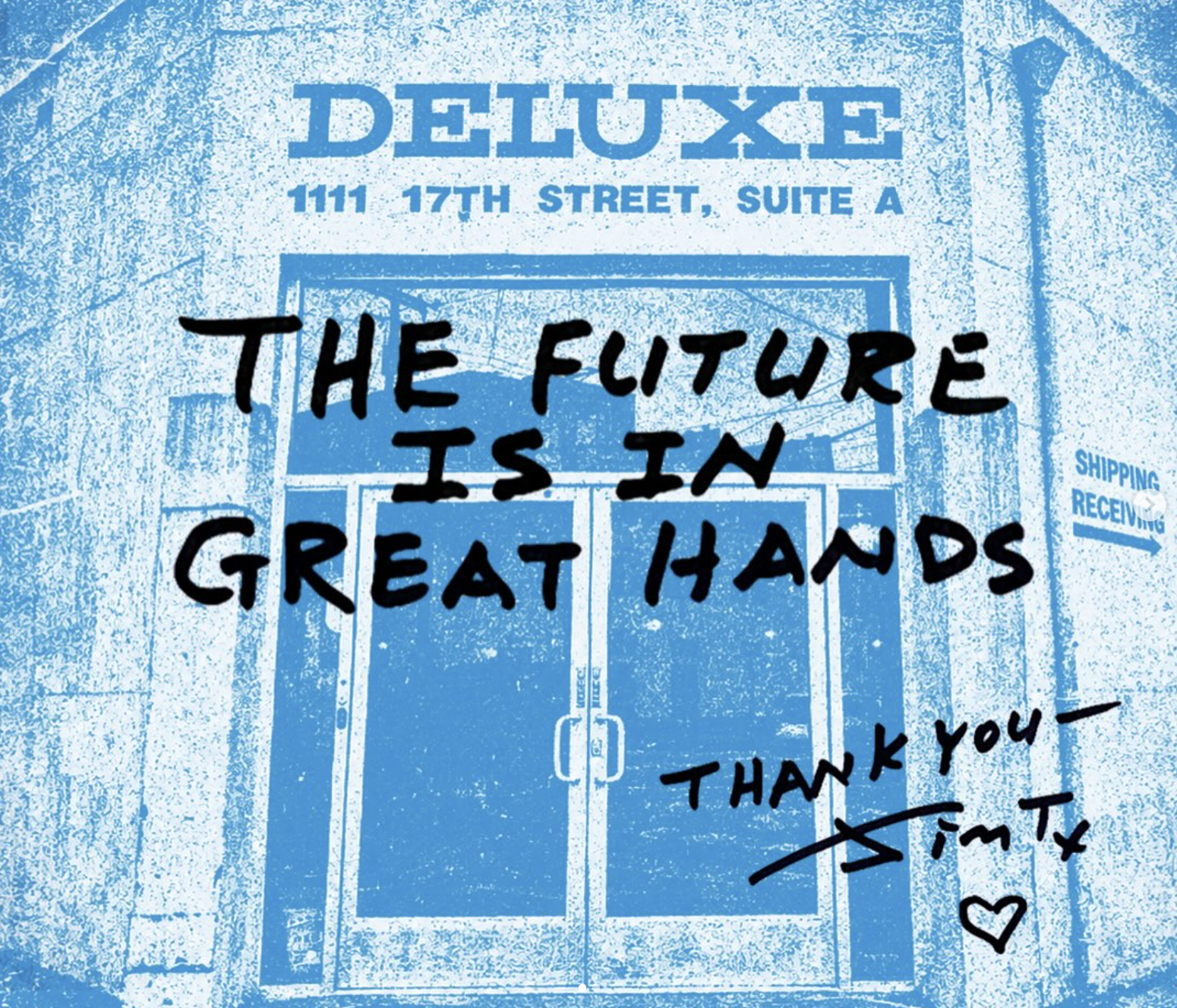
At the end of this year, I’ll be closing out my time at DLX so that I can devote more of my time to my family.
For more than 35 years, I’ve been lucky to be part of DLX and to roll through it with all of you. Getting to work with skaters I love, shops I respect, and so many people who give so much to skateboarding has been an honor and meant the world to me. You all taught me so much, and I’m grateful.
DLX is special because of the people in it, around it, and everyone who’s helped shape it along the way.
Today, DLX is in amazing hands. I believe in the skaters, the teams, and the talented, dedicated crew here who have been pushing it forward and will continue to do so. They care deeply about DLX, and they’re going to keep doing great shit for skateboarding.
For me, this role at DLX has always meant being all fucking in. Now it’s time for me to be all in at my other home.
Thank you to everyone who’s been part of this ride. YOU are the reason skateboarding is the best.
This is not goodbye.
I’ll see ya out there at the spots.
— Jim
I've only known Jim personally for a handful of years, mostly through online and snail-mail exchanges, but he has been unfailingly kind to and supportive of some random-ass guy up in Canada blogging about skateboarding. Why? I couldn't actually tell you. But it's probably because of the Elemental Nature of Jim, a thing that grows and changes over time, but ultimately stays true. That's just his authentic style: He cares and he doesn't care who knows. Take a scroll through the comment section of his retirement announcement post and you'll find a near-endless stream of people like myself who have experienced that Elemental Jim. So many lives supported in ways large and small by one of the biggest figures in this world, an impact immediately recognizable as beautiful whether you're familiar with skateboarding or not.
And skateboarding as we know it — many of the best parts of it — wouldn't be what they are today without Jim, and he would probably hate to read that, maybe even dispute it, which is only more evidence for it. The referent is pure. Skateboarding is lucky to have such a custodian.
Thank YOU, Jim.

Simple Magic Audio Companion: Being There
Rank: 1
Mood: 👂
 Kyle Beachy
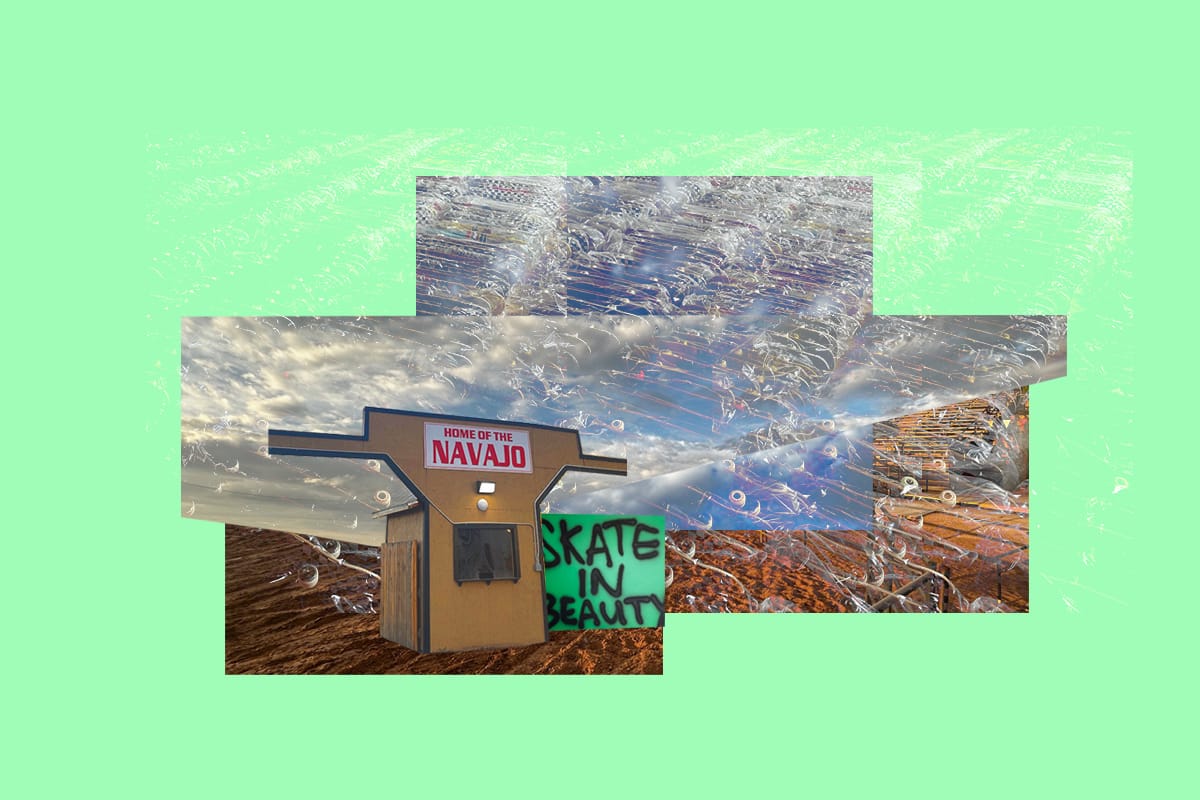
Last year, 'sletter friend and contributor Kyle Beachy wrote a fantastic piece for the newsletter called "Being There," which he was kind enough to record a reading of, and that is now the latest episode of the Simple Magic Audio Companion.
You can find it wherever you listen to podcasts and also right here.

MERCH ALERT
Rank: 1!!
Mood: 🚨!🚨!🚨
It took about a month longer than expected, but the new Simple Magic gear is all here and the shop is updated. For those looking to become paid subscribers and for those who just want to be the most fashionable person at the DIY and/or poetry reading, we've got hats and shirts with designs by Michael DeForge.

Contrasts Hat
$25
--------------------------------
A little whimsical, a tad metal.
Logo design by Michael DeForge
Stitched on Richardson 111 Garment Washed Trucker
Every order comes with a bunch of stickers, a pen, a bookmark, and other fun stuff.

Bucolic Shirt
$25
--------------------------------
Take a walk through the tall grass in a nice new t-shirt.
Design by Michael DeForge
Printed on White Comfort Colors® 1717
Every order comes with a bunch of stickers, a pen, a bookmark, and other fun stuff.
Every order/paid subscription comes with loads of stickers and a custom Simple Magic pen, ideal for filling out traveller's cheques and tapping against your chin thoughtfully while deciding what to write in a birthday card.

Again, and as always, whether you're a regular reader, a paid subscriber, handing over your hard-earned money for some merch or making a one-time tip, thank you for your support.

Something to consider:
 Jason Koebler

Very good video part:
Good thing:
 Emma Daelman
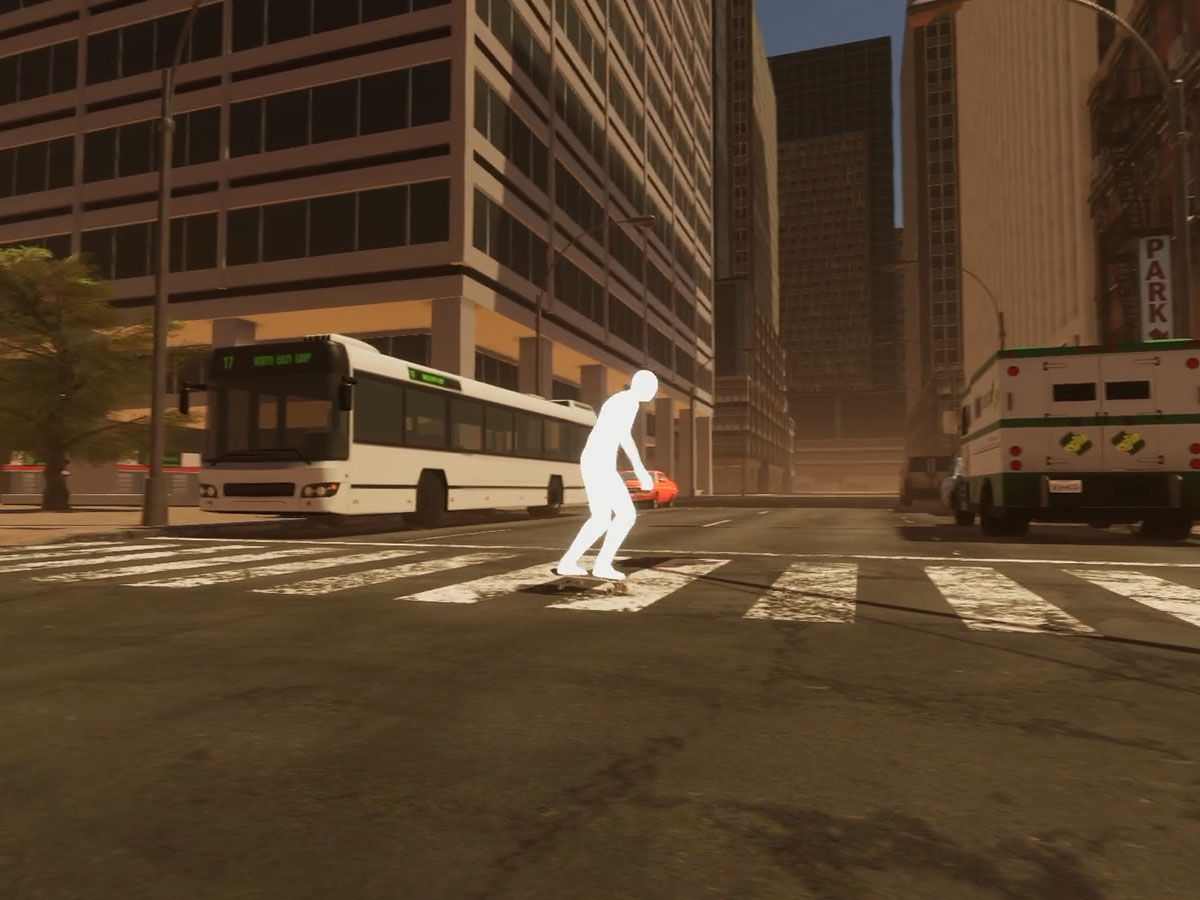
 Tianyu Jiang
Another good thing:
 Snack

Good Brooklyn Banks thing:
 Farran Golding
Good pod round-up:
 Village Psychic

 Posted by Templeton

Good thing about a bad thing:
 Nick Berardini

Good book thing: Jason Waters has a new book out titled Wish Fulfillment, which is about skateboarding, the self, and living with schizophrenia.
From earlier this week: For Thrasher, I talked to Whitmer Thomas about his recent HBO special, the strain of making and promoting creative work in the age of social media, getting personal, pranking Spanky's daughter, and more.

Until next week… adopt a cat, why not? I mean, have you seen those things? They're wonderful.