The Sponsorship Playbook
Attending Greg Lutzka's course on how to become a sponsored skateboarder, Marc Roca closes shop with three days' notice, someone is destroying all the banks-to-ledges, and more.

The definitive weekly ranking and analysis of all the skateboarding and other things online that I cannot stop consuming and how it makes me feel, personally.

A good video
Rank: 89
Mood: 🙉

The Sponsorship Playbook
Rank: 9
Mood: 💸
What are we if not our experiences? Moments folded into moments, all held in the warm, rough pocket of a life. Any attempt to distill a person requires pulling apart that tangled mass; but then you have just pieces, not a whole.
Greg Lutzka has decided to sell a piece of himself, the one the public is most familiar with: professional skateboarder. Far beyond the prime of his career, he has undoubtedly reached great heights, including major contest wins, magazine covers, genuinely boundary-pushing video parts, and many, many signature products. Lutzka is now selling a course on how to kickstart your own career, using his personal stratagems, which he calls The Skateboarding Sponsorship Playbook.
For $9 USD, Lutzka promises to help aspiring professional skateboarders "land legitimate skate sponsors and build your pro career." I paid $13.09 CAD to access the course, which consists of four pre-recorded video modules and a community dashboard where you can interact with other attendees. There were 19 active profiles on the site, not including myself and Lutzka.
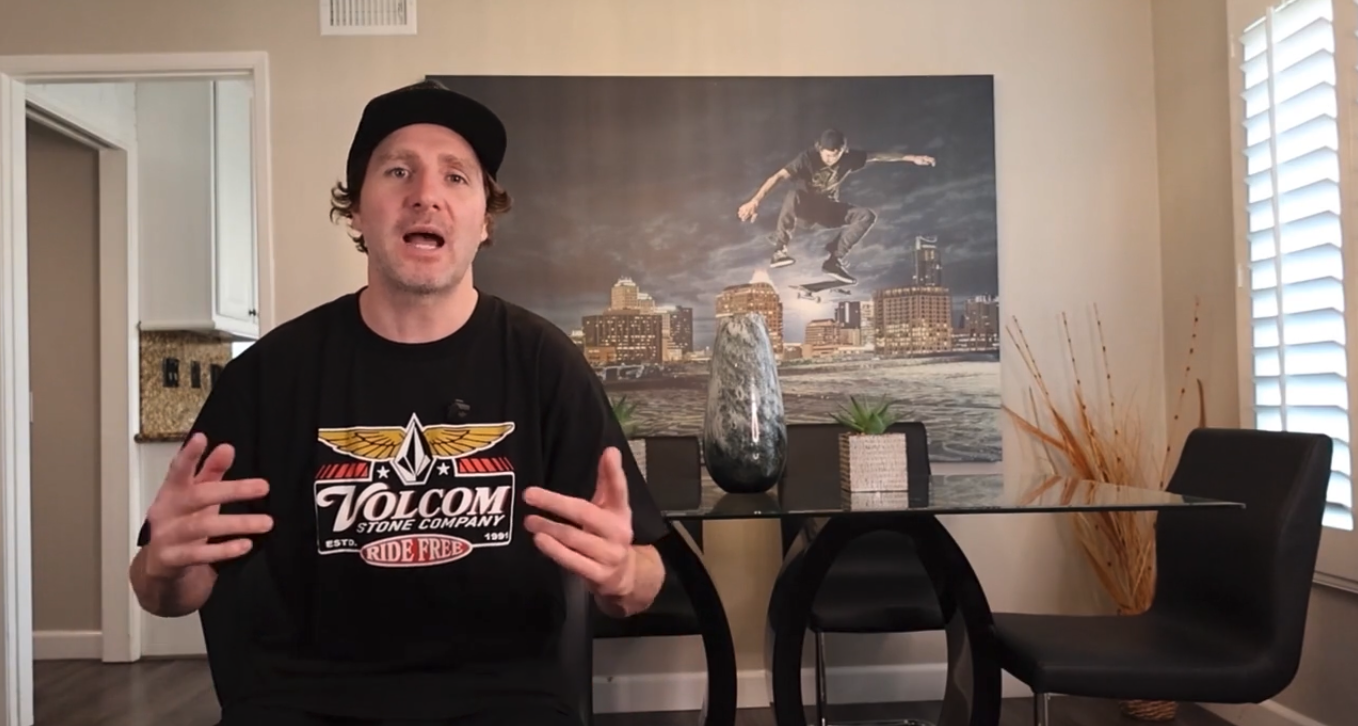
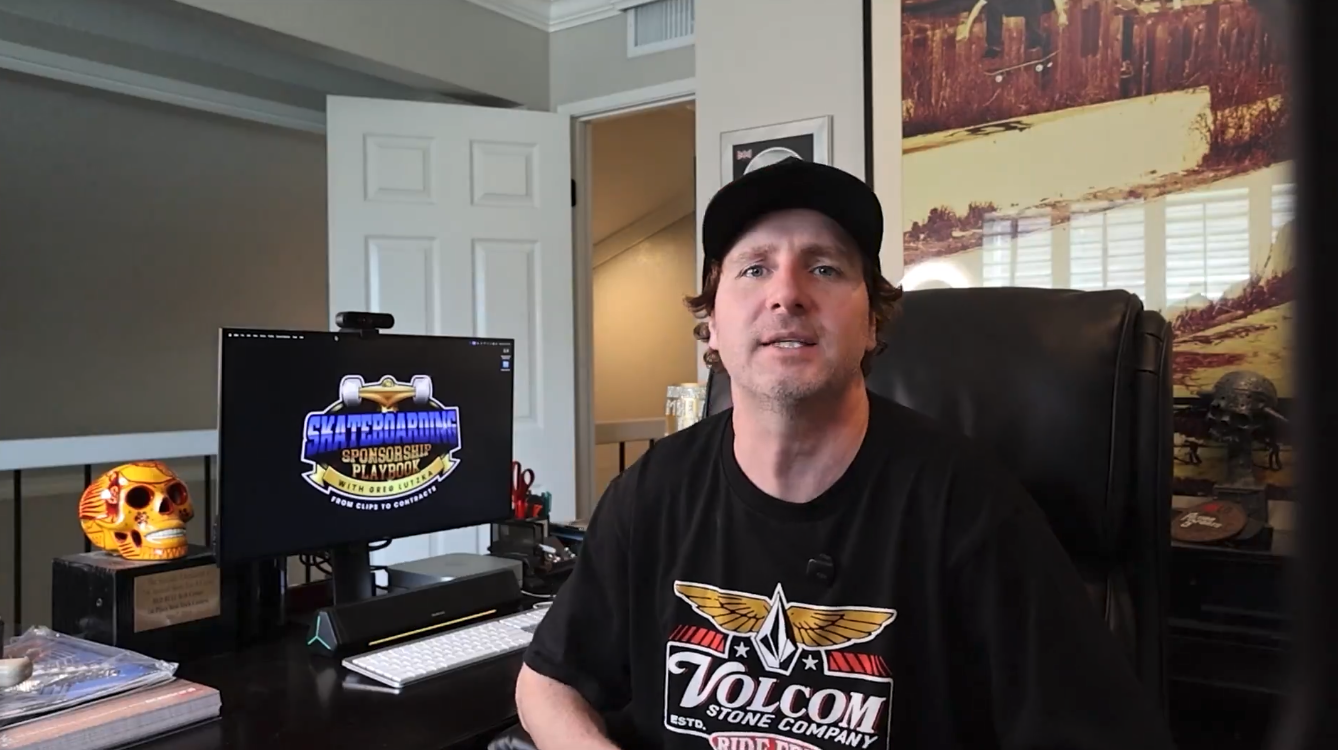
In an introductory video, Lutzka, whose on-screen presence is best described as "loud," more or less yells his way through a script while stationed in different locations throughout his, as he calls it, "crib."
Images: The Sponsorship Playbook
The Skateboarding Sponsorship Playbook is "where clips turn into contracts," Lutzka says, a large print of himself skateboarding stretched across the dining room wall behind him. "I've been a professional skateboarder for over 20 years, landing some of the biggest sponsorships in the industry, and... [The Playbook] has tonnes of proven strategies that I've created and used throughout my entire career.... I wish we had something like this that existed when I was coming up and building my professional skateboarding career."
That's a common refrain for those hawking personality-led courses. It implies both hard-earned experience and humility. Former professional skateboarder Mikey Taylor invoked a similar sentiment while promoting his pricey Exit Ramp program last month.
While Taylor promises to help optimize a business for selling, Lutzka is similarly confident he can "show you how to get noticed, land sponsors, negotiate deals, get paid, and leverage strategies to maximize your tax write-offs, all while building a successful career in this industry."
"This course is basically a shortcut to real-world advice straight from the personal playbook I use in my professional skateboarding career."
It takes about 55 minutes to learn all of Lutzka's insights and strategies. The first module, "Building Your Brand From The Ground Up," doesn't offer many novel insights. He lauds the power of the sponsor-me video, says contests are a great way to get your name out there and meet people, suggests tagging brands and team managers in clips on Instagram, and offers an actionable item:
"Identify three people already in the industry: A filmer, a shop owner, or a team rider for a brand you want, and start building a genuine relationship with them."
Realistically, that is fine advice, but also dead-eyed and calculating, particularly when Lutzka follows it up with the hustle-bro maxim "Your network is your net worth."
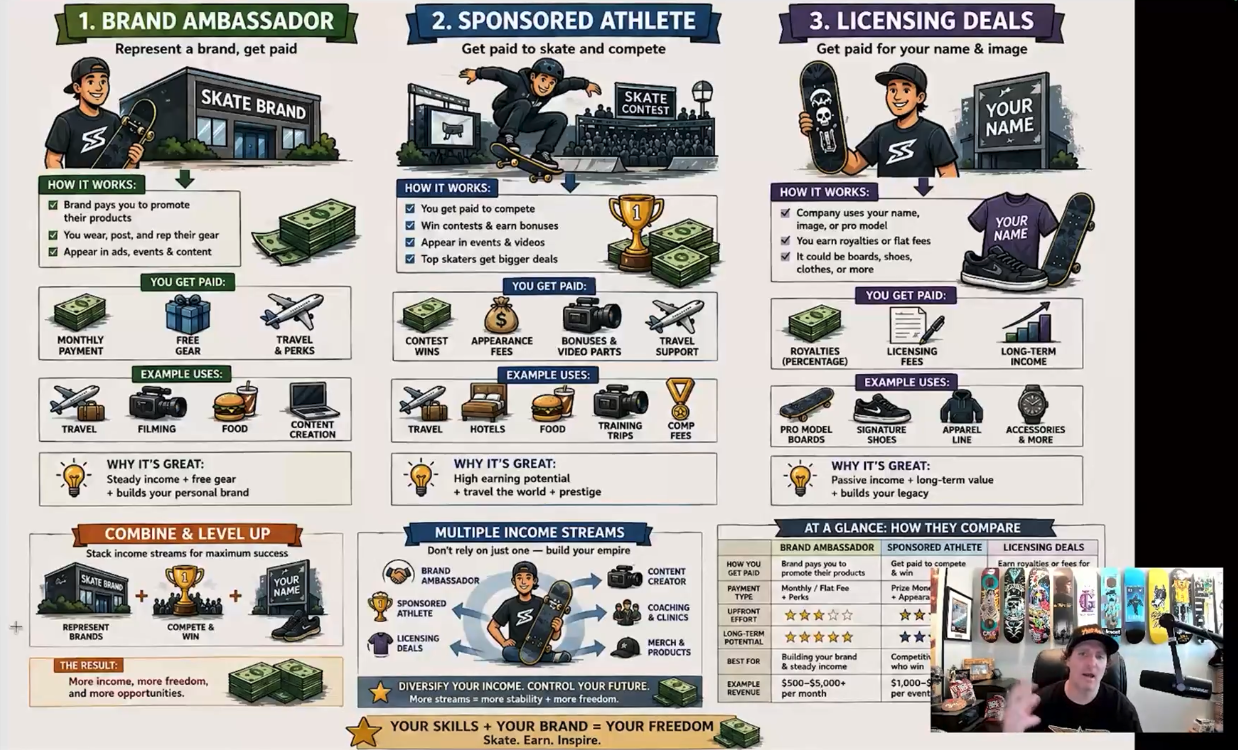
Module two, "Know Your Deal — Sponsorship vs. Ambassador vs. Licensing," centres around a few AI-generated graphics that Lutzka speaks to, breaking down the different ways a skateboarder can earn money by representing brands. Interestingly, he refers to being a professional skateboarder with your name on a product as a "licensing deal," which is accurate and probably a healthier way to consider what it means to be an independent contractor in the skateboarding space.
Despite saying in module one that social media is your "portfolio and pitch deck," module three, "Breaking Down the Strategies to Locking Down Deals," is almost exclusively focused on Lutzka building a literal pitch deck to share with potential sponsors.
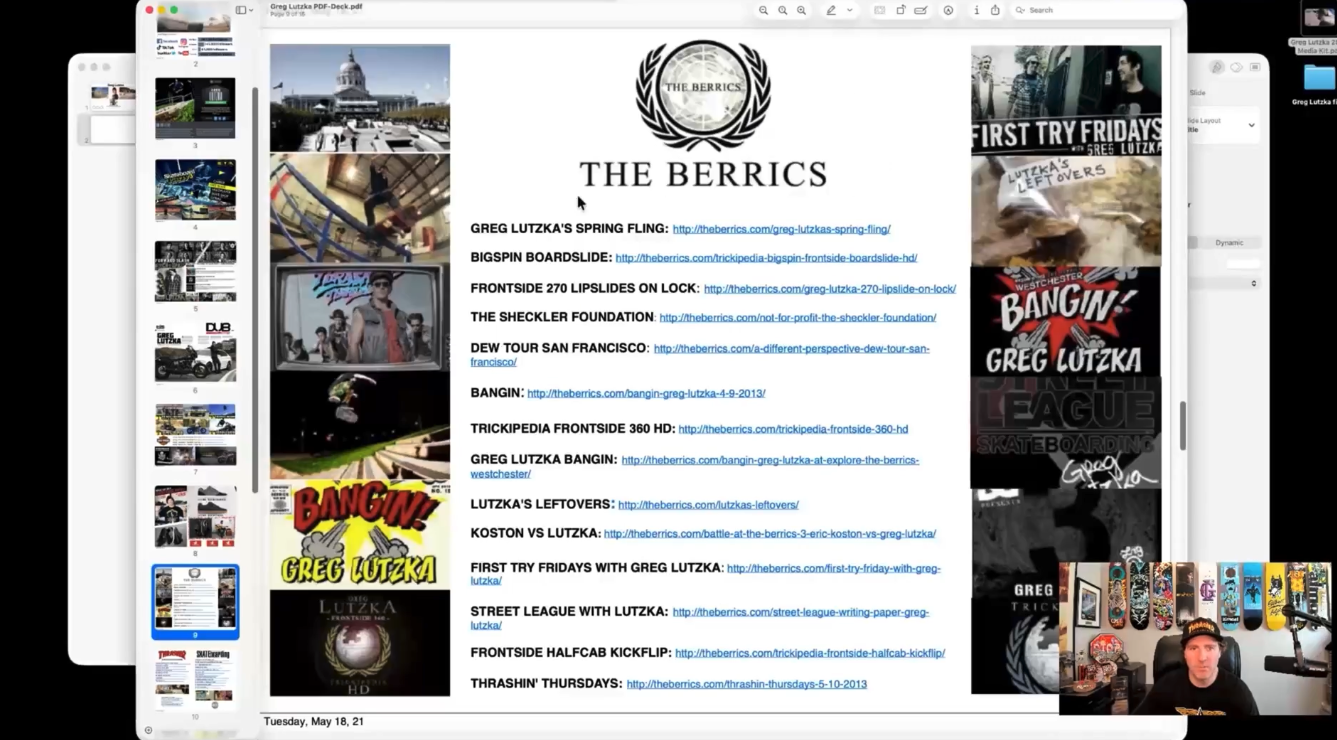
It's hard to convey how enamoured Lutzka is with Keynote. He repeatedly praises Apple's stock presentation software and implores his audience to use it. He explains that all you have to do is Google yourself and pull the subsequent photos and videos that show up into the deck. He finds his "United Globe by Fate [sic] video part" and plops it on the page. "All these links are live, which is really cool."
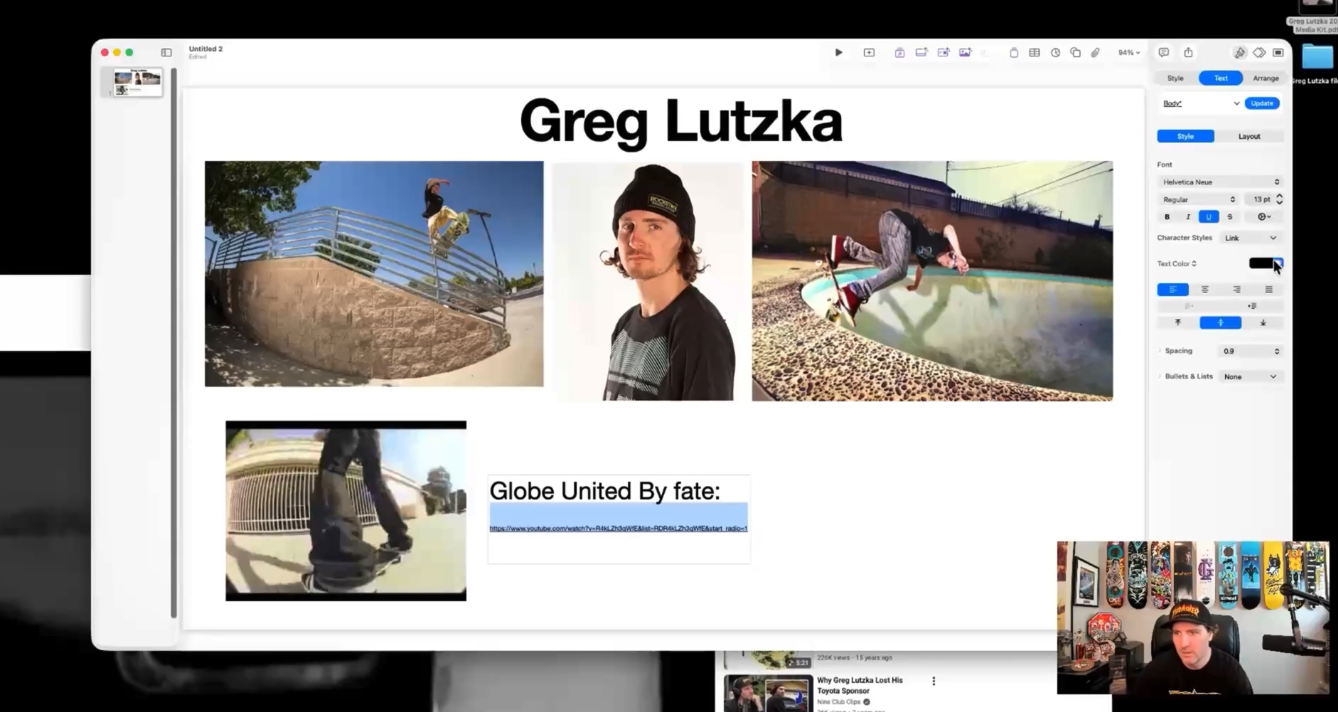
This probably works better if you're already a professional skateboarder with decades of media coverage to source from online. Still, Lutzka accomplished a lot with his pitch deck in a short amount of time, which leads him to warn, "You always want to save your project in between so you don't lose anything. That's what 'save' does."
However, Lutzka is also aware of his limitations. He tells the viewer that the deck he personally uses needed some design polish, so he turned to a professional: a guy he found on Fiverr.
"[He] is going to charge you $30. Just put in your credit card information." Lutzka says while scrolling through the graphic designer's Fiverr profile and revealing, in detail, their direct message exchanges. "It's super cheap, to be honest." Of the designer's work itself, "[He put] a dog on a skateboard in the background... He gave it some kind of cool vibe, I guess."
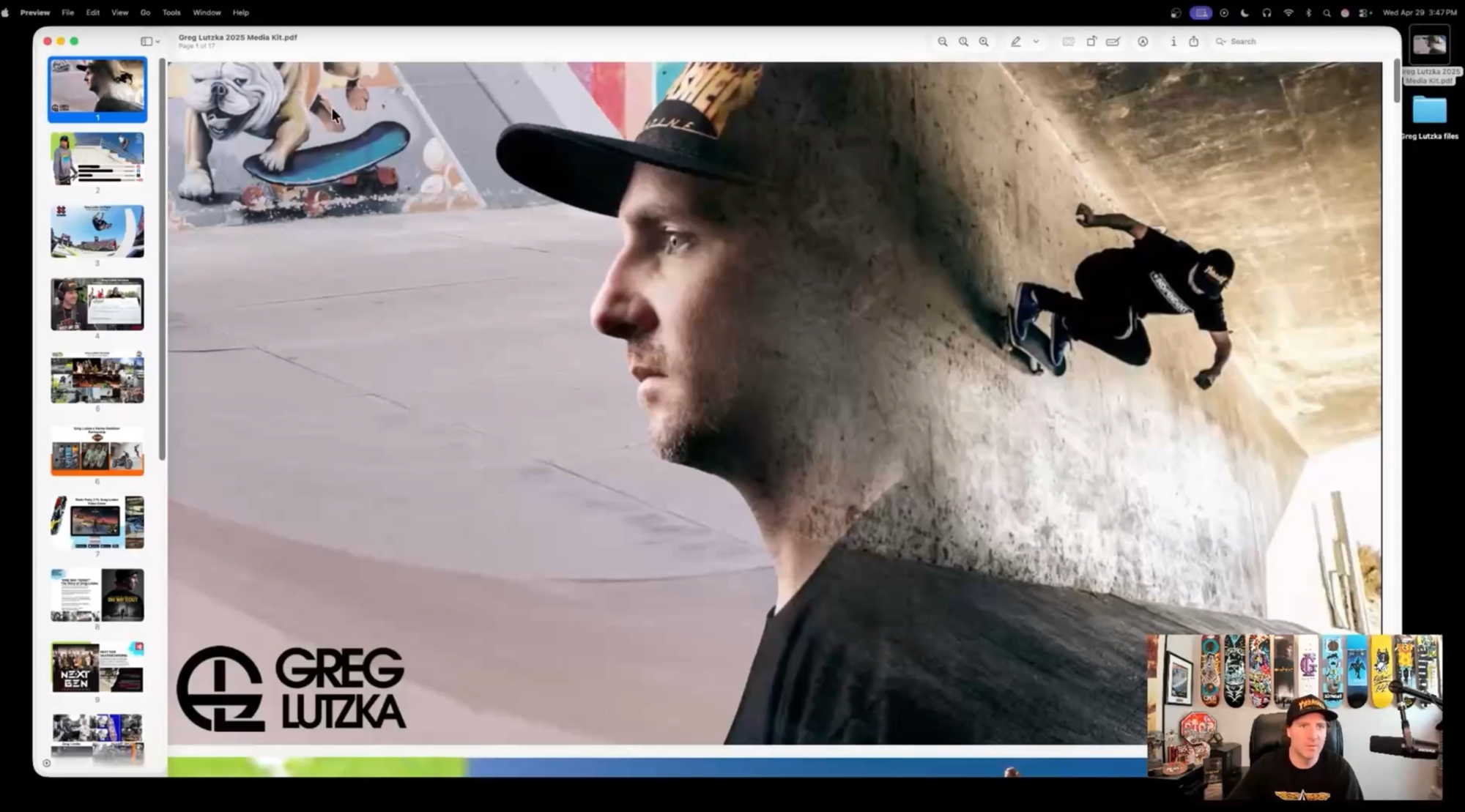
When your pitch deck is ready, Lutzka reveals the next step to locking down deals: "[reach] out to brands by writing them in their DMs [on Instagram]."
"But first, I'll reach out in a cool way. I start to follow them. Liking some of their photos. Commenting on some of their posts. I only reach out to brands I really want to work with." Those include Trace Minerals, HeyBike e-bikes, Juiced Bikes, Ikon Pass, Dixon Flannel Company, Russ Brown Motorcycle Attorneys, and 10x Health, which sells at-home genetic tests and supplements. In the video module, Lutzka shares the Instagram DMs exchanged with the social media manager at 10x Health, and details the follow-up emails he sent before briefly becoming an ambassador for the company. Ultimately, the goal is to "get them on a Zoom call" where you can show them your "PDF deck."
The final module, "Maximize Tax Savings and Protect Your Assets," features a Ferrari as its thumbnail. The video itself is less exciting and begins with Lutzka declaring, "This content is for informational purposes, as I'm not providing legal or tax advice. I'm only providing a general overview of how this process works."

This informational content is geared toward an American audience, as he suggests setting up an S-Corp, getting a business credit card for expenses to write off, and treating any filmers, editors, and designers you might need to hire as W-9 contractors. And that's the end of the course.
"I'm proud of you guys for taking this step," Lutzka says, or more accurately, yells into the camera. However, there's actually one more step.
"If you're serious about taking your skateboarding to the next level and want custom insider guidance, schedule your private session today. Spots are super limited because I can only take a few skaters at a time, so definitely don't wait. From clips to contracts, let's get to work."
One 45-minute session will cost you $147 USD. The $9 entry fee and generally light informational content in the video modules seem designed to funnel aspiring professional skateboarders into the significantly more expensive 1-on-1 sessions. This type of escalation is common practice for personality-led "courses" like these — that's where the real money is made. When I sat it on Mikey Taylor's Exit Ramp intro session last month, the $10,000 price tag reveal turned the Zoom chat cold.
Now, if you were concerned about that steep cost of Lutzka's 1-on-1 sessions, the Sponsorship Playbook also offers you a way to make money "easily."
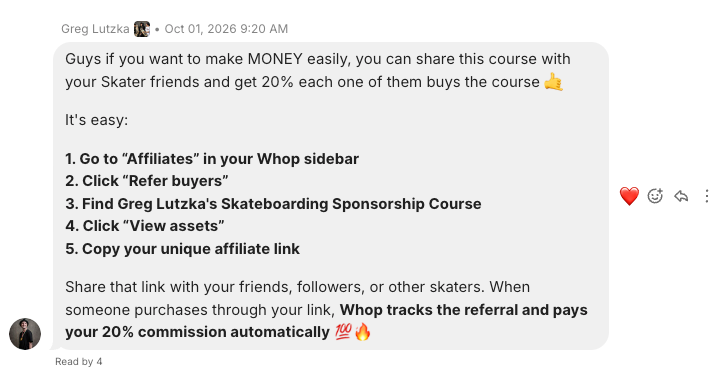
The piece of Greg Lutzka the skateboarding public has known is that of a professional skateboarder with great skill and ability. Lutzka notes in his course that being good at skateboarding isn't the only thing that attracts sponsors; the world is full of talented skateboarders. Sponsors want someone marketable, with a following, who represents their brand well, and is willing to promote them.
Lutzka does a lot of promotion; his Instagram feed is full of sponsored posts, but rarely for brands within the skateboarding space. That's because he is, bluntly, uncool. Unmarketable. That's been the case for nearly his entire career, much of it spent wearing a fedora. And that's fine. Not everyone can be Cruise Mosberg.
Lutzka legitimately earned his bona fides two decades ago and has been milking them ever since. It's how he manages to get his various oddball sponsorships today. He leads his pitch messages by touting his X Games gold medal victories from 2008. Those moments are why all he has to do is Google Image Search himself to fill out a "pitch deck." If that's how he wants to leverage his successes in this industry, that's also fine. However, as was probably expected, he isn't sharing much of anything useful from those experiences in his course; he's just telling viewers what works if you're already professional skateboarder Greg Lutzka.
We all suffer under the weight of capitalism. Cobbling together a living is increasingly difficult. It almost feels cruel to go on so long about what reads like an act of desperation from an aged pro skater. But there's a difference between hawking Trace Minerals to your followers and siphoning money from them directly.
Because what else would you call The Skateboarding Sponsorship Playbook besides a grift? Lutzka is selling a piece of himself, one we're already familiar with, and framing it as an ideal rather than what's real. That's why people aren't buying.

Three days notice
Rank: -3
Mood: 👔🤮
Of the recurring figures in this newsletter, Marc Roca has worked hard to cement himself as one of the most unsympathetic. The now-owner of Lakai Footwear and Tactics Skate and Snow (and Trading Card Games) has shown no real interest in skateboarding beyond the business opportunity, which, as far as we can tell publicly, he appears unable to handle.
After acquiring the company, Roca ceremoniously invited aboard and then unceremoniously laid off Lakai's co-founders, Rick Howard and Mike Carroll, and immediately became a figure of revulsion in the skateboarding world. A little over a year later, he fired his hire for brand manager, Luis Mora, after Mora went mutinous and tried to get him to give up the company after Mora realized Roca wasn't up for the job. He also shuttered two Tactics brick-and-mortar storefronts, laid off their entire staff, and gutted the corporate team at Tactics HQ. The remaining Tactics warehouse employees began shipping Lakai orders after Roca brought the shoe brand's stock into the skate shop's facility, mixing his businesses into one. I reported last month that, while he was closing stores in the Pacific Northwest, Roca quietly opened a Tactics-branded Trading Card store in the Philippines. That now looks even more callous, as news spread last week on social media that Tactics' original flagship store in Bend, Oregon, closed and that Roca gave the team just three days' notice, per reporting in The Bulletin.
“We’ve seen it coming just a little bit, but a three-day notice was the last way we thought it was going to unfold,” assistant general manager Grant Stein said. “It was a punch to the gut, not only to all of us that work there, but certainly the community as a whole.”
Roca “ran the business into debt,” Stein said, which forced Tactics to liquidate inventory and close the store in Bend.
“It’s hard to imagine that he cares about this place at all. He’s never met one of us. He just dug us into a hole and left us,” Stein said. “It’s your classic private equity fiasco. Even if we did stick around, we wouldn’t even be allowed to buy snow product next year because he put us into that bad of debt.”
 Sydney Seymour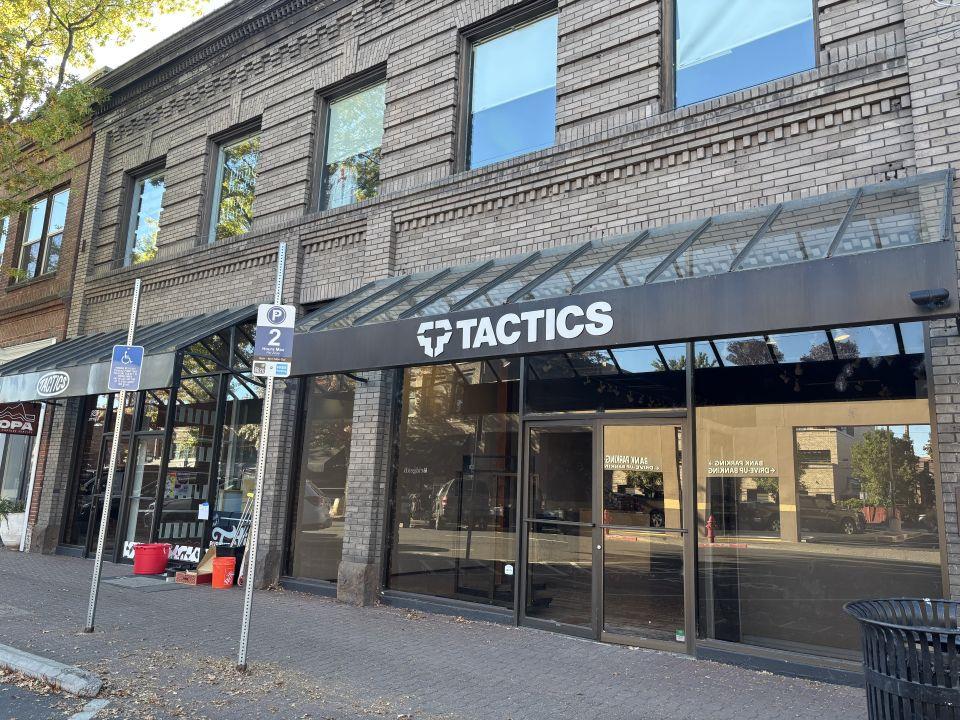
Roca is the same person who announced on LinkedIn, along with the birth of his daughter, that he had acquired Laka Limited Footwear in "a deal that would change the future of skateboarding forever."
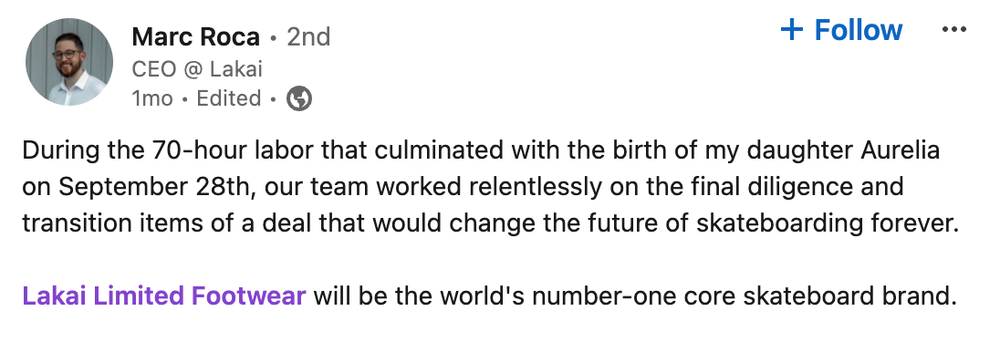
What, exactly, did he think he would be changing? Because if anything, the way Roca does business looks like more of the same.

Please, give me a spot
Rank: -2
Mood: 🤕
The universe is conspiring against me. Despite what that might sound like, this is not conspiratorial thinking. There is now what could be called a "pattern." It started in Portland this summer.
For months I've been searching for and dreaming of a bank-to-ledge that I can get a particular trick on for a video my friends and I are making. Vancouver suffers from a dearth of decent banks-to-ledges. Most are too rugged, or more wall than ledge, more flat than bank. Some are workable dimension-wise, but physically too close to a neighbouring building, eliminating entire classes of tricks.
A week before Adjacent, I remembered that there was a perfect-looking bank-to-ledge in Portland. I reached out to friends in the area to see if it was still a go. They said it had been skatestopped, but apparently freed, although they couldn't be sure without checking themselves. That was all I needed. I booked a flight.
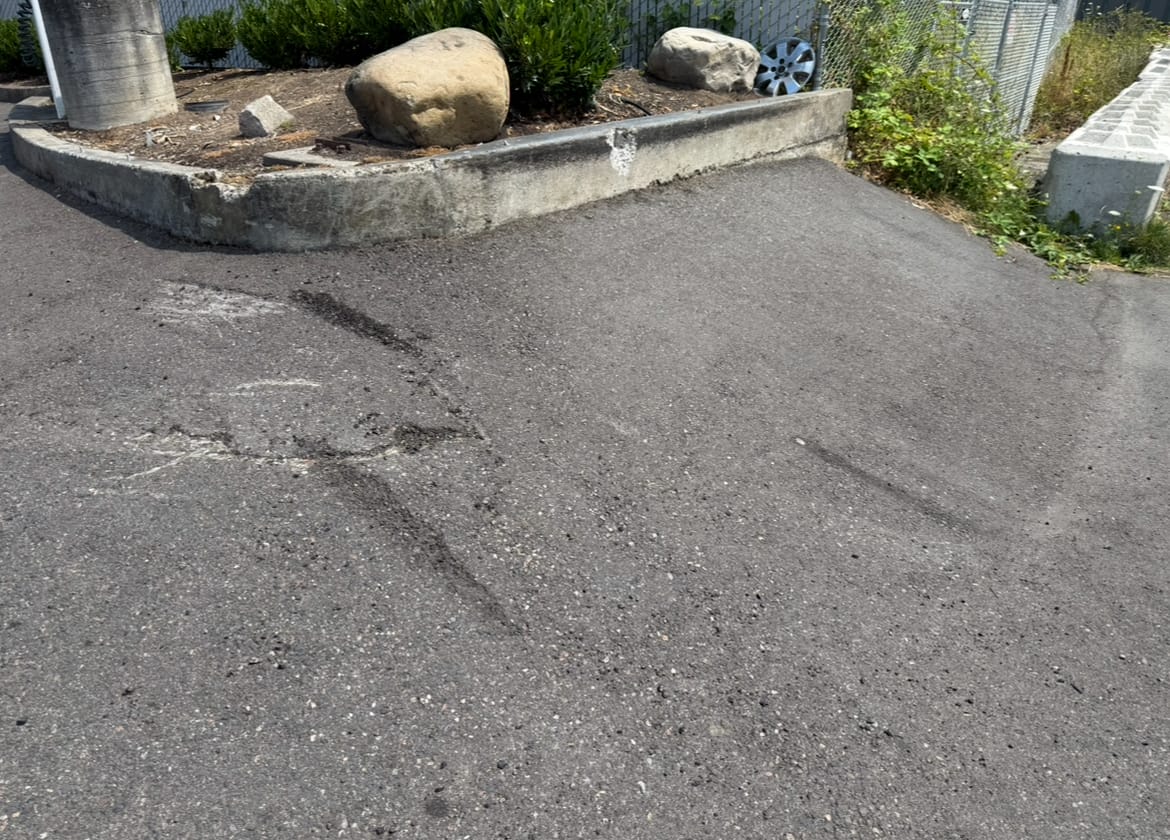
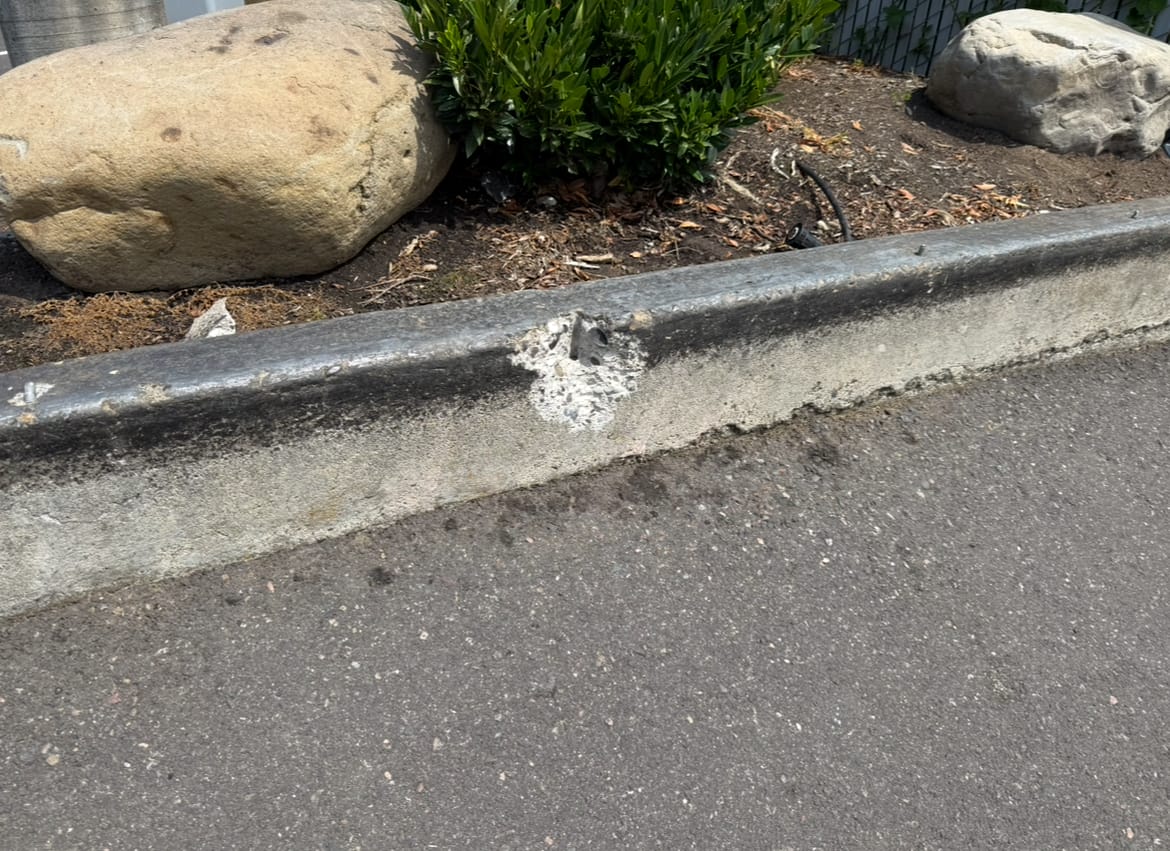
RIP | Photos: George Cutright
The day before I was to fly out, a friend texted a series of photos. Not only was the spot still stopped, but it looked like someone broke a chunk out of it while attempting to remove a stopper.
It was a heartbreaking development and only increased my desperation. Last weekend, my friends and I drove out to Surrey, British Columbia, to check out a bank-to-barrier that I thought would make sense for the trick. We knew it wasn't perfect and might need a bit of work, but the hope was still there — until we pulled into the parking lot.
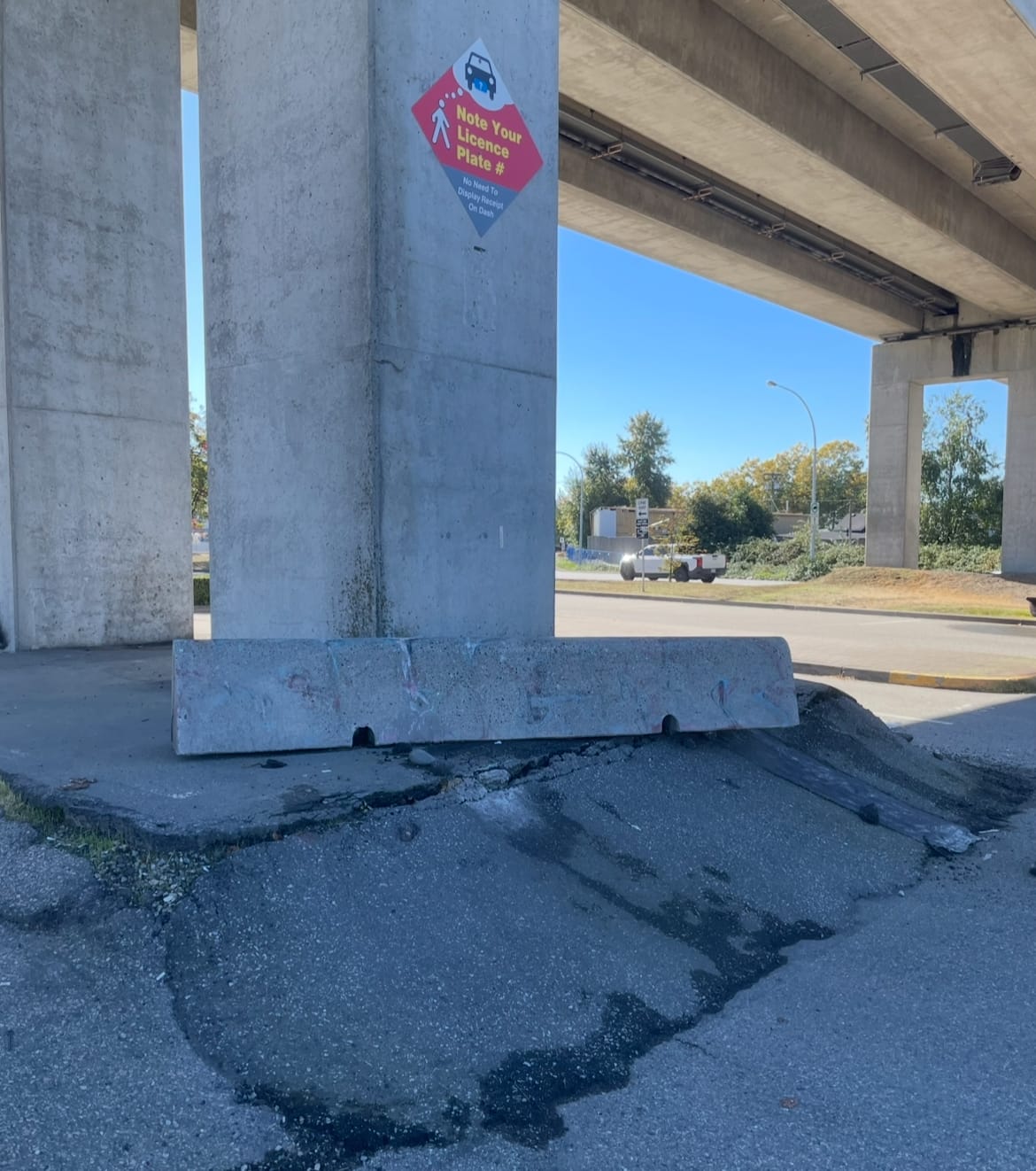
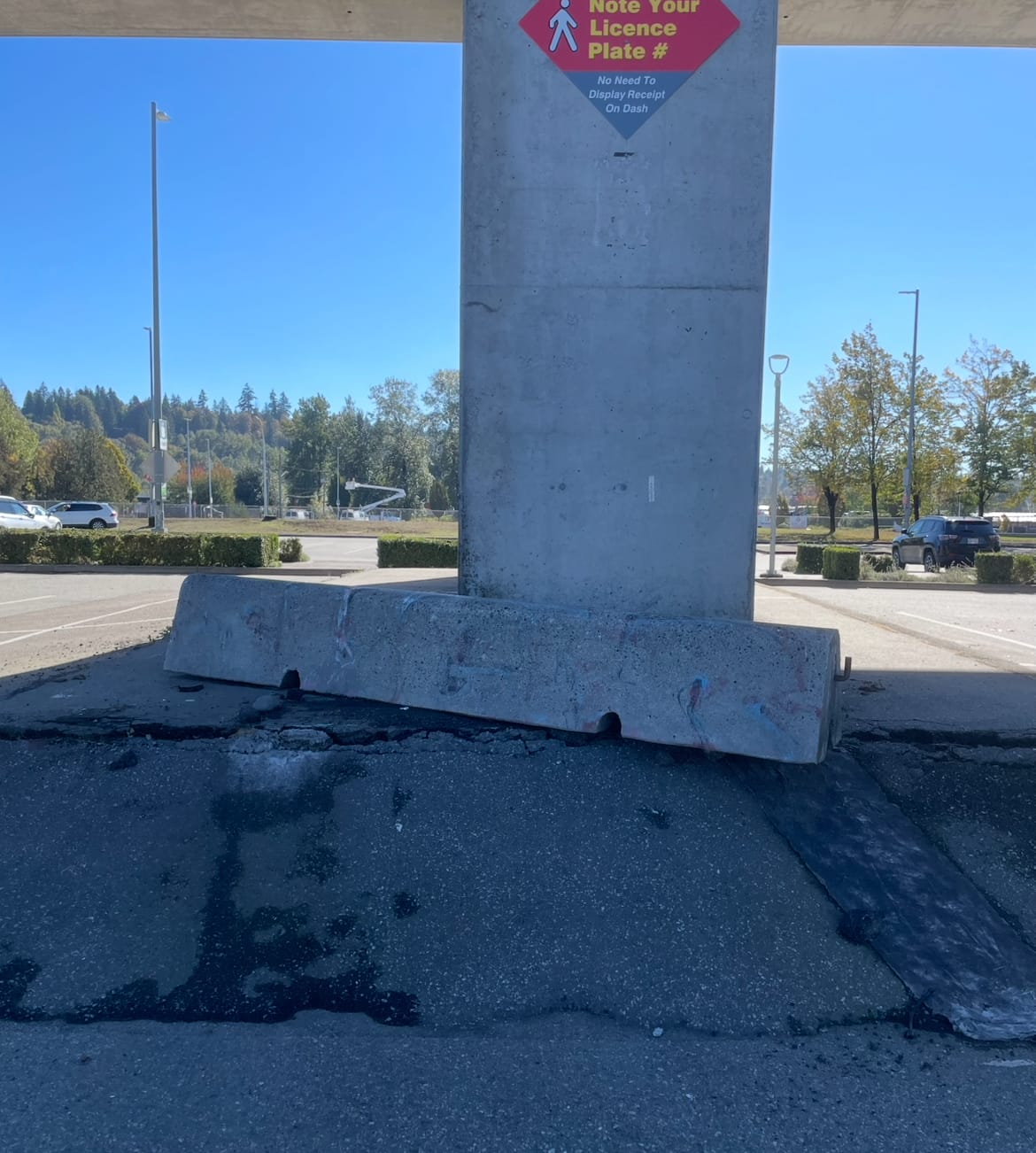
Bro...
What happened here to push the barrier out of alignment with the bank it sits on is unclear, but whatever it was, it had to be significant. If it were an inattentive driver, one assumes they suffered a medical episode and have tragically perished, which I forgive them for. The only other option is that some unearthly force is committed to preventing me from getting my ender. This demonic entity has now crossed international borders to put a stick in my spokes and I don't appreciate it.

Put your best foot forward; consider becoming a paid subscriber. Nothing on Simple Magic is behind a paywall, but your money will get you stickers and merch, go towards paying contributors for their great work, and put some dough in my pocket as I write these each week. You can also leave a one-time tip.
Something to consider: Listening to the wind.
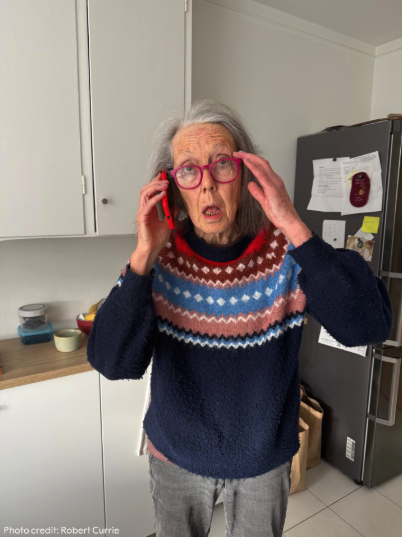
And reading some Anne Carson.


Good thing:
 Thom Callan-Riley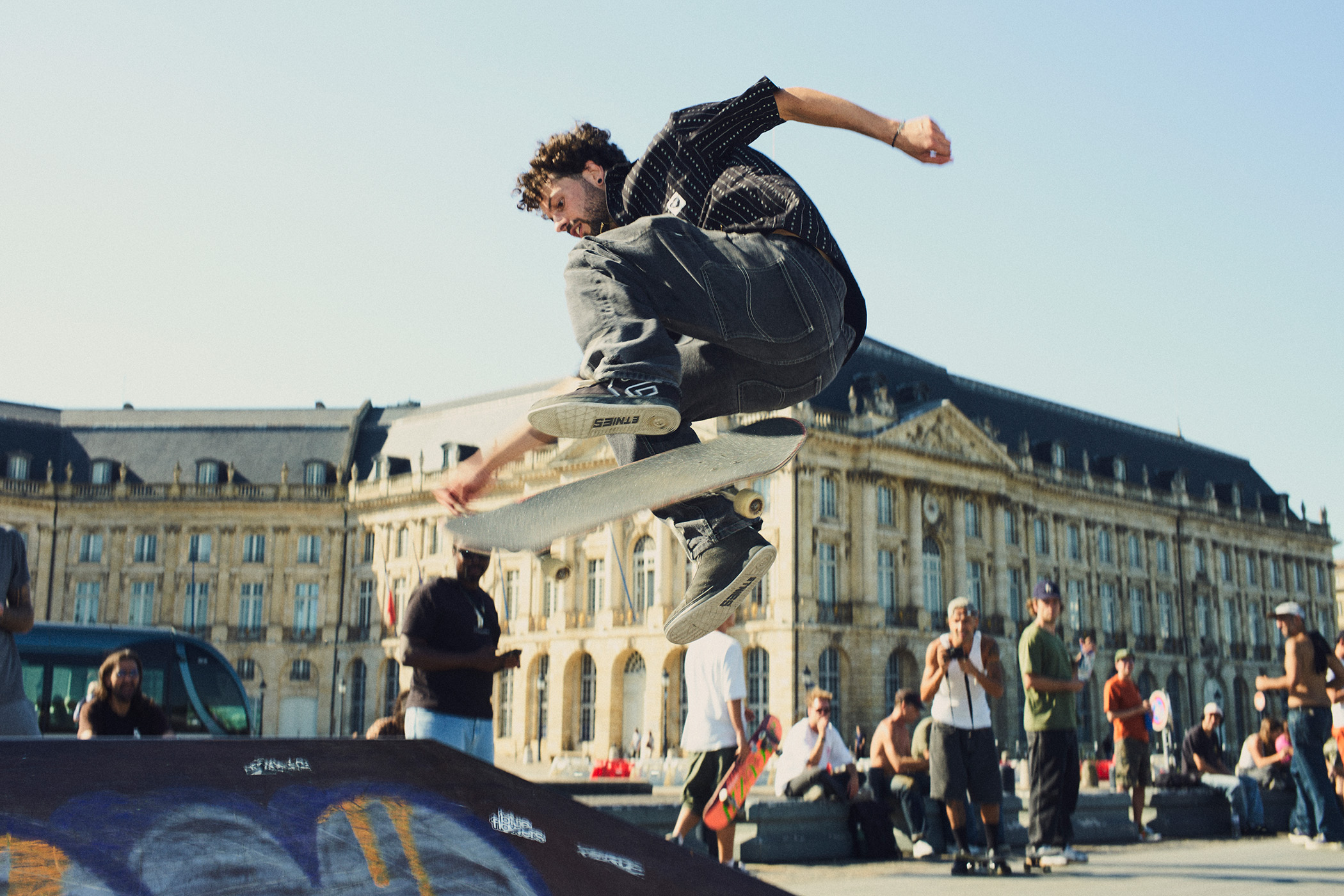
Another good thing:
 George Cutright
More good thing: "Queer Eye for the Skater Guy: From Core to Care," by Bethany Geckle, Indigo Willing, Lee Dubin, and Brian Glenney for Sociology of Sport Journal.
Good thing about good company:
Good, interesting chat:
 Ian Michna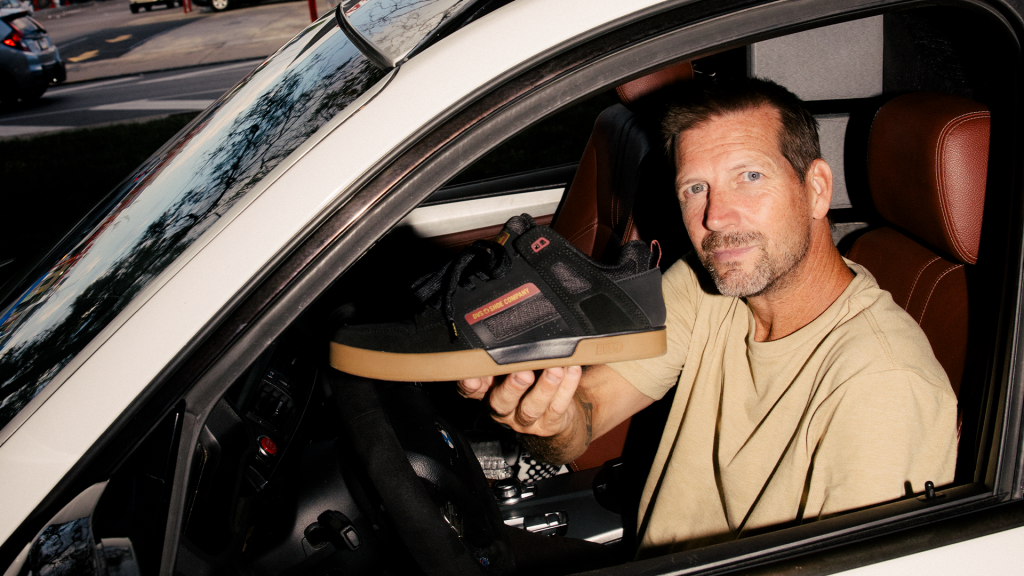
Good pod round-up:
 Posted by
Templeton
Posted by
Templeton
Good pod round-up, Nowhere Fast edition: Wesley O’Driscoll at Nowhere Fast has recently been chatting with a number of pals and faves of this very newsletter.
 Nowhere Fast
 Nowhere Fast
 Nowhere Fast
 Nowhere Fast
 Nowhere Fast
A thing from last week: This piece seemed to hit with a lot of folks. Its Audio Companion is live, too.
 Cole Nowicki
Good new Daniel Kolitz:
"Secret Billionaires, Mafia Brides, Alpha Kings: The Insane World of Microdramas," by Daniel Kolitz for The New York Times Magazine
Good thing about bad thing:
"How Everything Became Gambling," by Max Read for The New York Times Magazine
Related:
 Jake Pearson and Chris Alcantara
Rest in Peace, Andrea Warner: We lost one of this country's premier music writers and one of this planet's best people on September 27.
Until next week… if you've got a bank-to-ledge that's not physically destroyed, please let me know.


Laser Quit Smoking Massage
NEWEST PRESS
--------------------------------
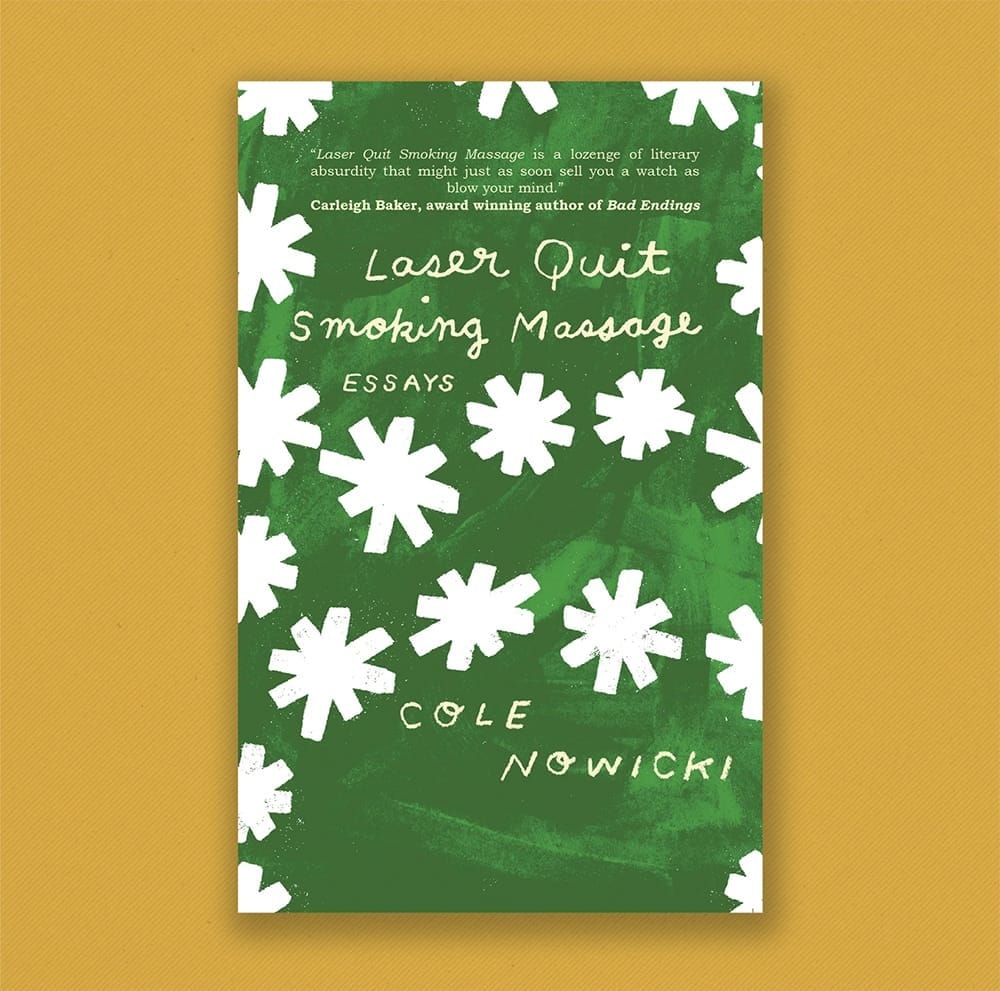
A collection of essays that I think you might like. The Edmonton Journal called it a "local book set to make a mark in 2024," The CBC said it's "quirky yet insightful" (lol), and it won Trade Non-Fiction Book of the Year at the 2025 Alberta Book Publishing Awards.
Book cover by Hiller Goodspeed.
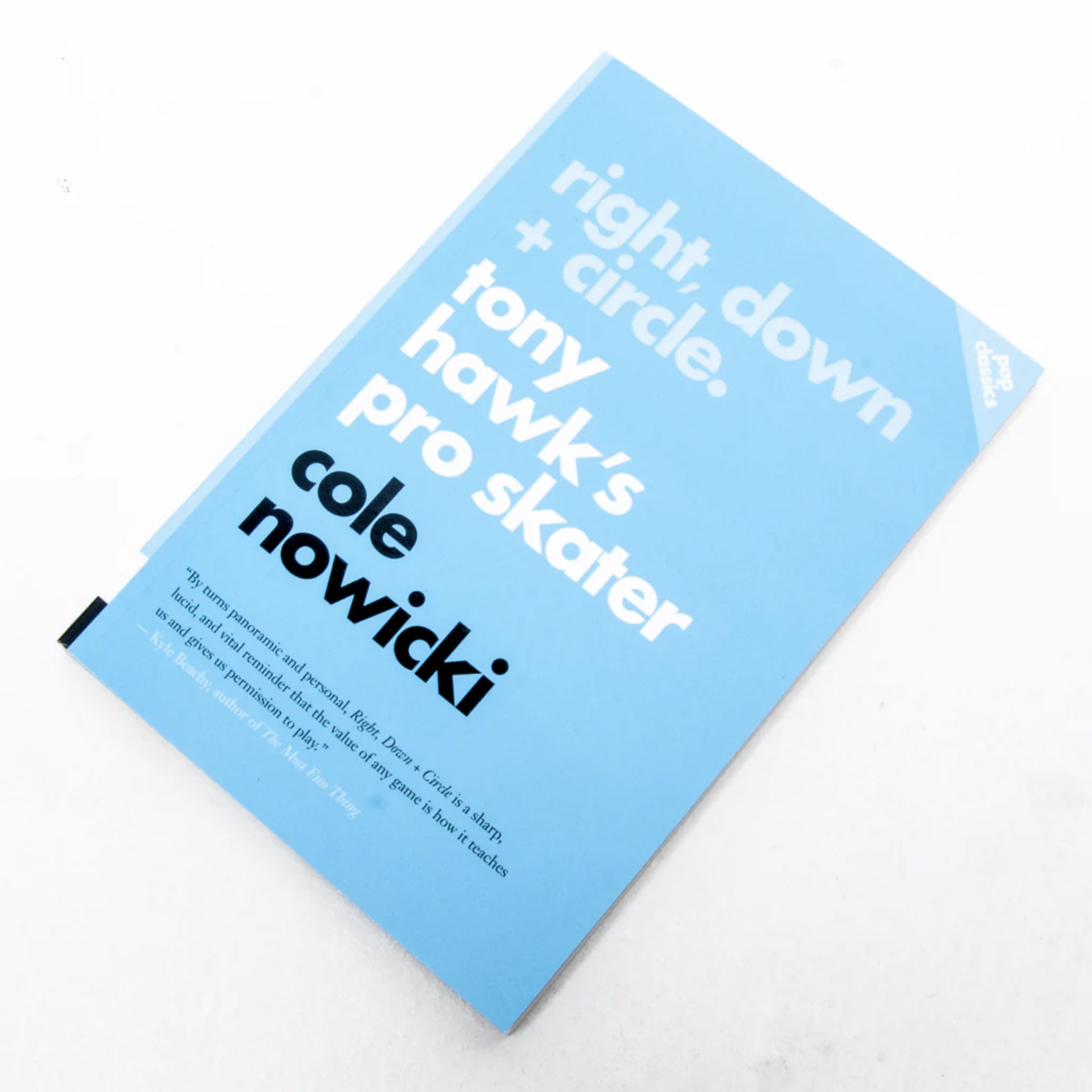
Right, Down + Circle
ECW PRESS
--------------------------------
I wrote a book about the history and cultural impact of Tony Hawk’s Pro Skater that you can find at your local bookshop or order online now. I think you might like this one, too.
Photo via The Palomino.