Soul leaves body
A trip to Adjacent, MoonPay X Games League concludes its Summer Season, MoonPay X Games League establishes its vision of the future of sports, and more.

The definitive weekly ranking and analysis of all the skateboarding and other things online that I cannot stop consuming and how it makes me feel, personally.

Medium-effort travel blog
Rank: 1
Mood: 🧳✈️
The fear is a part of it. As is the uncertainty. It’s stupid and cruel enough to work, because it’s hard to reason that a person should go to a country whose leaders use memes to threaten annexation of your own. A regime at war with the people who call their country home. One at war with the world. Determined to close itself off from the past and confine its future to a balled fist windmilling through the air, blaming anyone who gets close.
That said, if you really want to go to the United States of America in the year 2026, to see friends is as good a reason as any. This past weekend, for the first time since February 2025, and despite my own anxieties — which can admittedly feel silly at times when dwelled on as a straight, white tourist — I took a trip down from Canada to the U.S.A. All the joy and love and good times I’d had before were still there, this time in Portland, Oregon.
Adjacent, the now annual skateboarding event put on by Adjacency Bias, helmed by Alex Fazekas-Boone and his team, was full of coordinated skate jams, panel discussions, art shows, and self-guided street skating in one of my favourite pockets of the PNW. Having been to these types of gatherings in various corners of the world, you start to pick up on their rhythms. Event pacing is critical. Consideration of the cityscape, too. How long it takes to get from the talk to the skate spot, whether there's time to rest in between or if there are just too many things to do.
Adjacent was a tightly run affair. It didn't feel rushed and rarely was there a moment that felt wanting — a tough balance; kudos to the team. And despite one skater brutally snapping their arm at the new adidas skatepark on opening day, it was otherwise, to an attendee like myself, smooth sailing.
Photos: Simple Magic
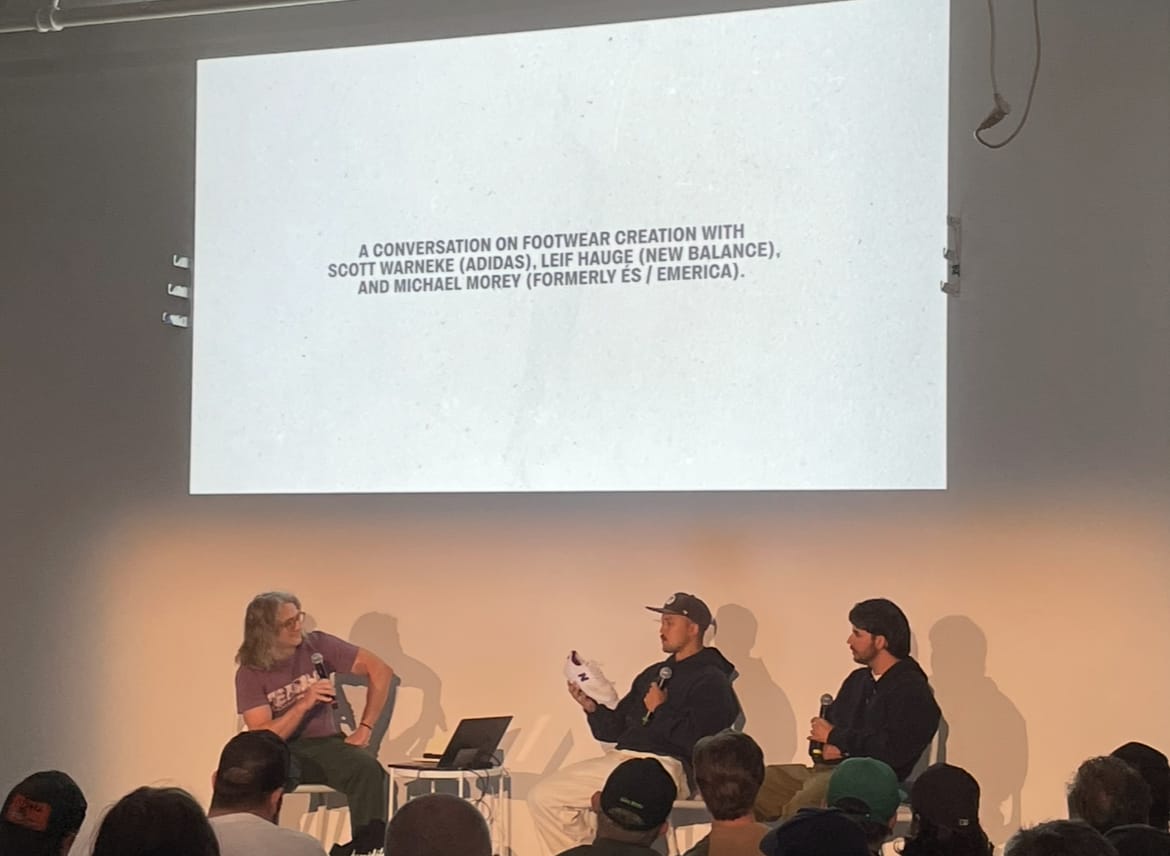
The "Closer Look at Skate Shoes" panel with Scott Warneke of adidas, Leif Hauge of New Balance, and Michael Morey, previously of éS and Emerica, was an interesting look into the processes behind skate shoe design and just how small those teams are, no matter the size of the company.
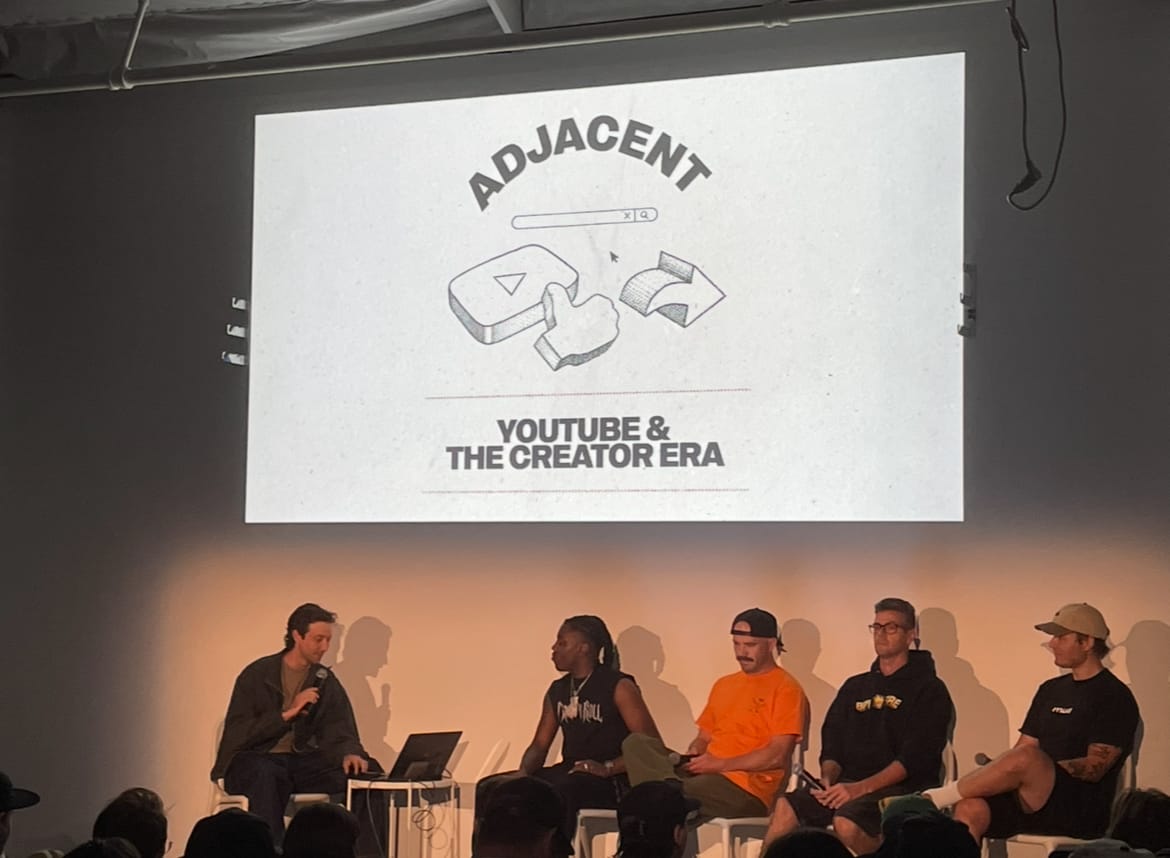
The "YouTube and The Creator Era" panel, hosted by iÓS vérité auteur Ryan Lay and featuring Ben De Gros, Sam McFarland of Rose Anvil, Cory Keen of Keen Ramps, and D'andre Smith, otherwise known as Xiii, was fascinating in its own right. Particularly the general admission from the panel that YouTubing risks draining the spirit without offering much in the way of a return, financial or otherwise, unless you already own a business that the 'Tubing supports as a promotional arm. "Creator burnout" has been a topic of discussion for years, but it's rarely touched on in skateboarding. De Gros, who exists in a semi-retired YouTuber purgatory, was most upfront about the challenges of putting so much of yourself into content creation. The wear of being at the algorithm's whim was something he appeared to struggle with greatly.
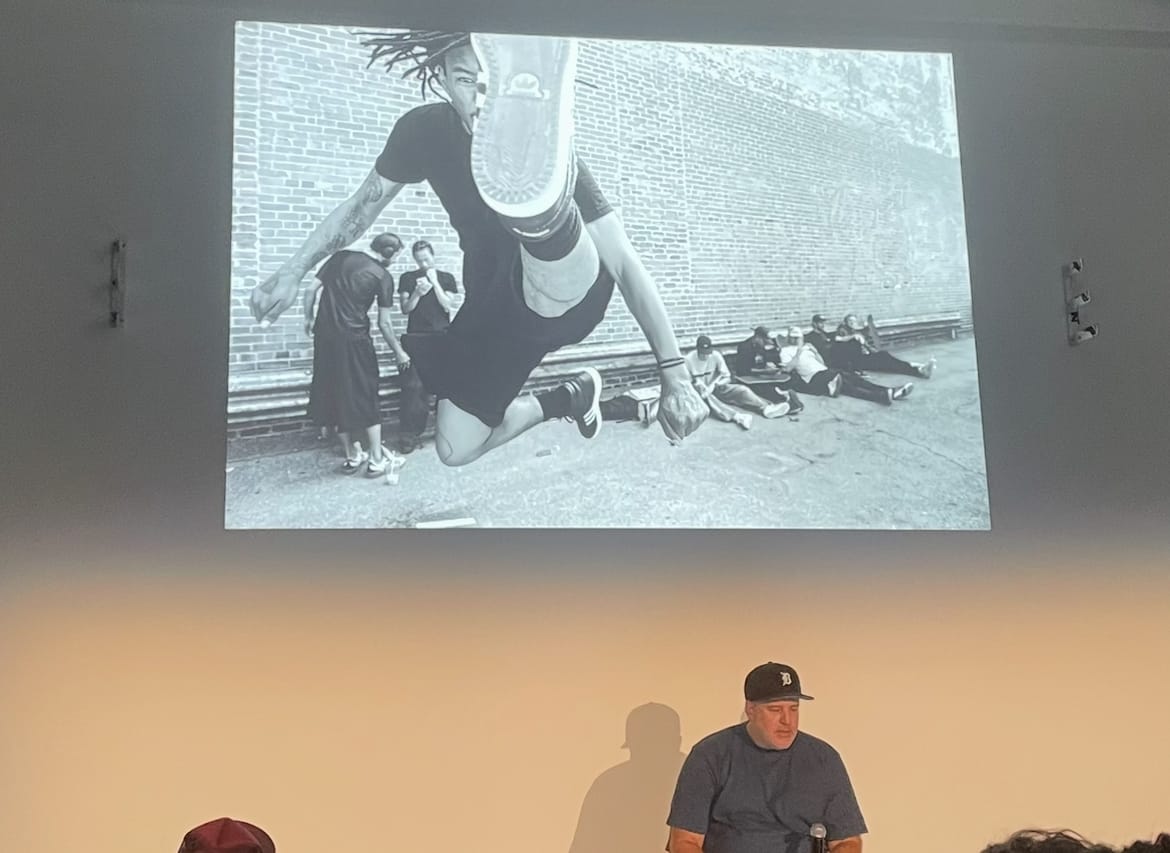
One of skateboarding's premier lensmen, Joe Brook, spent an hour and change telling stories loosely related to a career-spanning bank of images projected on the wall behind him. It was a surprisingly moving talk, as he was always quick to say how fortunate he's been to live the life he has with the friends he's made throughout that long career. He appeared to tear up at times, but maybe that was just me.
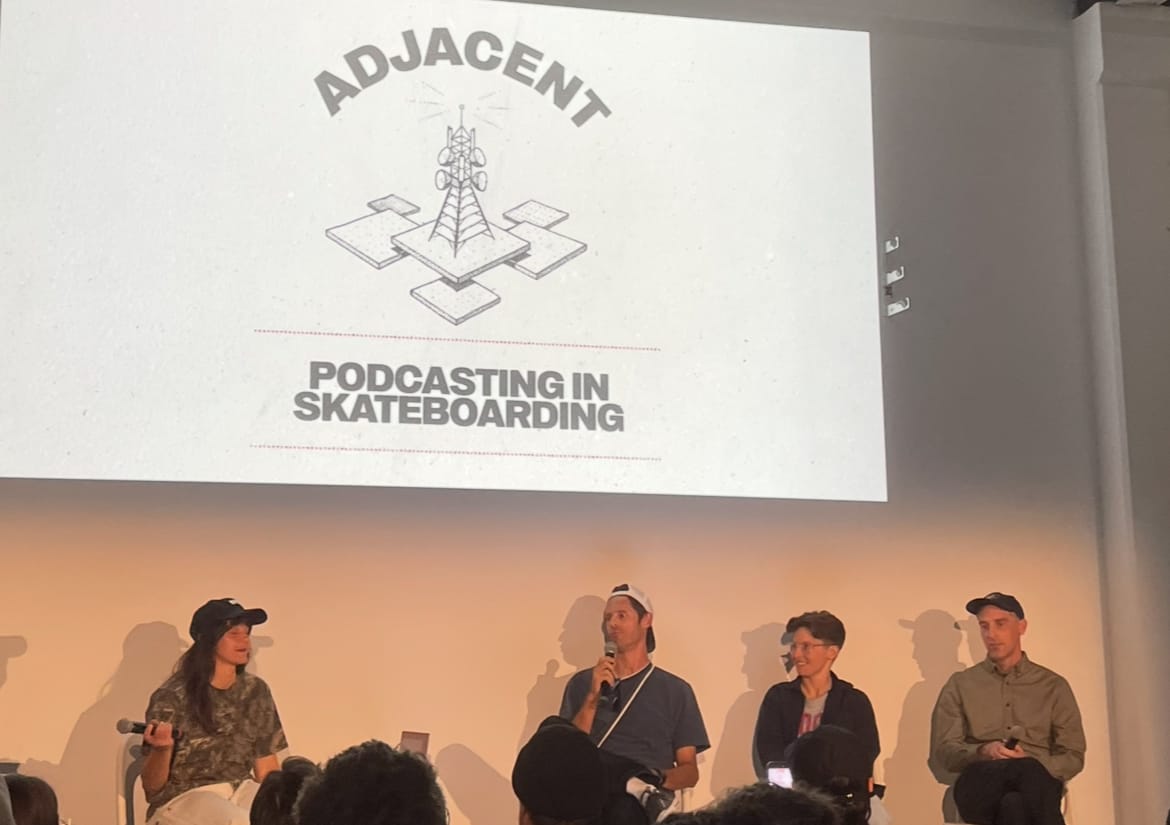
The last panel of the weekend, "Podcasting in Skateboarding," was hosted by Kristin Ebeling of Vent City, along with Chris Roberts of The Nine Club, Alex White of Good Luck With That, and Templeton Elliot of Mostly Skateboarding. As skateboarding culture runs on content, and most skateboarding podcasts are in reaction to said content, it was instructive to get a deeper look into each person's approach to existing in that cycle. And to Chris Roberts' credit, I'm not sure that this was his audience per se, but he handled himself well, even if he dodged some of the tougher questions. There's also something oddly brave about admitting to a room full of people how big a fan of Theo Von you are, as Roberts did without shame.
Photos: Simple Magic
While seeing friends and attending Adjacent was a primary driver for going to Portland, it would be dishonest if I didn't admit to the other: I really wanted to get a clip. For months I've been searching for and dreaming of a bank-to-ledge that I can get a particular trick on for a video my friends and I are making. Vancouver suffers from a dearth of decent banks-to-ledges. Most are too rugged, or more wall than ledge, more flat than bank. Some are workable dimension-wise, but physically too close to a neighbouring building, eliminating entire classes of tricks.
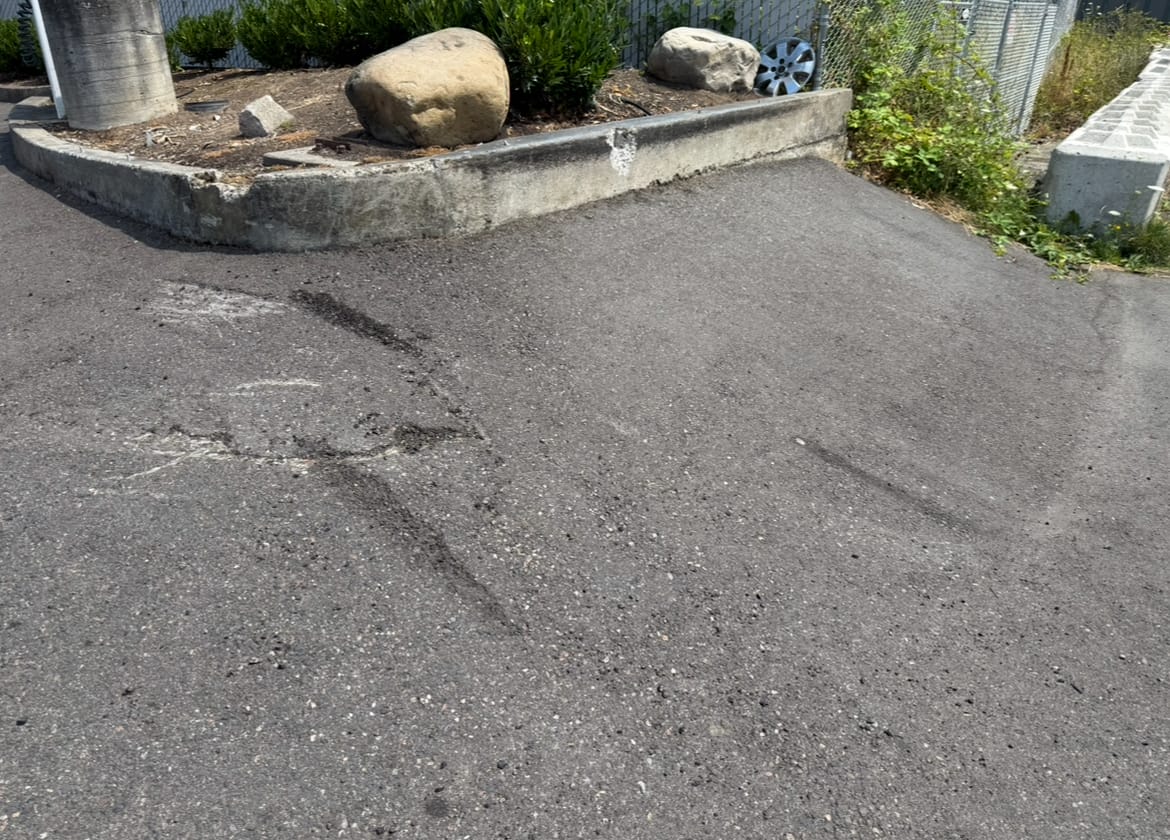
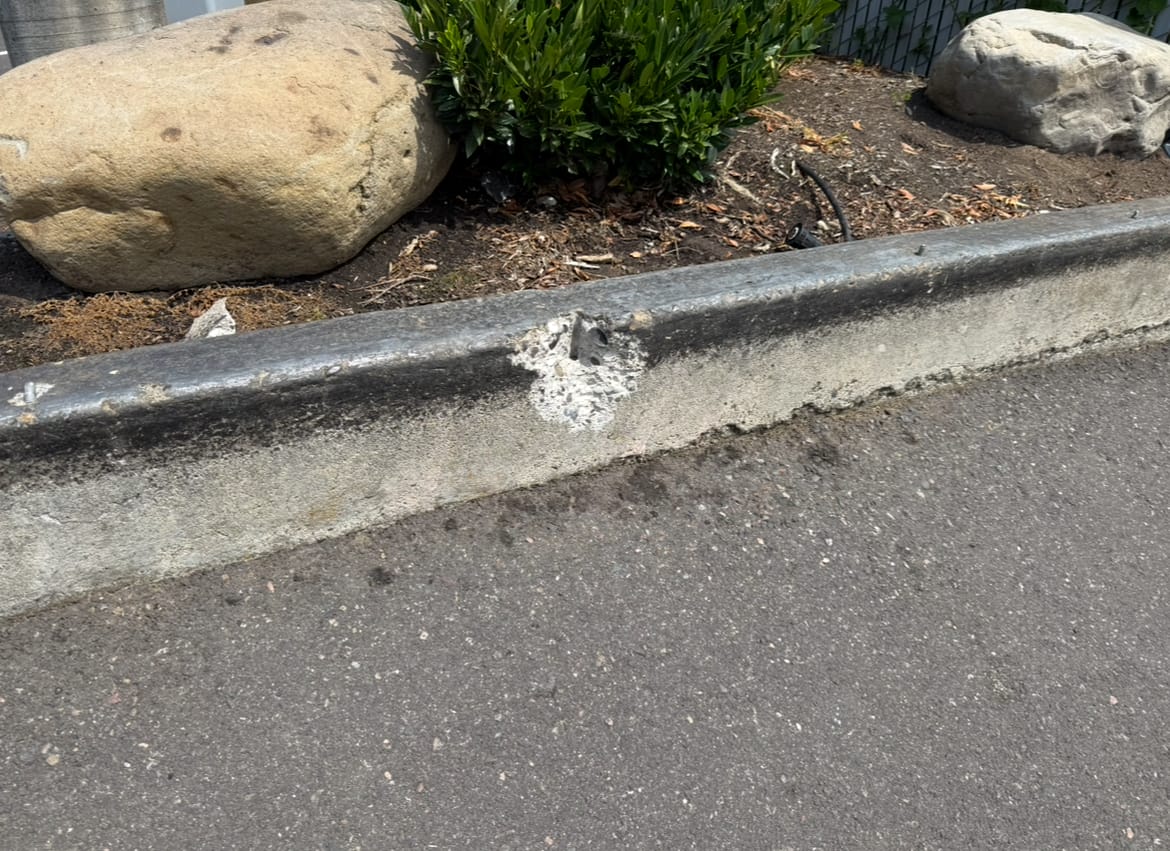
A week before Adjacent, I remembered that there was a perfect-looking bank-to-ledge in Portland. I reached out to friends in the area to see if it was still a go. They said it had been skatestopped, but apparently freed, although they couldn't be sure without checking themselves. That was all I needed. I booked a flight.
RIP | Photos: George Cutright
The day before I was to fly out, a friend texted a series of photos. Not only was the spot still stopped, but it looked like someone broke a chunk out of it while attempting to remove a stopper. Sensing my heartbreak, he sent photos of other banks-to-ledges in town, a glut I am envious of. I'd end up checking one out with a large crew of friends, new and old. It wouldn't work for the trick I wanted, but we had a great time. Hell, Daniel Shimizu was there; that's as good a consolation as any.
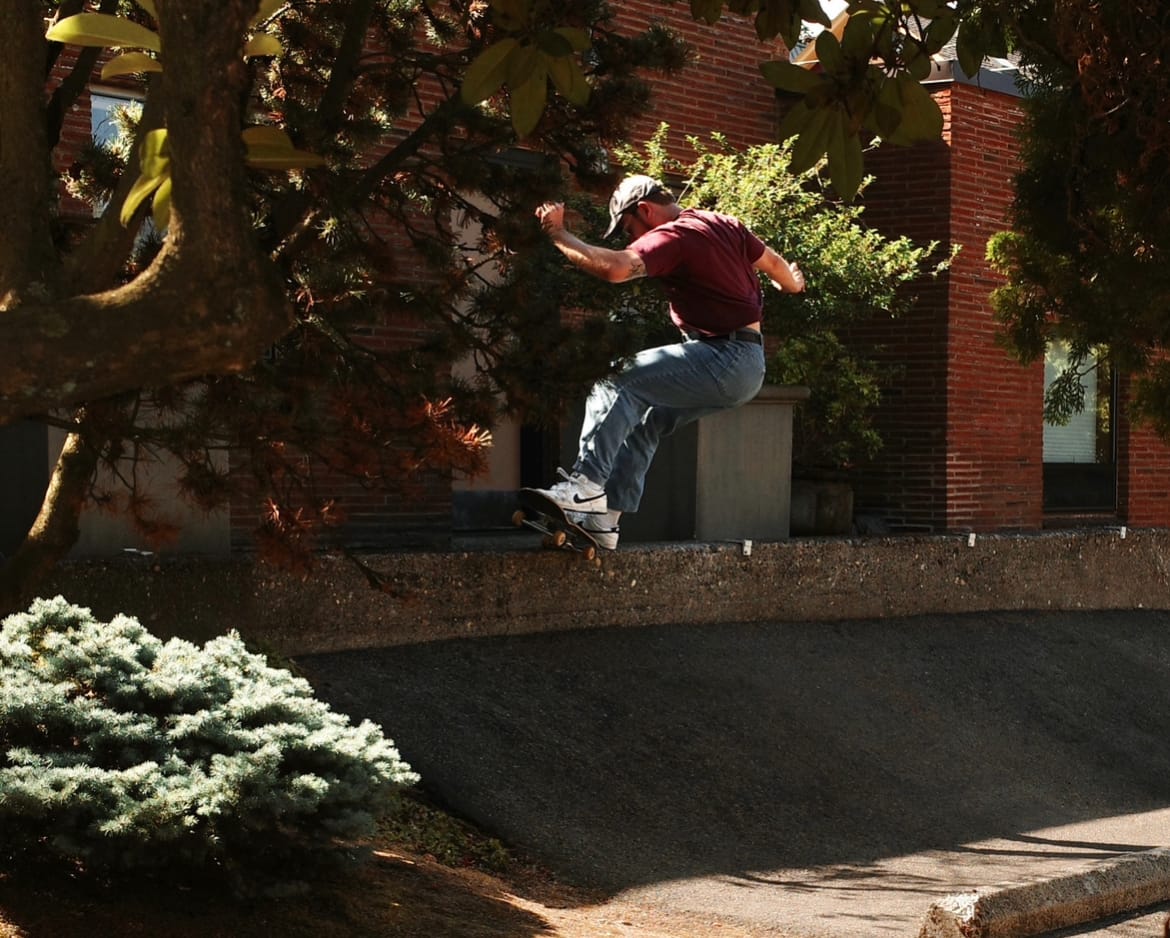
Those friends, those good times are what sit on the other side of that fear and uncertainty. It's a privilege to be able to push through them. Not everybody can.
The day after I flew home, The New York Times reported that "ICE Arrests Surge at Airports..." and a U.S. citizen and Copy City activist faces jail time after wiping his phone before customs agents could search it. That fist keeps swinging, waiting to connect.

The MoonPay X Games League Summer Season is complete
Rank: 3
Mood: 👻
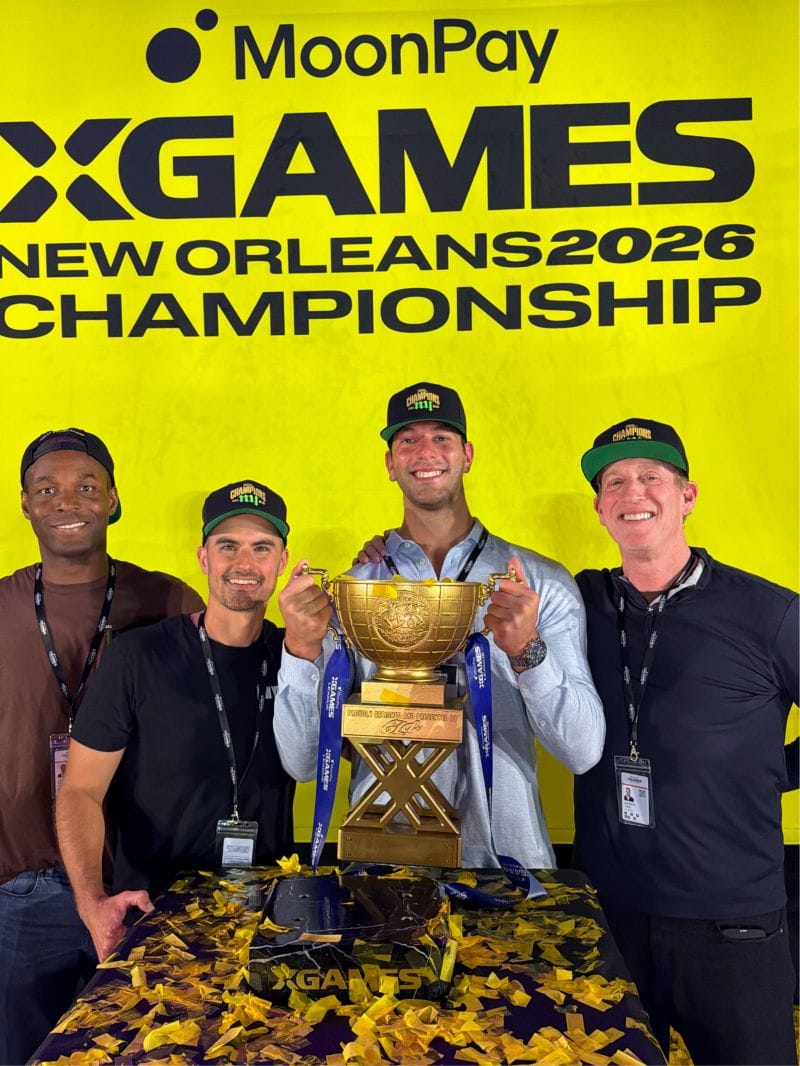
The MoonPay X Games League capped off its month-long, three-event debut "summer season" over the weekend. Previous stops in Sacramento, California, and Chiba, Japan, delivered great action on the course, as did the finale in New Orleans, Louisiana.
Ginwoo Onodera swept the Men's Skateboard Street event for the season with a more refined trick selection, deciding to do away with the excess of double-flips that marked previous years and events in exchange for bigger, faster, and more concise skating overall. Chloe Covell won two of three Women's Skateboard Street events, taking silver in Sacramento. Her win last weekend gave her a total of seven X Games gold medals in that event, breaking the record previously held by Leticia Bufoni. Covell and Onodera were key contributors to Team New York's first championship victory.
Fifteen-year-old Mizuho Masegawa earned the season's MVP award by scooping up 680 of Team Tokyo's 2630 total points. Tom Schaar also cleaned up, earning 620 points and seven medals across two disciplines and three events (Men's Skateboard Park, Men's Skateboard Vert, Men's Skateboard Vert Best Trick).
BMX stuff also happened.
Now, an attempt to take stock and make sense of the MoonPay League X Games League experiment in the aftermath of its first season: As far as the league format goes, it was often confused in practice. Since teams are comprised of five men and five women across all disciplines, many of the athletes in the individual events were "undrafted," meaning they didn't belong to any of the four teams or "clubs" and were earning points for no one, like Juni Kang, who medalled in every event he entered, taking gold in all three Men's Skateboard Street Best Trick events and earning two bronze and a silver in Men's Skateboard Street. He ended the season with 500 points.
The distribution of events is also uneven for athletes. Transition skaters like Masegawa and Schaar can compete for three different medals per stop (Skateboard Park, Skateboard Vert, Skateboard Vert Best Trick). Street skaters can only vie for two (Skateboard Street, Skateboard Street Best Trick). That means more money is (presumably) on the table for those skaters and not the others (unless you're a rare case like Jagger Eaton and are also competitive in Skateboard Park).
And while there did seem to be genuine camaraderie among teammates, as a viewer, the events themselves remain indistinguishable from standard X Games fare — the courses are similar, the competitive formats are the same. The league aspect and its point structure feel slapped on, a promotional gimmick and financialized hook. That was clear with the draft and the commentary team's strained attempts to sell the league as a concept. Brandon Graham, who I generally think does a great job, called Kang "the most valuable undrafted free agent perhaps in the history of all sports." C'mon, man.
There are some clear wins that the MoonPay X Games League can point to, like their initial viewership numbers in Sacramento ("...more than 12 million U.S. linear viewers across ESPN and ABC — up by 21% compared with recent Summer X Games broadcasts. Digital engagement also surged, with X Games YouTube views up 88% year-over-year," reports Deadline) or that, according to X Games CEO Jeremy Bloom, all six clubs have sold in "eight-figure" deals whose details remain murky.
There is also reason to remain skeptical, much of which I've written about before, but to sum it up, the obnoxious corporate sheen on the MoonPay X Games League is blinding to the point of nausea. Something that Bloom either can't see or ignored as he celebrated on LinkedIn.
What a season.
Nine months ago, this was just an idea.
This weekend, in front of a packed Caesars Superdome, the inaugural MoonPay X Games League Championship came down to the final event. You couldn’t script it any better.
From Sacramento to Chiba to New Orleans…
From our first-ever team draft to the first-ever league champion…
From selling clubs around the world to watching athletes battle for their teammates instead of just themselves…
We proved that action sports can evolve without losing its soul.

Soul leaves body
Rank: 0
Mood: 👻
Part of what feels so unseemly about the MoonPay X Games League — and to be clear, it isn't the athletes or the action, which have been incredible — is the blunt financialization of the operation as a whole. Yes, X Games needs to make money to survive, and sponsorship, ad revenue, and now investors are the primary means of doing so, but it's the execution of that mandate without shame.
To watch the MoonPay X Games League is to see literal children wearing the logos of crypto companies in competition. A person close to a MoonPay X Games League athlete told me that said athlete was allegedly paid in crypto — a move that has precedent. The MoonPay X Games League itself promoted the fact that athlete signing bonuses were "$2,500 in XO Cash ($XO) instantly deposited into their Exodus Wallets, in one of the earliest instances of professional athletes being awarded signing bonuses in stablecoins."
It's unclear whether athletes' full salaries (reported as $30,000 per season, though I can't find the source of that figure) and additional prize purses are paid in crypto. While that might seem like a betrayal to anyone who remembers the MoonPay X Games League promising athletes big salaries on top of prize purses, those crypto companies clearly don't feel the same, according to that MoonPay X Games League press release.
“We’re giving athletes greater flexibility in how they receive and manage their money,” said JP Richardson, CEO and Co-Founder of Exodus. “Athletes have global careers and they need payments that work across borders just like they do. By awarding signing bonuses in a form athletes can receive instantly and hold in their own wallets, we’re creating a modern approach to compensation built for speed and ownership from day one.”
“We partnered with the X Games because they’re doing to sports what crypto is doing to finance: challenging legacy systems and building something entirely new,” said Ivan Soto-Wright, CEO and Founder of MoonPay. “The future of money is crypto. It’s only natural that one of the most forward-thinking leagues in the world is embracing digital assets as part of how athletes are rewarded.”
It is an impressive feat of delusion to claim there's more flexibility in paying someone in crypto than actual money. XO Cash is a stablecoin launched by Exodus and developed in partnership with MoonPay, which means the MoonPay X Games League Exodus Wallets full of XO Cash are essentially just gift cards for the athletes from the league's presenting sponsors.


lol
Stake, the sketchy online crypto casino and sportsbook, is another one of those presenting sponsors with naming rights for the MoonPay X Games League Stake BMX Park event. Kick, the Stake-owned streaming service best known for hosting some of the most vile opportunists on the internet, is another headline sponsor whose logo rings the course.
To let those companies not just sponsor your event but have naming rights speaks to the vision of the enterprise and the people leading it. Bloom, a legitimate athlete in his day, competing as an Olympic Skier and bench player for a pair of NFL teams, followed that up with a career as a serial entrepreneur, building and selling various tech companies. His AI sports judging outfit, OWL AI, signed a deal with X Games shortly after he was named the company's CEO.
Business is — and as far as his role is concerned, rightfully — front of mind for Bloom. But it's also something of a performance. He was once starred in a reality show called Adventure Capitalists. Before that, he was a contestant on dating show The Choice, alongside Pauly D and Dean Cain.
Now he's travelling to the World Economic Forum for photo ops as one of the "leaders from across the global sports industry [who] came together to launch a new initiative focused on the future of sport," according to a LinkedIn post.
Is a crypto-pilled NFL also-ran reality show star-cum-entreprenuer the best person to lead the "future of [action] sport"? One who proudly takes money from predatory grifters and promotes their products? Whose solution for an ailing industry is investment from private equity concerns, the exact thing that's hollowing it out? Depends on the future you want.
Because Bloom's future looks like Ted Andrews, Vice President at UNA Sports Group, owner of X Games Club New York, who posted this on LinkedIn.
It started a few months ago when we heard about the opportunity. X Games was moving to a Formula 1–style league format, and teams were up for sale.
We knew X Games was the name synonymous with action sports — but we wanted to make sure we weren't just trusting our own bias. So we ran the research, did the diligence, and built conviction from there.
Fast forward, and we've taken that thesis from investment to an inaugural season championship. Roster formation. Proprietary LLMs built to draft the most performance-oriented team on the board. Supercharging an already powerful New York brand.
And this is only the beginning.
Cool.
Bloom is clearly invested in the MoonPay X Games League. He's at the events, he's doing promotion, he's working hard. I don't doubt that he believes in his mission. And if that provides additional support and opportunities for the athletes, that's great. In the end, that's what matters. Just drop the performance. As Bloom has stated plainly, this is an investment opportunity, not a sporting one. Bloom is quite literally the last person who can claim that MoonPay X Games League "proved that action sports can evolve without losing its soul." He's the one vacuuming it out and selling it piecemeal.

Ready to feel like a champion for doing nothing but handing over your money? Consider becoming a paid subscriber. Nothing on Simple Magic is behind a paywall, but your investment will get you stickers and swag, go toward paying contributors for their great work, and put some dough in my pocket as I write these each week. You can also leave a one-time tip.
Something to consider:
 Diana Moskovitz
Good thing:
 Walker Ryan
Another good thing: George with some lovely photos from Adjacent.
 George Cutright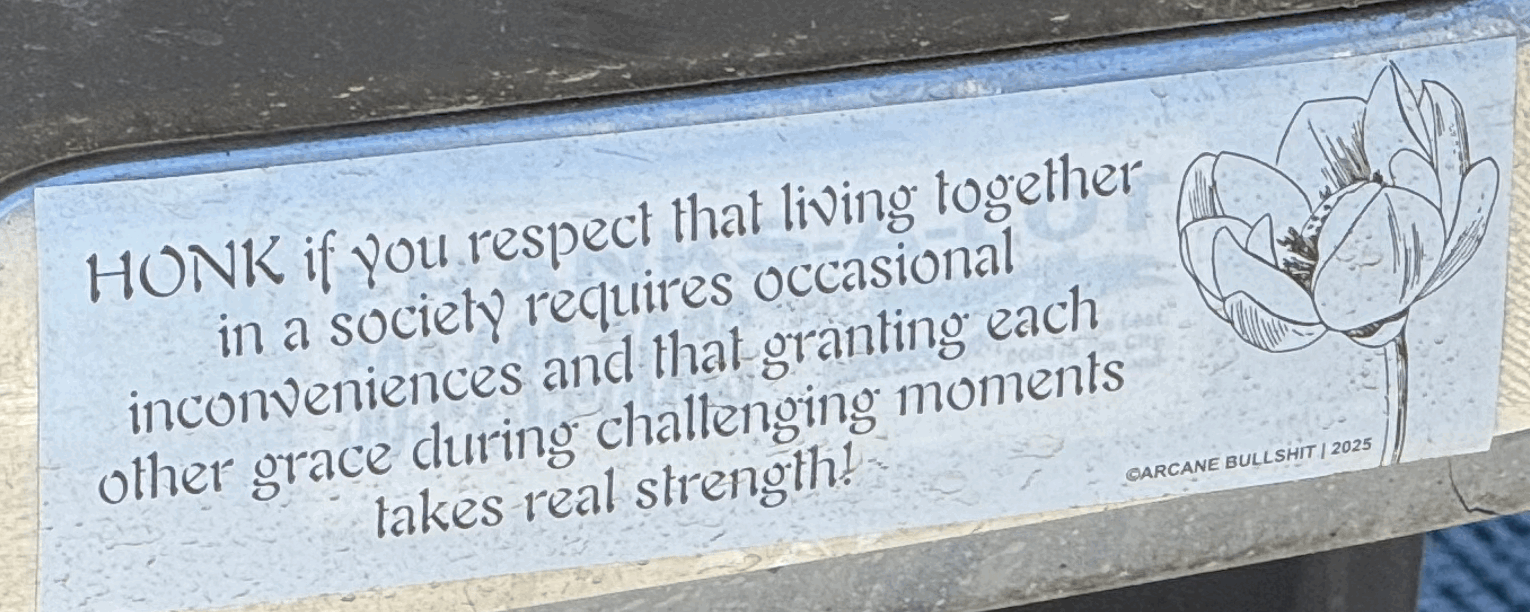
A good thing on the horizon: 'sletter friend Lee Dubin is making a short film, which you can help fund here.
A good coupla guys talking about stuff thing:
 Anthony Pappalardo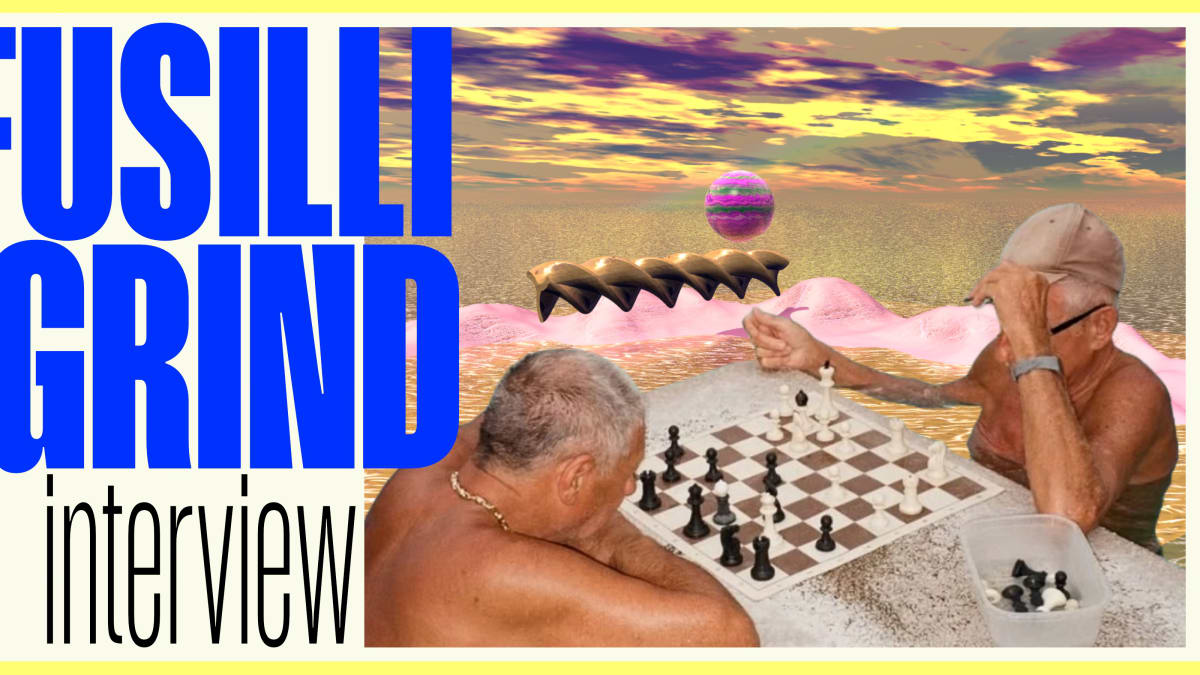
Amazing that this episode dropped the same day the Raptors vs. Clippers in Vancouver pre-season game was announced:
More basketball in skateboarding newsletter:
 Katie Heindl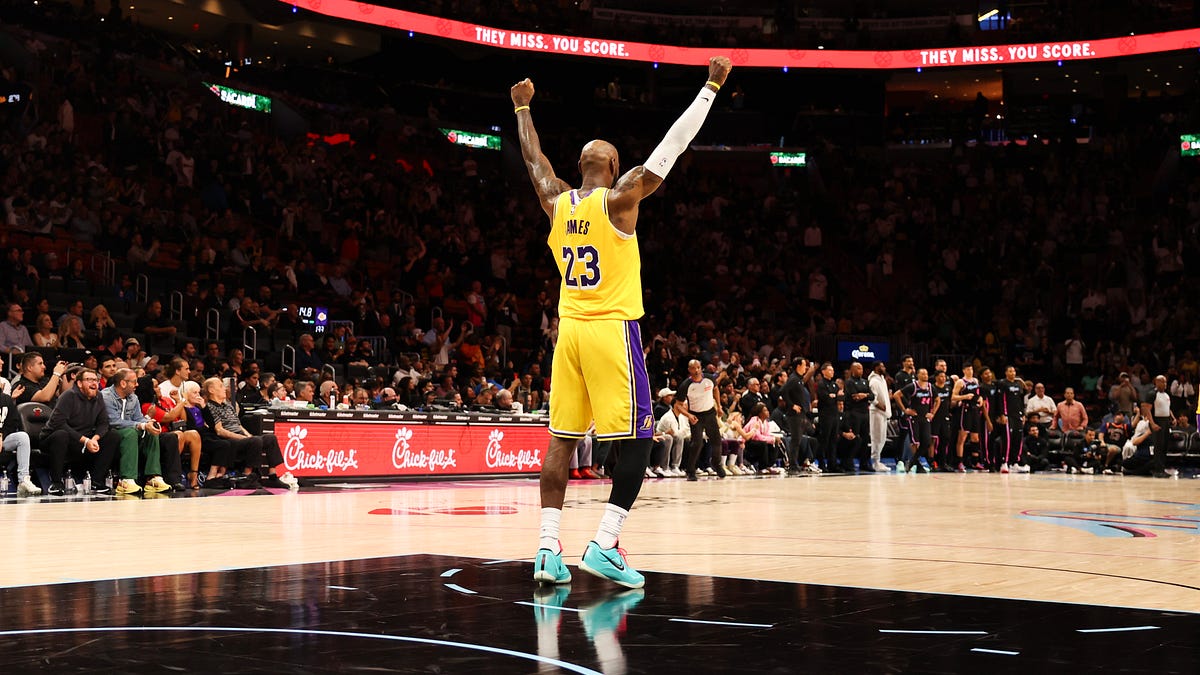
Until next week… when's the last time you walked across a fallen tree or a log stretched over a creek?


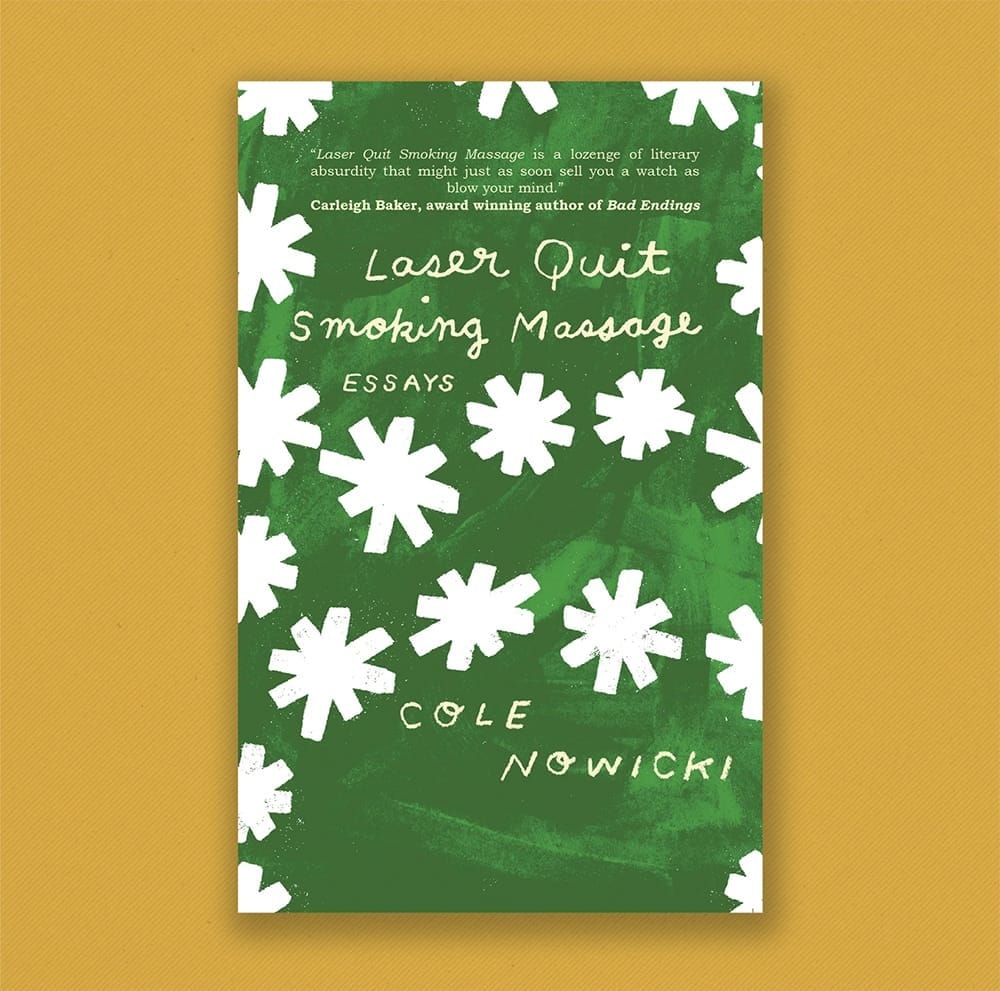
Laser Quit Smoking Massage
NEWEST PRESS
--------------------------------
A collection of essays that I think you might like. The Edmonton Journal called it a "local book set to make a mark in 2024," The CBC said it's "quirky yet insightful" (lol), and it won Trade Non-Fiction Book of the Year at the 2025 Alberta Book Publishing Awards.
Book cover by Hiller Goodspeed.
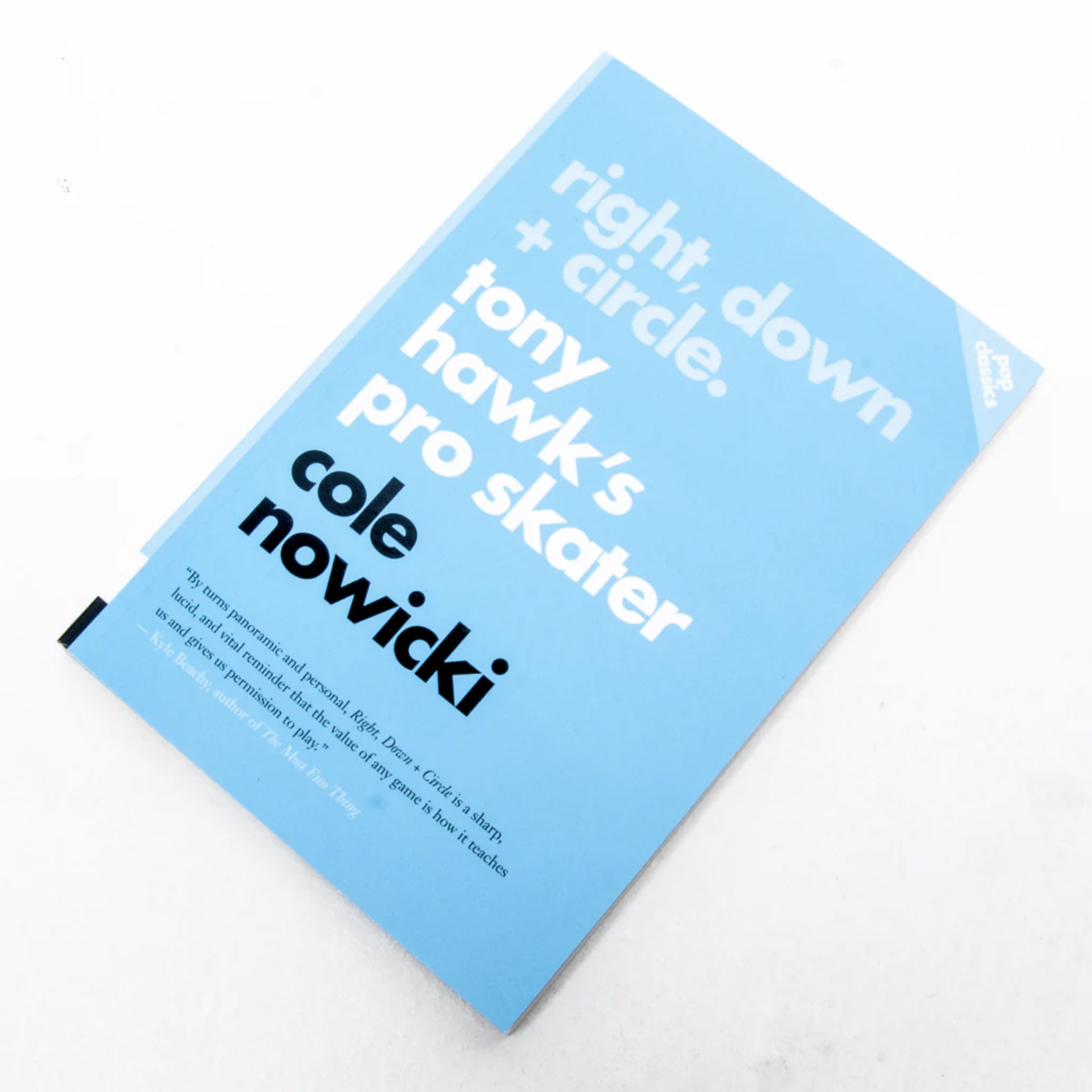
Right, Down + Circle
ECW PRESS
--------------------------------
I wrote a book about the history and cultural impact of Tony Hawk’s Pro Skater that you can find at your local bookshop or order online now. I think you might like this one, too.
Photo via The Palomino.