The cozy, slow-living middle
From Alberta's icy industrial parks to Arizona's sun-baked parking lots, skateboarders Oria and Ryan Lay have found shared ground and a new audience thanks to a leisurely, contemplative cinematic style.

It’s called freezing-point depression. That’s what salt does to ice. Its little sodium and chloride ions mess with water molecules’ ability to bond together, lowering the temperature at which water can freeze. That’s why it’s poured all over the road each winter, the salt.
According to the Government of Canada, the country uses approximately 4.75 million tonnes of NaCl road salt per year. A 2018 report from Columbia Climate School estimates an annual salt dump of 20 million tonnes on U.S. roads. Or, as the report puts it, “about 123 pounds for every American.”
If you live in a place where the winter hangs around heavy and long, with snow like a weighted blanket draped over everything for six or seven months, salt is why the roads and sidewalks (not to mention adjacent greenery and waterways) are like that once spring lifts it.
Salt corrodes. The snowplow’s blade scrapes and pulls and carves. A parking lot freshly paved during an Alberta August will age in the extreme winter by winter.
If you ride a skateboard across the pebbled and pocked asphalt expanse of one of the province’s countless strip malls or industrial parks, you can experience these deprecations in real time. They vibrate up through your skateboard, to your feet, and may even rattle a filling if you go fast enough. Living in a place with a climate like that, when the sun is out and the snow is gone, you're grateful for whatever space you have.
To skateboard outside during the winter in Alberta’s provincial capital is a far less enviable endeavour. However, if you’ve ever wanted to roll around bad enough, weather be damned, it feels remarkable to find something, anything to skate.
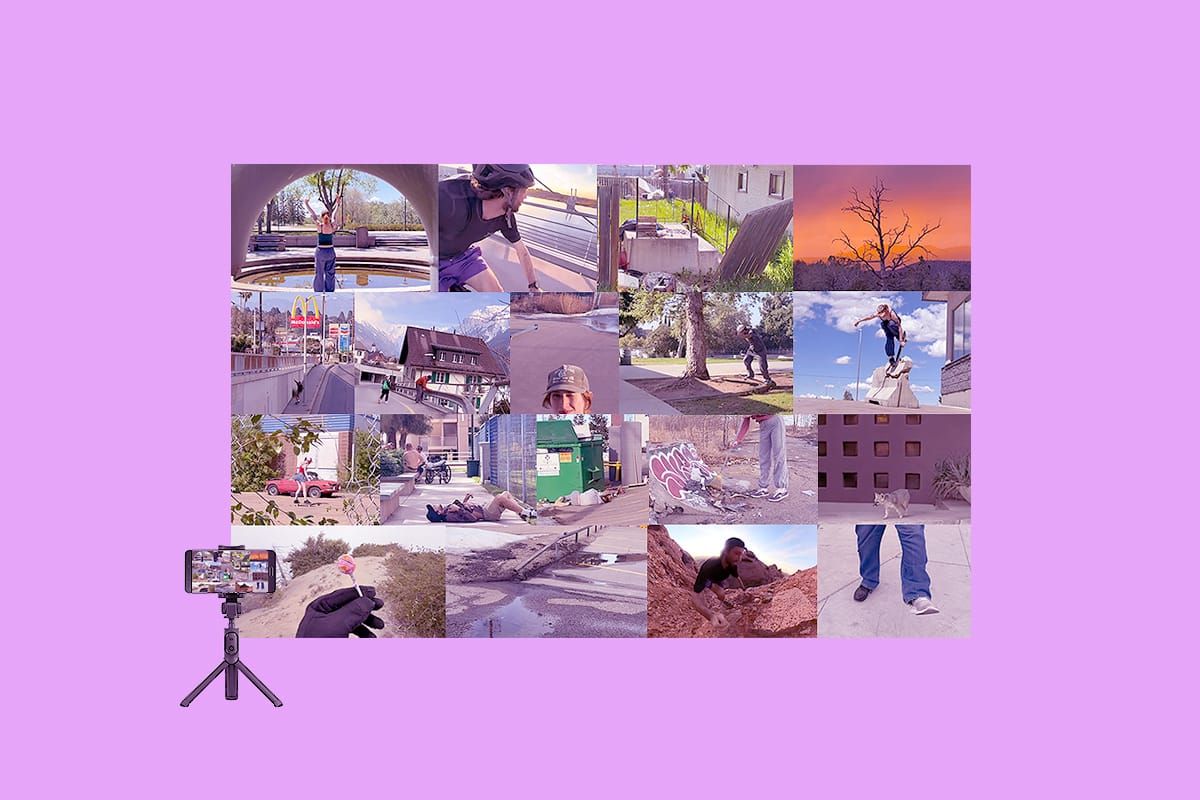
That feeling, a composite of relief, excitement, and desperation, is captured in exacting detail by the YouTube channel of a mononymous skateboarder named Oria. In her first upload in January 2026, she skates a lone concrete curb sitting atop a small, dry strip of parking lot set on a slight incline. Where that incline ends, snow and ice lie like a grimy, grey frozen tide.
There is something meditative about watching and listening to Oria rumble across this familiar bleakness (that curb looks like it could be behind the Staples off Whitemud Drive or Ironwood Drive in Coeur d'Alene, Idaho), in a minutes-long montage of attempting tricks, landing tricks, and falling hard, laid out on her back on the freezing asphalt under a towering sky, tide way out, stuck.
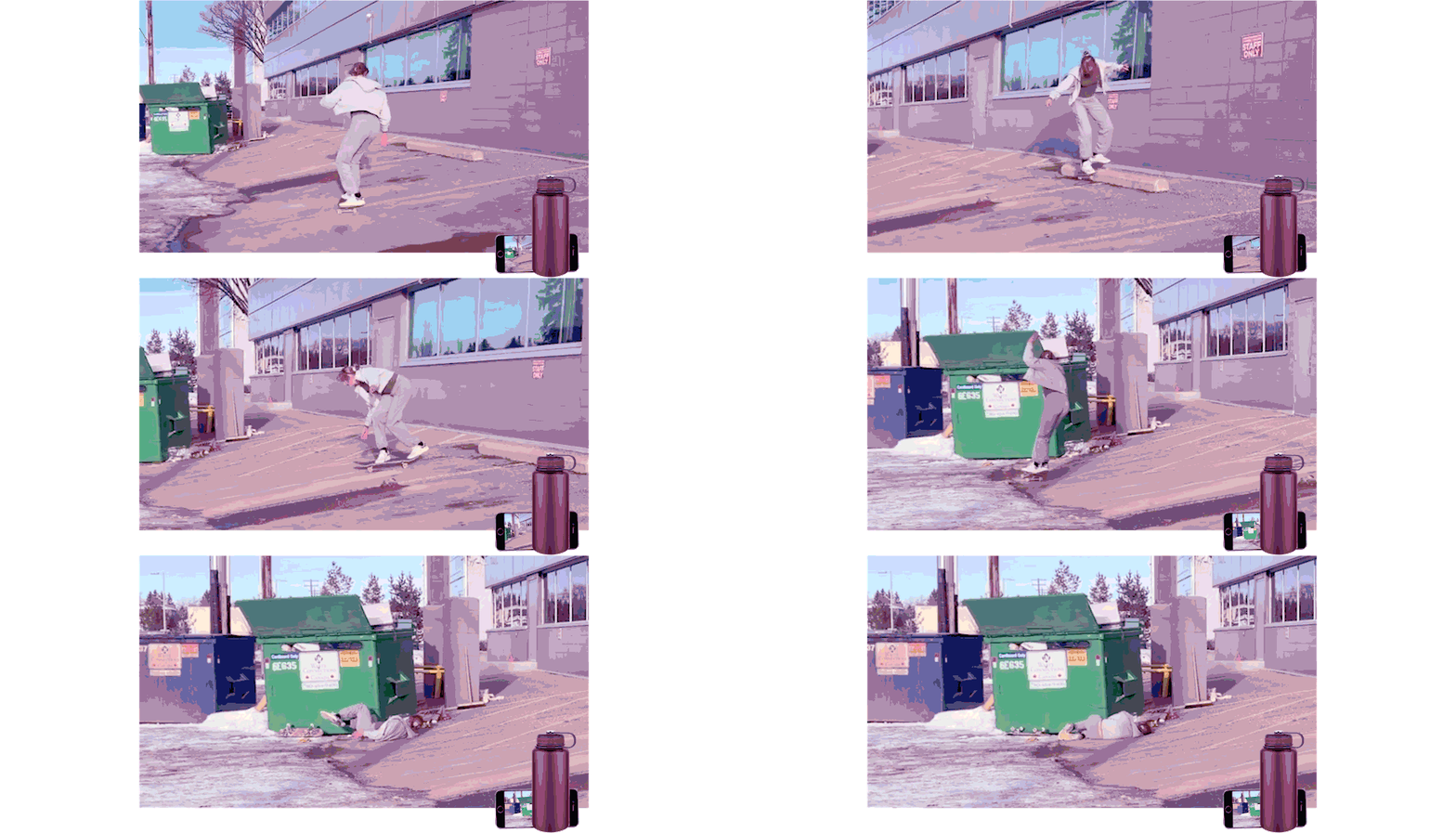
In any other circumstance, that is not a skate spot. It’s not even that good of a parking spot. What Oria does in her diaristic updates — most of which are shot over a single day, this one titled 1.11.2026 — is make the viewer appreciate how crusty and difficult and even awful these places are for skateboarding, while drawing a certain warmth from the subzero urban decay.
Part of that alchemy can be attributed to Oria’s filmmaking style, which fits within a genre growing in popularity. It is decidedly less action-oriented than the professional full-length productions that have served as the primary marketing vehicles for the industry’s biggest players for over four decades, and it moves at a much more leisurely pace than the frenzied Instagram and TikTok clips that blur together skaters’ talent and achievement into forgettable, online chum.
In the wider world of content creation, Oria’s videos might fall under the banner of “cozy” or “slow living.” Because this is skateboarding, where casual violence always awaits its practitioners, I would venture further and place these works somewhere between direct cinema and cinéma vérité in a style we might call IÓS vérité. Here, a solitary camera captures the skateboarder in mostly low-stakes settings as they try and fail and occasionally ride away from their tricks. This showcase of the “process,” as it were, and the life happening around it, has tapped into something for audiences both inside and outside skateboarding.
When I first spoke to Oria in April of this year, she was a few weeks removed from her YouTube channel catching an unexpected algorithmic wave. She told me that when she started making and sharing these videos there was no audience in mind, they were just a creative outlet, something to focus on while going through a divorce. Then her videos began getting tens of thousands of views. One from March peaked at 124 thousand. By June, her channel had nearly 21 thousand subscribers.
Her audience grew large, rapt, and enthusiastic enough that when Oria’s phone fell and its screen cracked during the filming of 4.4.2026, she included a Buy Me A Coffee link in the video description and was soon inundated with cash. Someone bought her 55 coffees, roughly $385 CAD. Another sent her $1,400, with their only request being "Can you write my name on the bottom of your board with a Sharpie, like, hidden?" Says Oria.
Comments from supporters on her Buy Me A Coffee page help elucidate the appeal of her videos, much of it stemming from a genuine hunger for what could also be called “cinematic realism.”
“You're the most legit street skater I've seen in a long time (and I've followed Powell Peralta since the late 80s). It's so sick and your cinematography is next level.”
“You clearly have a gift for skating and storytelling and your videos are possibly the most honest I’ve ever seen on YouTube”
“I’m convinced you have an incredible talent for framing and editing your videos. I love your channel and I feel there’s an artistic, even philosophical depth to the raw imagery, the absence of a script, music or commentary. Simply a girl struggling against herself in a dilapidated, pre-apocalyptic setting. There is a strong sense of humanism at its core. And your sustained effort, without hiding the small failures, illuminates that bleak landscape with a genuine hope of returning to the essence of things in order to rebuild the future.”
And some simply appreciate the formula her videos follow.
“so effin gritty. don't stop shredding and filming garbage spots.”
That’s something Oria understands and respects as she continues to produce videos at a clip of about six per month. “I don't want to get too ahead of myself or try to change anything too much. But whatever I've been doing seems to be working, and people seem to like it, and I like doing it, so I'm just going to keep doing that and see what happens.”
This isn’t the first time Oria has found an audience online. Her foray into YouTube was a means of making longer versions of her Instagram videos, which had inadvertently become a way to reintroduce herself to her community.
“I started to transition during the pandemic. And for the first five years or so, I kind of isolated myself from the skateboard scene because I felt like I wasn't ready to put myself out there. I pretty much skated alone for like five years, and only last summer I started going around to skate parks and skating around with other people.”
That’s when, by chance, Oria drove past Canora Courts, a local DIY spot, noticed it was nearly empty, and decided to skate. The only other person there would soon become a friend. Sara, impressed by Oria’s skating, asked if she wanted to film a line, and then, if Oria had Instagram.
Oria would post the resulting footage to her account, which had previously been set to private. People in the skate scene were excited to get an update on their friend, and Oria kept skating with Sara a few times a week. The more clips she’d post, the more traction and followers she’d get.
“One video got over 100,000 views and I was getting tons of followers and stuff… I thought it was just going to be small. I never expected that to happen, and it was kind of overwhelming.”
“So at that point, I was blocking all of my new followers. It was too much. I didn't want all these random people following me, people who don't even have any posts or a profile picture. You click on their profile and it's like ‘45-year-old Christian soldier, father of two,’ and then they message you saying, ‘Oh, you're so cute, skater girl.’ So I just blocked so many people. I think I have almost 5,000 accounts blocked on Instagram. I got a little bit carried away with it because once you start blocking a lot of people in a row, it gets easier to do it.”
As her audience has continued to grow online, Oria has become more comfortable with the exposure, but remains mindful of the ways of the internet, choosing not to share footage shot near her home, as some followers have been quick to attempt deciphering her location in the comment section like parasocial Rainbolts; a constant and unsettling quirk of the online world. However, comparatively, the creeps and the assholes are minimal compared to the positive responses online.
One follower noticed Oria skating a curb outside their garage in one of her videos and reached out over Instagram.
“[I thought] they were going to be angry or something. But he was like, ‘I have no problem with you skating it. I think it's super cool. And if you want, I can clean it up. We can put concrete at the bottom, or you can do whatever you want there. Just don't paint the garage wall.’”
The immediacy and intimacy of the cinematic style Oria employs, in its strength of schedule and proximity to the audience, allow viewers the opportunity to form connections with the people on screen. It gives space for attachments to grow and threads to form. A jackrabbit crosses the screen in one video, one scratches at the earth in another, and soon enough, you look forward to when the next will appear.
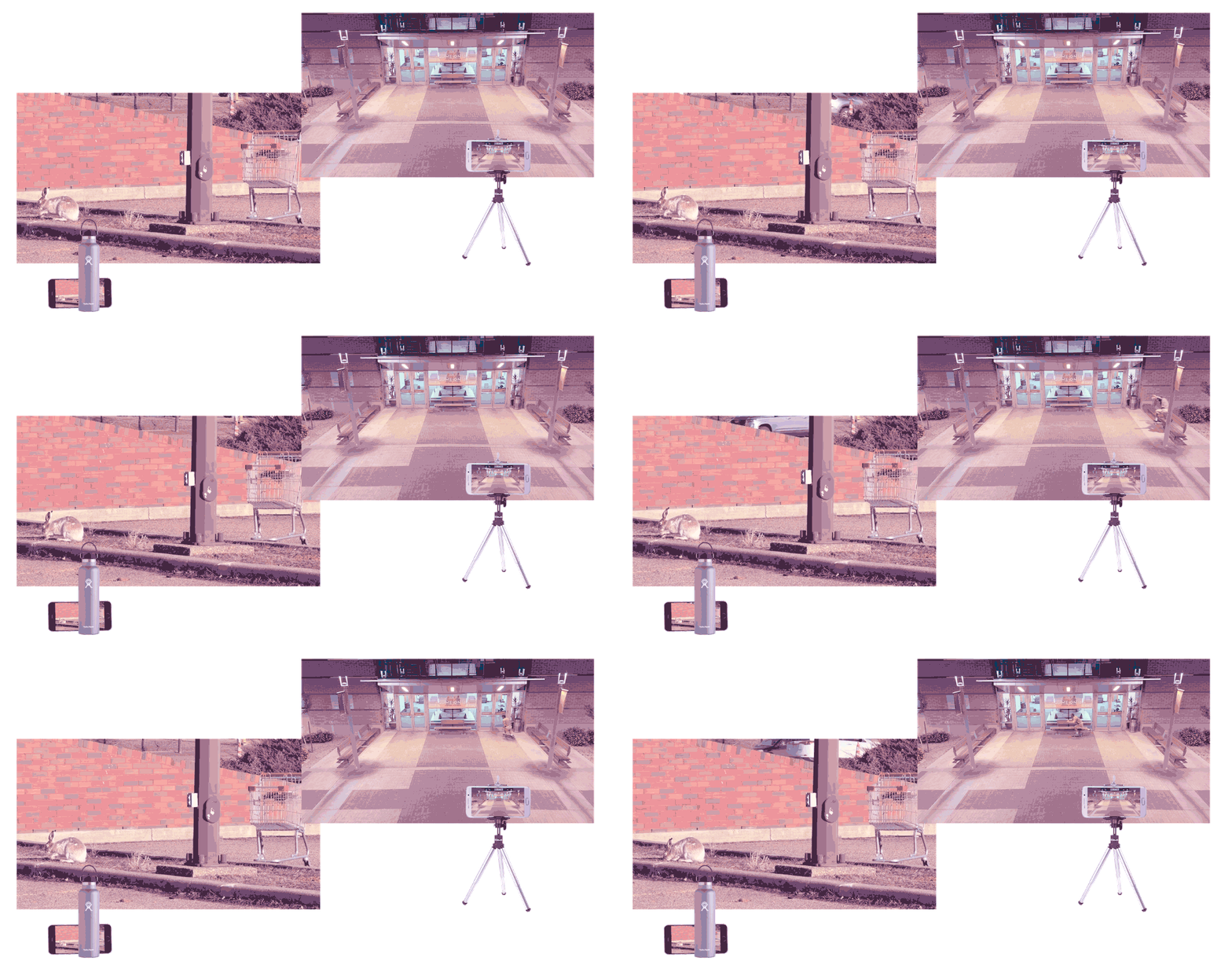
A grey fox enters the frame from stage left, weaving through a set of benches outside the Institute of Religion at Arizona State University. Professional skateboarder Ryan Lay soon follows from stage front of the static campus shot, switch-crooked-grinding a bench before the fox exits and the clip cuts away.
Lay has been working within his own strain of IÓS vérité and uploading the results to YouTube for just shy of a year. While he studied video art in college, he says he doesn’t consider himself an artist and likens his videos more to “sketches” than art projects or vlogs. If you watch these sketches, such as so cloudy, which features the curious grey fox throughout, there is a clear consideration of craft. They do not shy from furry leitmotifs, letting a shot sit and a scene wander, or leaning into structure, as many of Lay’s videos end not with skateboarding but an endurance sport — a long-distance cycle or a hike through the craggy bluffs above Tempe — set to a soothing ambient soundtrack.
It’s effective, as one commenter gushed, “This is a brilliant piece of cinema, not just a skateboard video part.” Others are even more effusive. “Every shot is a painting. The whole video was so moving. It made me feel a way about skateboarding I've never felt before. Thank you for making this.”
In recent years, professional skateboarders have become more comfortable incorporating YouTube into their promotional toolbelt. Most tend to use it in the traditional YouTuber style: unboxing videos, skatepark reviews, gear talks, and the like. Others, like Brad Cromer and Nelly Morville, play in the IÓS vérité style with their own twists, polished and lo-fi. Lay is a fan of both, and his work has understandably been compared to theirs, but he attributes his particular vision and entry into the field to two things.
“Scott Gall was visiting me and he has long been an inspiration of mine. He's not a super famous skater, but if you're familiar with a specific type of underground niche skating, [like] Matt King's early videos, Scott is pretty legendary.” Says Lay.
“He was staying with me in LA for a few weeks, and we were talking about YouTube. He has always made these beautiful, alternative skate videos, and is really the pioneer of this type of style for me.” The influence of Gall’s videos, whose catalogue dates back to 2013, is apparent in Lay’s own. If it wasn’t clear enough, Lay’s debut in the genre is titled ode to scott gall.
The other thing that encouraged Lay to explore this style of video and publishing platform is that, he says, “The economics of skateboarding are totally different” for veteran professionals at his stage of career. “There's a whole cast of older pro skaters and not a ton of infrastructure to do things the old-fashioned way… coming off of making the Sci-Fi [Fantasy] video, I just had this feeling that I needed to be street skating a lot and treat it like it's my job, and when I'm in Arizona, I can't rely on my friends who have kids and full-time jobs to just film me for an Instagram clip. That's a pretty big ask.”
Naturally, if you’re the subject, cinematographer, and editor of a video project, you enjoy complete creative freedom. “I like that I have control over it,” Lay says, especially as “this medium gives things a little more time to breathe,” and for some, that’s a much-needed respite from the current skateboarding media landscape.
“The staid contemplative nature of locking off your own camera and just letting the skateboarding do the heavy lifting is such a welcome tonic…” wrote a viewer on one of Lay’s videos, contrasting it with a recent big-budget video production. “The incessant and directionless nature of the constant zooming and panning just left me frustrated. It was all ‘full of sound and fury, signifying nothing,’ a whole video of immature and non-committal visual bullshit. Thank you for finding a creative way to create skate videos that allow the viewer to really immerse themselves in the skating and the locale.”
That frustration is increasingly common and can be chalked up to the rigidity and limitations of the skateboarding industry’s promotional structures. The on-screen talent feel the squeeze, too. “I find that skaters are pushed into the world that we operate in, [which] is tricks on Instagram, maybe some [short] edits, and then working on video parts.” Says Lay. “And sometimes those are out of your control, and they obviously take a lot of time and resources to happen.”
“[That's why] I like being able to see what I can come up with in a week. When I started doing it, I remember thinking that I wanted to learn how to train that muscle of making things. Even if they're bad, I'm just going to make them and put them out there and maybe they'll get better.” Lay says, before cutting to the core of his profession: “The reason I'm in pro skateboarding is to make stuff for the public.”
Lay makes stuff for the public very much in public. One of the more compelling parts of his sketches, besides the extremely high-level skateboarding, is his interactions with the people going about their lives in the scenes around him.
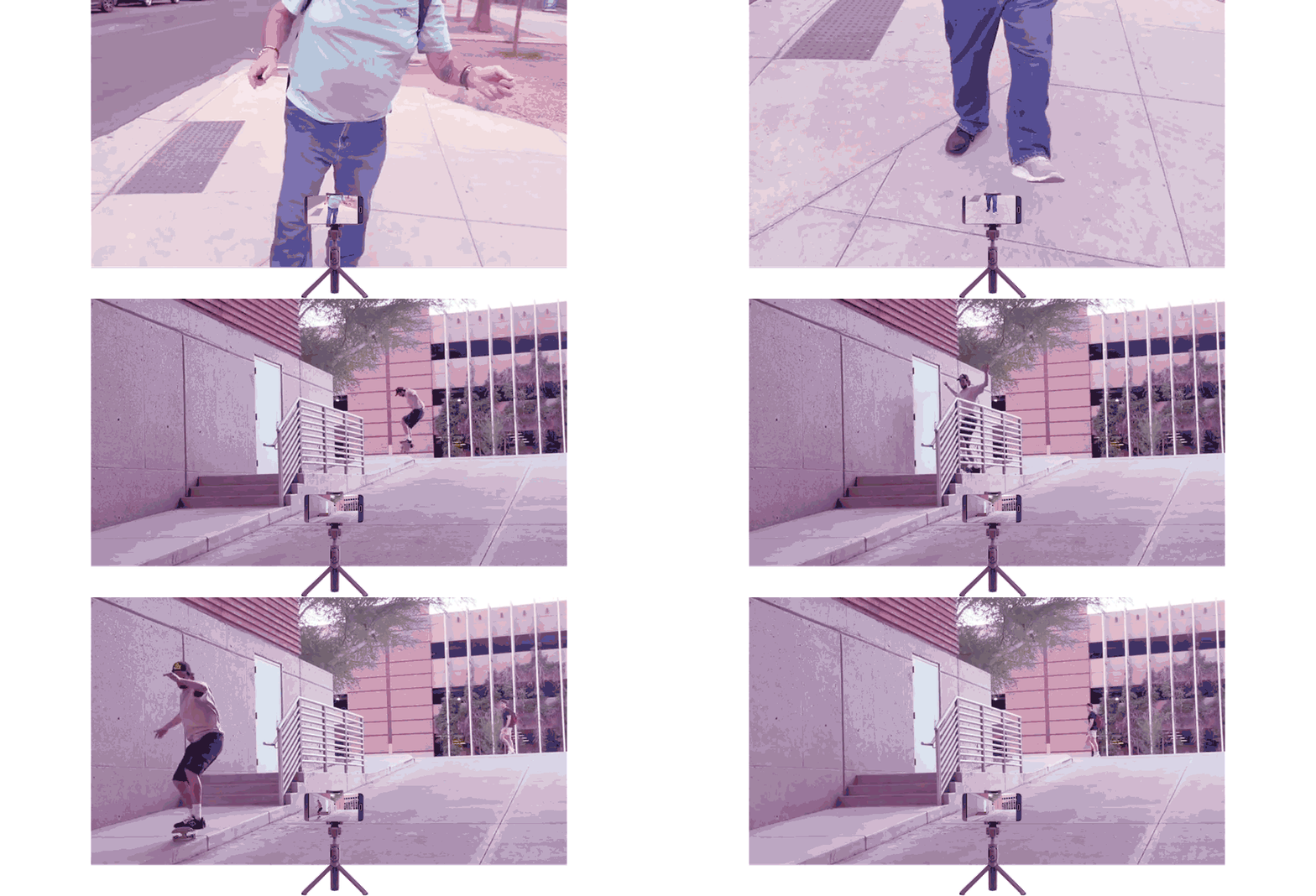
Those exchanges have been on his mind, especially as he creates for public consumption in a world already siloed and drowning in entertainment. “There was a part of this podcast I listened to where they talked about how we want to remove all of the friction from our lives, and part of that is everyone's on their phones [and] people walk around with headphones. I found myself doing that as well. You walk through the grocery store and you don't really have to interact with people. That really stuck with me.”
“You know, the older you get, the smaller your world gets, and the more lonely I think life gets in many ways [when] you don't have a lot of load-bearing community activities. Even skateboarding can be a lonely activity the older you get, [so] I like having these interactions with different characters. Anyone who's ever skated a plaza is super familiar with that. You run into the same types of people [and have] little conversations, some of which are off camera, some of which are on.”
“Yeah, my brother does this shit,” a friendly onlooker once offered Lay, on camera, in a parking garage somewhere in the greater Phoenix area. “I was either too high or too drunk or too spacey,” another spectator on a busy street shared, bemused and laughing, as he pointed out that he unknowingly left the house with two different shoes on. "I had this ongoing rapport with these train workers in Switzerland, and after watching me struggle through a handful of tricks for the couple of days I was there, they offered me a job," Lay recalls. Even the quiet exchanges are full, like when a curious middle schooler shuffled past, agog at Lay grinding a steel crash barrier in that picturesque Swiss mountain town.
These moments help direct the momentum of Lay’s videos and give them a new focal point, however briefly and entertainingly. “I'm into the juxtaposition — this is a funny scene going on and we're skateboarding in front of it.”
That’s a lesson pulled from the New Jersey School of film theory. “I learned that from Fred Gall tré-flipping in front of a street fight. That kind of situation always makes for good viewing.”
For Lay, those interactions can also work to counteract the shrinking of our social lives. “I feel like [they] really make my day on a very simple level; it's embracing the beauty of everyday people. You remember that cartoon, Richard Scarry’s Busy World?”
Based on the beloved children’s books, which took a turn as an animated series in the early 1990s, The Busy World of Richard Scarry centred on vignettes celebrating the ordinary lives and occupations of the talking animal inhabitants of Busy Town.
“I love that. And again, I don't need to harp on it, but we experience so little of that [sense of community] in our lives now. It's very easy to remove yourself from it with things like remote work and our phones and all that. We live remarkably unsocial lives in most U.S. cities.”
People can still connect online, of course, it’s just different. Removed, in physical and emotional register. Even so, the relationships we have with strangers we find on our screens can feel as intimate, or more so, than those in the flesh.
A sign of the times, sure, but a testament to the internet’s early promise as a means of connection and discovery, however enshittified its primary platforms have become. When I reached out to Lay to see if he was interested in talking about his recent work on YouTube and the growing popularity of IÓS vérité, I led with Oria’s channel in my pitch.
“So weird, someone just commented about her videos and I was literally watching one when you texted me.”
Springtime in Alberta is uneven. In late April, my father shared a photo in the family group chat of a blooming Prairie Crocus sticking out of a patch of brown grass in Grande Prairie. The delicate purple flower is known as the “harbinger of spring.” Across the province in Lac La Biche, my uncle replied, “pretty much the same here,” along with photos of his walkway, from which he had just cleared nearly a foot of snow. In the province's capital city, the jackrabbits were out and shedding their winter coats.
By the end of May, Oria was wearing a red tank top, Daisy Dukes, and crawling through a hole in a fence to skate a spare car tire stuffed under the rusted-out chassis of an MG MGB Convertible. She was alone and falling and landing tricks in another barren pitted lot — less Richard Scarry’s Busy World and more Mad Max’s Wasteland, but that crusty solitude has its charms.
It also serves a more practical purpose. “Part of the reason I’m drawn to those kinds of isolated industrial areas is there’s less chance of someone bothering you. I’ve had some sketchy encounters with people when trying to film in places with more people around.” Oria notes that she doesn’t exclusively skateboard alone; she just reserves filming for her solo excursions. Even then, that solitude isn’t a protected thing. In 3.28.2026, her brother Zach, who creates his own unique brand of online video, happens to be driving past as Oria is skating a Jersey barrier and joins in on the fun.
As her videos have gained traction online, her real-life network has expanded. From sales reps at IPath sending her shoes, flying out to Seattle for Wheels of Fortune 13 to meet friends from her phone in person, to her videos working as a reintroduction to her community, the internet has bled into her physical, tangible present. Oria’s videos have also become a potential revenue stream, with her YouTube channel getting monetized alongside tips from fans on Buy Me A Coffee, who appreciate her work and what it offers in our fractured and often fraudulent media environment.
“In these days of AI slop, it’s a pleasure to watch the real. To me, your videos are nostalgic and new. I love them.”
Even Oria’s primary business of selling retro video games and other vintage goods online dovetails nicely with her YouTube project, as driving around to source items leads her to finding new skate spots. It may even inspire some tax breaks. “I could already write off travelling to video game conventions to go sourcing, and now if I'm earning money from this and I can start to write off going somewhere new to skate to make a video or something, that's pretty exciting.”
Oria doesn’t know where this will take her but she is interested in finding out. She also remains measured in her expectations, even as her audience grows (one Chad Muska recently joined her legion of followers).
“I never really aspired to be like a YouTuber or anything like that,” she says, “But for it to kind of fall into my lap from something that I would have been doing anyway, I think I should — I don't want to say take advantage — but, you know, take advantage of that.”
Oria and Ryan Lay have approached a similar medium from different directions. The former may have stumbled into a career and the latter looks to extend his by taking it into his own hands. They’ve both been able to connect to others through this work. Now they meet in the cozy, slow-living middle where we get to watch them figure it out, video by video.
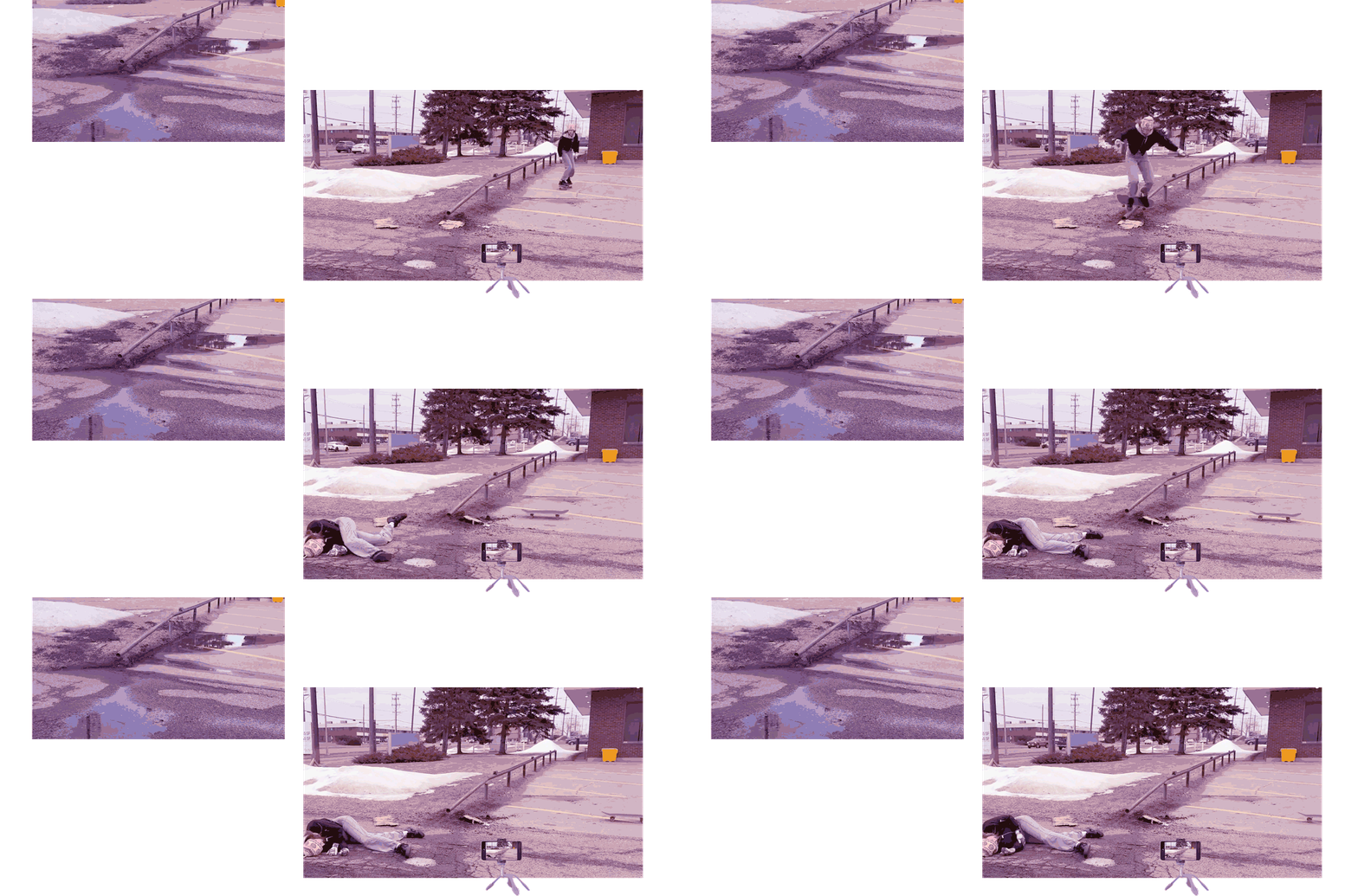
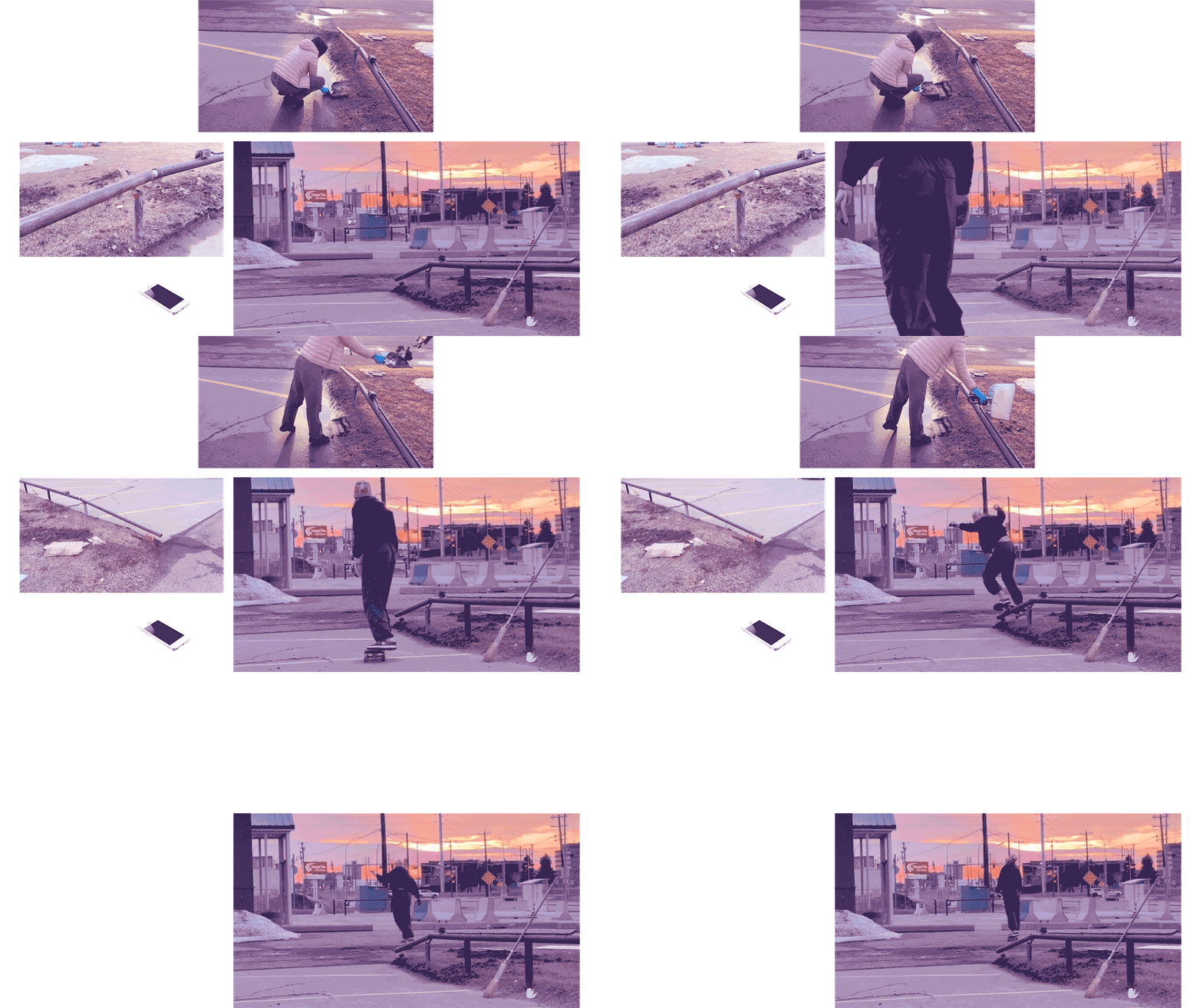
In 4.2.2026, Oria focuses her smartphone’s camera on a rail in another lonesome parking lot. An island of gruel-hued snow butts up against it. The rail is rusted out and missing a leg, causing it to wobble and droop into the adjacent alleyway, which is potholed, gravelly, and flanked by mud thanks to winter runoff. Her every attempt at a feeble grind looks miserable, and Oria falls and falls again, sticking and slamming in that mess of a road. She places a piece of cardboard over the muddy landing after her wheel sinks deep, emerging as if from an earthy fondue that would later require “a couple hours of cleaning my bearings over.” Nothing works. Once more, she sticks, is bucked, and lands in a heap on the cracked and pocky asphalt. The video ends.
A couple of weeks later, on 4.12.2026 to be exact, Oria returns. She had already spent time prepping the spot, digging out the mud with the hard edge of a metal dustpan and clearing the rest with a broom and a leafblower. The snowbank has shrunk and sits in puddles at the rail's shaky terminus. Oria tries to steady it with a brick and a stick wedged into the open mouth of the closest remaining leg, which is also separated from the crossbar that floats precariously above. The camera cuts to a close-up of the crude apparatus. It is not encouraging. Oria tests out different materials in the landing, including a scrap of a lawn sign and a melamine shelf that had been sitting in the trunk of her car.
This had become a great drama for both her and her viewers. “The infamous round rail is starting to have a Villain arc,” wrote one commenter. “This broken rail saga has a better story than most Netflix productions. What a journey!” Wrote another. One follower even offered to weld it, but Oria declined, preferring to grind the rail as is: broken.
It’s a sonic, psychic battle. The rumble and crunch of her wheels punctured only by the snap of her tail and the sharp ting of metal on metal. Every attempt is a little different, each closer to something, success or otherwise. The brick topples, so does she. Oria throws the shelf and the lawn sign aside. A prairie sunset burns a brilliant orange above the neighbouring United Rentals.
With nothing between her and the ground, she tries again, rides away.

Want to live slower and cozier? Consider becoming a paid subscriber. Nothing on Simple Magic is behind a paywall, but your money will get you stickers and merch, go towards paying contributors for their great work, and put some dough in my pocket as I write these each week. You can also leave a one-time tip.