Natty 'Nar
José Vadi on damp climes, Alexis Lacroix skates cold climes, patently piping it, Plan B = Boston Celtics(?), and more.


The definitive weekly ranking and analysis of all the skateboarding and other things online that I cannot stop consuming and how it makes me feel, personally.

Patently piping it
Rank: 1
Mood: ™️
On Tuesday, a redditor shared the following on the r/legaladvice subreddit:
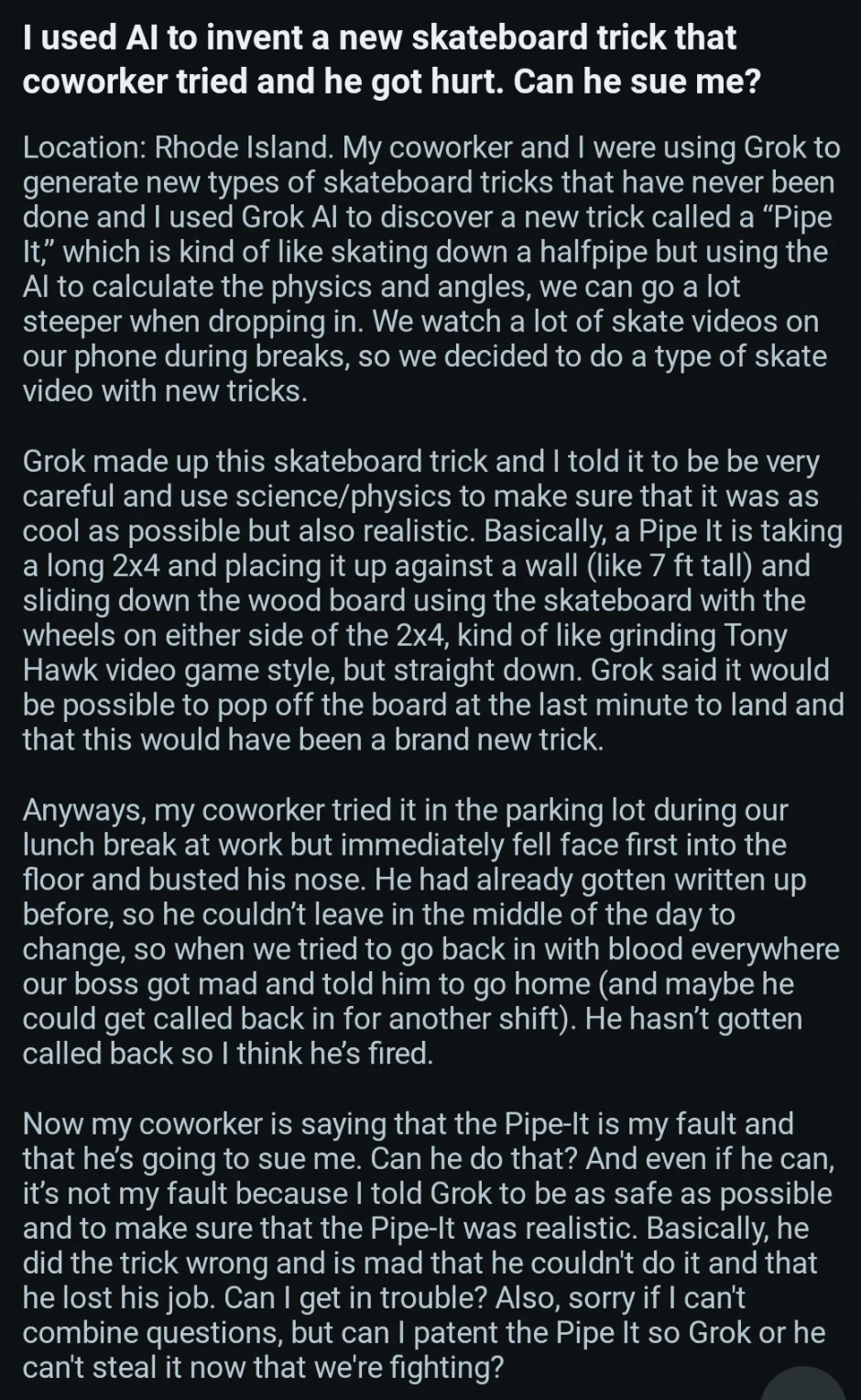
I used Al to invent a new skateboard trick that coworker tried and he got hurt. Can he sue me?
Location: Rhode Island. My coworker and I were using Grok to generate new types of skateboard tricks that have never been done and I used Grok Al to discover a new trick called a "Pipe It" which is kind of like skating down a halfpipe but using the Al to calculate the physics and angles, we can go a lot steeper when dropping in. We watch a lot of skate videos on our phone during breaks, so we decided to do a type of skate video with new tricks.
Grok made up this skateboard trick and I told it to be be very careful and use science/physics to make sure that it was as cool as possible but also realistic. Basically, a Pipe It is taking a long 2x4 and placing it up against a wall (like 7 ft tall) and sliding down the wood board using the skateboard with the wheels on either side of the 2x4, kind of like grinding Tony Hawk video game style, but straight down. Grok said it would be possible to pop off the board at the last minute to land and that this would have been a brand new trick.
Anyways, my coworker tried it in the parking lot during our lunch break at work but immediately fell face first into the floor and busted his nose. He had already gotten written up before, so he couldn't leave in the middle of the day to change, so when we tried to go back in with blood everywhere our boss got mad and told him to go home (and maybe he could get called back in for another shift). He hasn't gotten called back so I think he's fired.
Now my coworker is saying that the Pipe-It is my fault and that he's going to sue me. Can he do that? And even if he can, it's not my fault because I told Grok to be as safe as possible and to make sure that the Pipe-It was realistic. Basically, he did the trick wrong and is mad that he couldn't do it and that he lost his job. Can I get in trouble? Also, sorry if I can't combine questions, but can I patent the Pipe It so Grok or he can't steal it now that we're fighting?
A moderator has since removed that request for legal advice, deeming it a troll post, which it clearly is as only a troll would claim to use Grok, but that last sentence in particular does present us with an interesting question: can a skateboarding trick fall under legal protections? Skateboarding already has an unofficial and generally unenforceable patent system built around NBDs (Never Been Dones) and ABDs (Already Been Dones), but those are primarily designated for already existing tricks done at specific skate spots.
For example, when Antwuan Dixon graced the cover of Thrasher Magazine earlier this year with a switch-frontside-kickflip down an imposing stack of stairs, former Shorty's Skateboards stalwart Andrew Pott was quick to point out that trick at that spot was ABD, by himself, 17 years earlier. In that instance, no one really cared because Dixon was in the midst of a special career resurgence, and Pott even came off as petty for pointing out an historical fact, which could be a sign that the NBD as a concept is losing grip on its cultural policing powers, if it really had any to begin with.
That could also be because a switch-frontside-kickflip as we know it belongs to the public domain. It's fair use within the physical commons, no credit or citation required to do it on flat, over, or down something. If you really want to slap an NBD on a trick, for it to really stick, you need to be the first to ever do it.
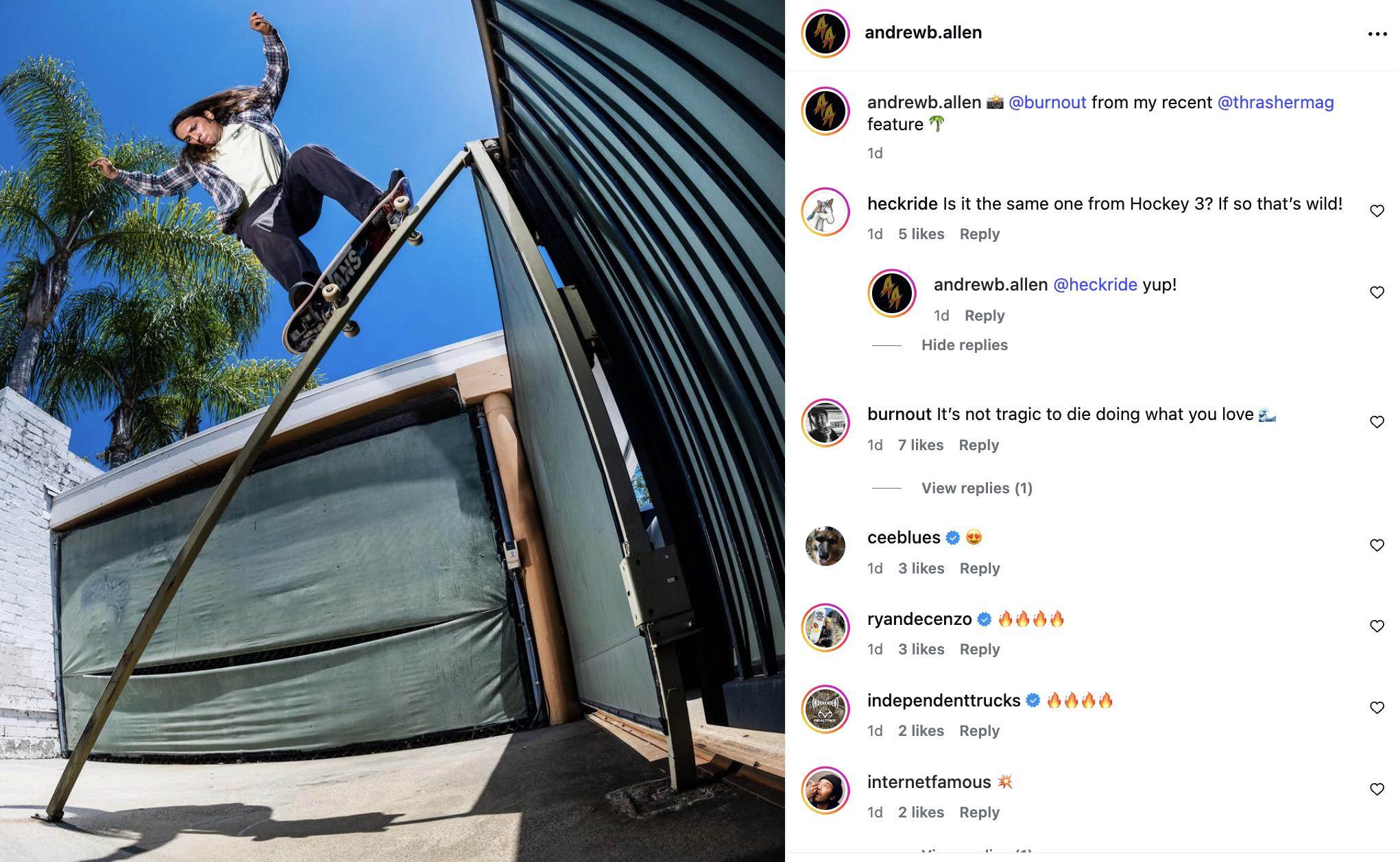
Unfortunately for the redditor above, trolling or not, the Pipe It, while compellingly named, is not an original concept. Andrew Allen shared a photo of what amounts to a switch Pipe It just this week on Instagram.
However, if you invent a net-new skateboarding trick, a real NBD, there may be a chance you can patent it. Canadian patent law has "categories of invention" that include "manufacture" and "process," which allow you to patent an "invention" if it meets the criteria therewithin.
Per the Canadian patent law Wikipedia page, "Manufacture implies a product made by hand, by machine, industrially, by mass production and so forth, by changing the character or condition of material objects," and "A process is the application of a method to a material or materials. The process may be patentable even if the process does not produce a patentable product."
Does doing a trick on a skateboard not change the character, however briefly, of a material object, i.e., the skateboard? And is the technique required to perform that trick not the application of a method to a set of materials, which is, once again, the skateboard?
While the statute of limitations has probably long expired for most of the skateboarding tricks we are familiar with today, if anyone can test the patentability of an on-board maneuver, it's Jamie Griffin. In his quest to land 1000 different flatground tricks, of which he's already reached 800, it's plausible that he has landed or invented hundreds of NBDs, which we can peruse with ease in 'sletter contributor Christian Kerr's incredible compendium.

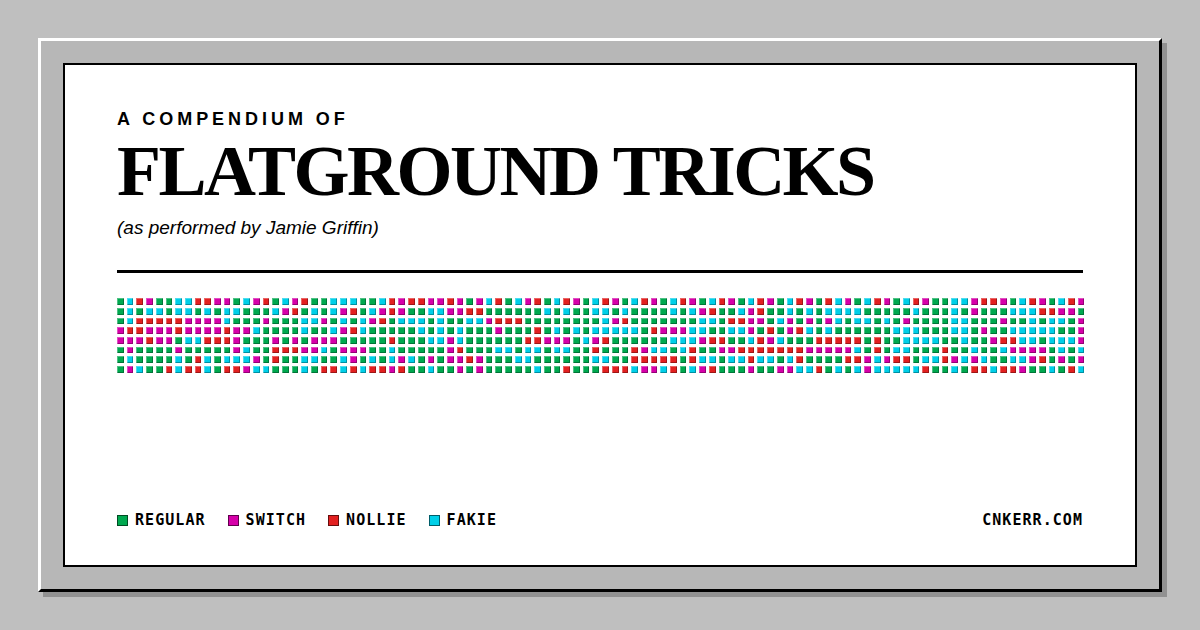
Now, would it be a good idea to patent skateboarding tricks? Probably not. Patent trolls are a legitimate scourge. But in a resource-strapped profession such as skateboarding, if someone like Donny Barley could sue or demand royalties every time a professional skateboarder published photo or video evidence of themselves performing his namesake trick, he'd probably have several hundred dollars.


Natty ‘Nar: Sessioning Waterworld
A special correspondence by José Vadi
September started with a splash. Kaede Terauchi’s Eye of the Storm, video part, advertised in its title as “ONLY SKATING IN WATER,” was published by Pocket Skate Mag on September 3rd. Griffin Gass’ Rain Shadow, a short film shot entirely on 16mm and directed by Ben Ericson, was published on the director’s YouTube channel on September 9th. Both are end-of-summer bangers and teasers for the forthcoming El Niño winter.
While Terauchi’s ledge assault occasionally takes place on sunny days post-downpour, sometimes caution is thrown to the clouds and tricks are handled mid-storm. Terauchi’s stunts are performed on wet fountain ledges that serve as the aquatic front lawns of skyscrapers. A faux waterfall down an equally manufactured cliff becomes an opportunity for a THPS-style drop-in. It’s as if he’s skating a world post-glacier melt, showing his generation it’s not all bad living in a climate-changed world.
Gass is the co-character in Ericson’s short film, sharing the overcast spotlight with the rain shadow, the term for a place that avoids wind and rain by being on the other side of a mountain; in Seattle’s case, the other side of the Olympic Mountains. It creates a dual performance where one skater tries to outsmart the natural regional phenomenon that is the skater’s forever nemesis. For both skaters, conquering street maneuvers in such harsh conditions is a flex of skill, and in Gass’ case, a form of regional pride visualized for no-season residents of the world to behold. In addition to living and starting companies in the PNW, so too is Gass filming there, heavily, rain be damned.
Both videos reminded me of a comment-as-question I heard during a Q&A at Devyn Defoe’s reading at Beers Books in Sacramento in celebration of her debut novel. A gentleman who used to live in Hawai’i cited Defoe’s focus on wildfires in her book, inspired by the 2018 Camp Fire, and how the book’s titular character, Burnside, was obsessed with starting small fires of their own. His rhetorical question of a comment was whether she was worried, as he was, about the seemingly pre-destined floods Sacramento will endure in the future, citing examples of recent catastrophes in Nepal and Appalachia as proof of a not-so-paranoid concept.
Sacramento, built in floodlands, has survived multiple floods. The city exists where the American and Sacramento Rivers intersect, each river’s riptides feared as they claim many lives each summer. The River City’s risk of flooding is the reason why “weir” was one of the first words I learned upon moving here five years ago.
Some of skateboarding’s most memorable moments have taken place in the rain. Pat Duffy’s slo-mo rail assault, Sean Young’s bombing down Gough in San Francisco, Muska’s black rail tailslide interlude in Fulfill the Dream. In researching other examples, I found something I missed nine years ago: Northbound: Skating on Frozen Sand, featuring then-upstarts Hermann Stene, Didrik “Deedz” Galasso, Henrik Lund, and Karsten Kleppan.
Terauchi and Gass’ efforts are not new by nature, but they are in scale. Entire parts drenched in rain, or the threat thereof, reflect its greater role and influence in skaters’ everyday. What breaking point did these skaters and filmers reach to conceive these projects? Frustration with winter, lack of indoor parks, a desire for the proverbial clip? As seen in Northbound, geographic isolation and insane terrain are solid bits many skaters have committed to before, but there’s something about the very wet, very slippery terrain of Terauchi and Gass’ recent efforts that cracks the code into this naturalist genre of skate videos. Let’s call it “Natty ‘Nar.”
Where does it end and what is its future? Should wheel durometer now be measured in aquatic resilience and response? Will there ever be a waterproof Shake Junt bearing, and why haven’t the Swiss figured out a solution considering their climate? Will skaters, on some Swampfest shit, embrace mud that much more? On the opposite, arid end of the weather spectrum is Zarosh’s dirt skate race near the Carmel hills. Will this replace future summer schoolyard sessions?
Will folks closer to the ocean, or the Arctic, feel the effects of our warming climate first? Will the soggy rain board setup become all skater’s ever know, and will filmers add foldable umbrellas to their camper chairs each time they go out on a mission?
These two videos could be a prophecy of global skate sessions to come. And maybe, for once, a comment during a literary event’s Q&A section was relevant to the conversation.

Brand synergies
Rank: 1
Mood: 🌬️🌍🌊🔥
Is it too on the nose, a nose rosy from the biting winter cold, that Alexis Lacroix begins his professional debut video part for Element Skateboards by skating, well, the elements? Ice and snow in Canada's eastern provinces have long been an inspiration for Lacroix, and if there was a "breaking point" that drove him to put four wheels down in the slush, as José asks above, I'd proffer that it's any day below zero degrees Celsius.
Those extended winter months require a resourcefulness and a willingness to do whatever you can to get your licks in. Purpose-building a quarterpipe out of snow and ice to skate on might be a bit out of the normal range of desperation or expedition for most, but if you're a skateboarder and have lived in a place where the ground is covered in a downy, white blanket of frozen water for four to six months of the year, then you, in all likelihood, spent a lot of afternoons practicing kickflips in unfinished basements and unheated garages, and a good portion of your time shovelling out skateparks and skate spots.
There is a unique satisfaction that comes with clearing snow from an obstacle and chipping away at the ice underneath. Along with the bare concrete, the steam radiating off whatever flesh happens to be exposed becomes proof of the work put in. It's enough to make you exclaim, "OOOHHHYYYEEEAAAHH."
There's a chance this is a projection, but Lacroix's skate-specific personality — the skiing, hollering, left-field technicality, the nollie-one-foot-backside-smithgrinds down handrails — all reads as informed by inclement weather. Of making the most of what you have. And for Element Skateboards (Europe), in it's latest stage of life now free from the shackles of Authentic Brands Group and released into an industry freezing over, to bring aboard someone like Lacroix — who has long been one of the more interesting skateboarders in the popular consciousness that has never had a consistent home sponsorship-wise outside of Dime — and promptly promote him to professional, seems like proof that they're not just shovelling shit around for the sake of it, they're trying to build something.

The NBA season approaches
Rank: 18
Mood: 🏆🏆🏆🏆🏆🏆🏆🏆🏆🏆🏆🏆🏆🏆🏆🏆🏆🏆
This isn't the most novel comparison, and has probably been made elsewhere before, but has a skateboarding company ever been as Boston Celtics-coded as Plan B Skateboards?
Like the Celtics, Plan B has a storied, multi-generational history whose heyday has long passed; they've got a number of rings (two), concerning ownership, and, outside of their diehard fanbase, are generally despised by the wider community, despite having an incredibly talented roster (that once included Massachusetts' own PJ Ladd). Plan B, like the Celtics, have also done a decent job at fostering new talent, as shown in their latest video, Growing Pains.
Kristion Jordan and Lazer Crawford, who anchor the project, are franchise players — if Plan B plays their cards right. The company turned Crawford PRO this week, so they seem to realize the duo's Jason Tatum and Jaylen Brown-esque potential. However, we know how that turned out, and like the Celtics, their head office's decision-making is questionable at best.

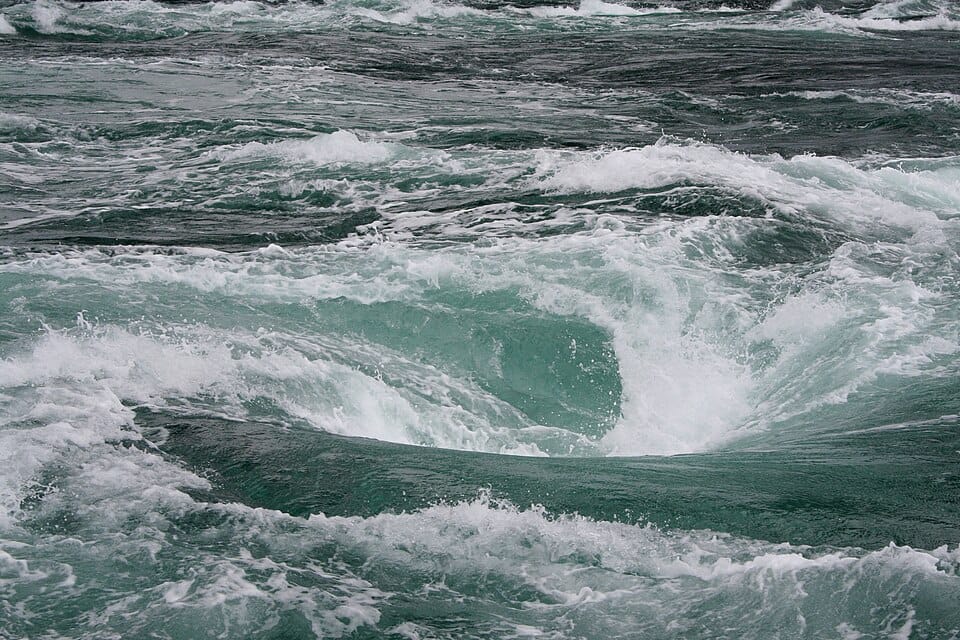
That looks like a pretty decent spot; might need to be rubbricked, though. Probably easier and drier to become a paid subscriber instead. Nothing on Simple Magic is behind a paywall, but your money will get you stickers and merch, go towards paying contributors for their great work, and put some dough in my pocket as I write these each week. You can also leave a one-time tip.
Image via Wikimedia Commons.
Something to consider: Sending Sam Altman to jail.
 Mark Follman
Good thing:
 r&d
r&d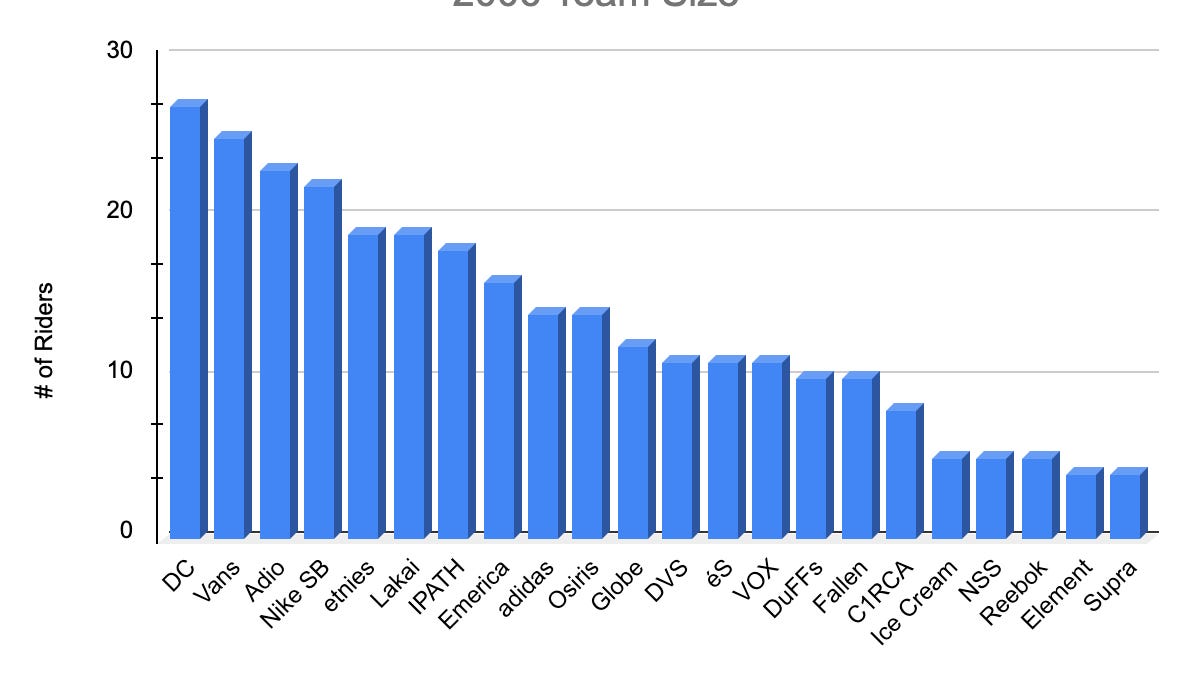
Good pod round-up:
Margie Didal on Good Luck With That
 Posted by
Templeton
Posted by
Templeton
More good pod thing: The Bunt Video has no business being this good and easily takes the title of best Podcast-affiliated skateboarding video.
More pod stuff: Now that this newsletter is intermittently podding, will there ever be a The Simple Magic Video?


No.
Good thing about a bad thing:
 Anna Merlan
Another good thing:
 Ted Barrow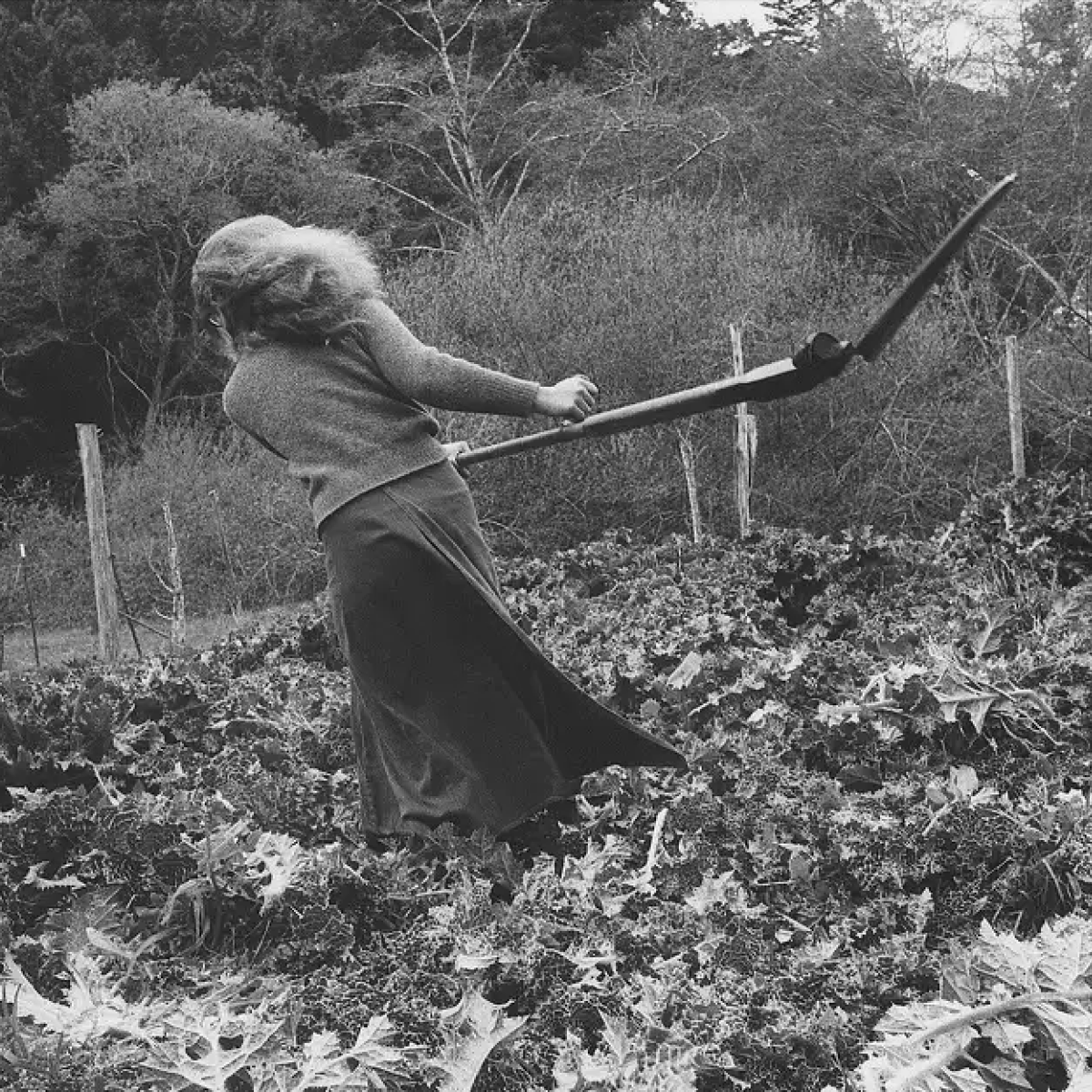
Even more good thing: via 'sletter contributor Ian Browning and Closer.
 Ian Browning
Good, SAUCE-y thing: The first issue of Skateboarding and Urban Cultural Ecologies (SAUCE) is live and online and features articles and essays from Ema Ostřížková, Harry Meadley, Ted Barrow, Juliette Evon and Jean-Sébastien Lacam, Thomas Kemp, Brian Glenney, and Paweł Madaliński.
 SAUCE
SAUCE
It's been a treat working on this for the last few months. Hope you enjoy.
PRO AF things: I chatted with the recently promoted Lau Willems for the latest issue of Thrasher.
Video via Lau Willems on Instagram
Until next week… autumn is here. The time for scarves is near. Act accordingly.


Laser Quit Smoking Massage
NEWEST PRESS
--------------------------------
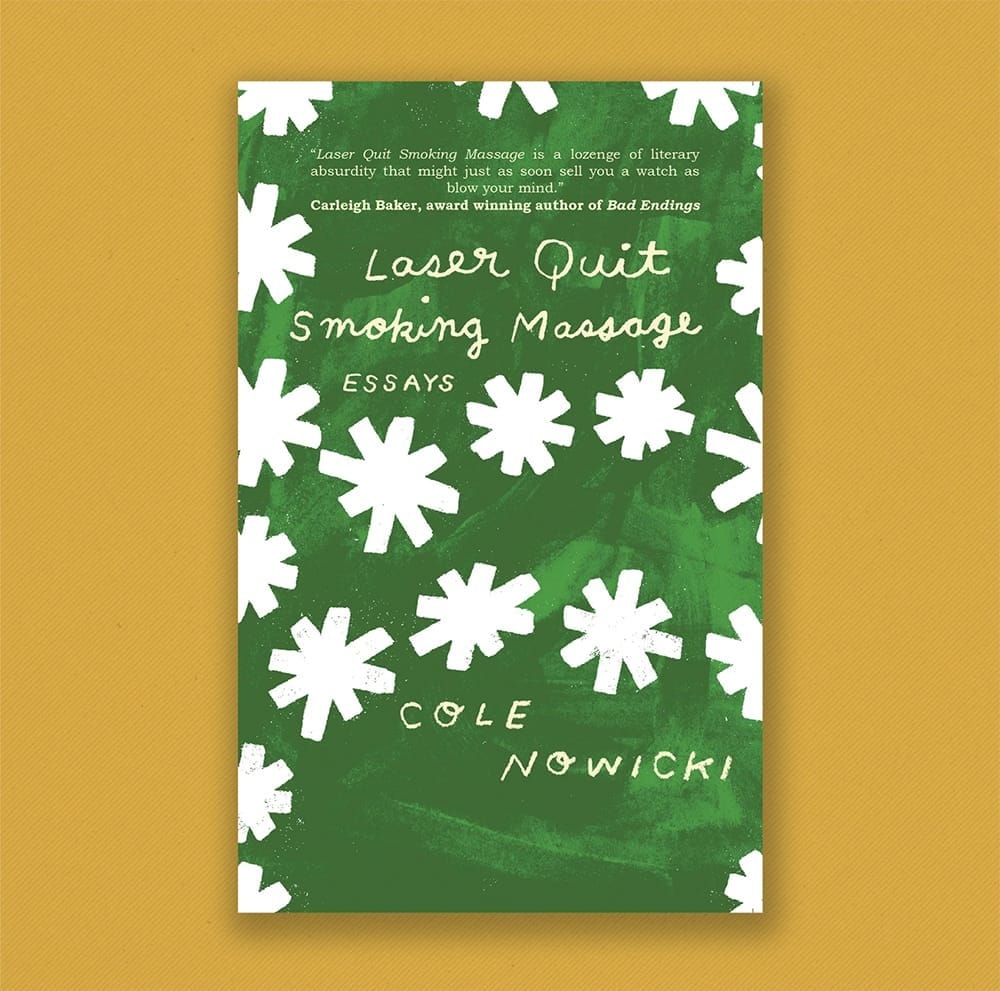
A collection of essays that I think you might like. The Edmonton Journal called it a "local book set to make a mark in 2024," The CBC said it's "quirky yet insightful" (lol), and it won Trade Non-Fiction Book of the Year at the 2025 Alberta Book Publishing Awards.
Book cover by Hiller Goodspeed.
Right, Down + Circle
ECW PRESS
--------------------------------
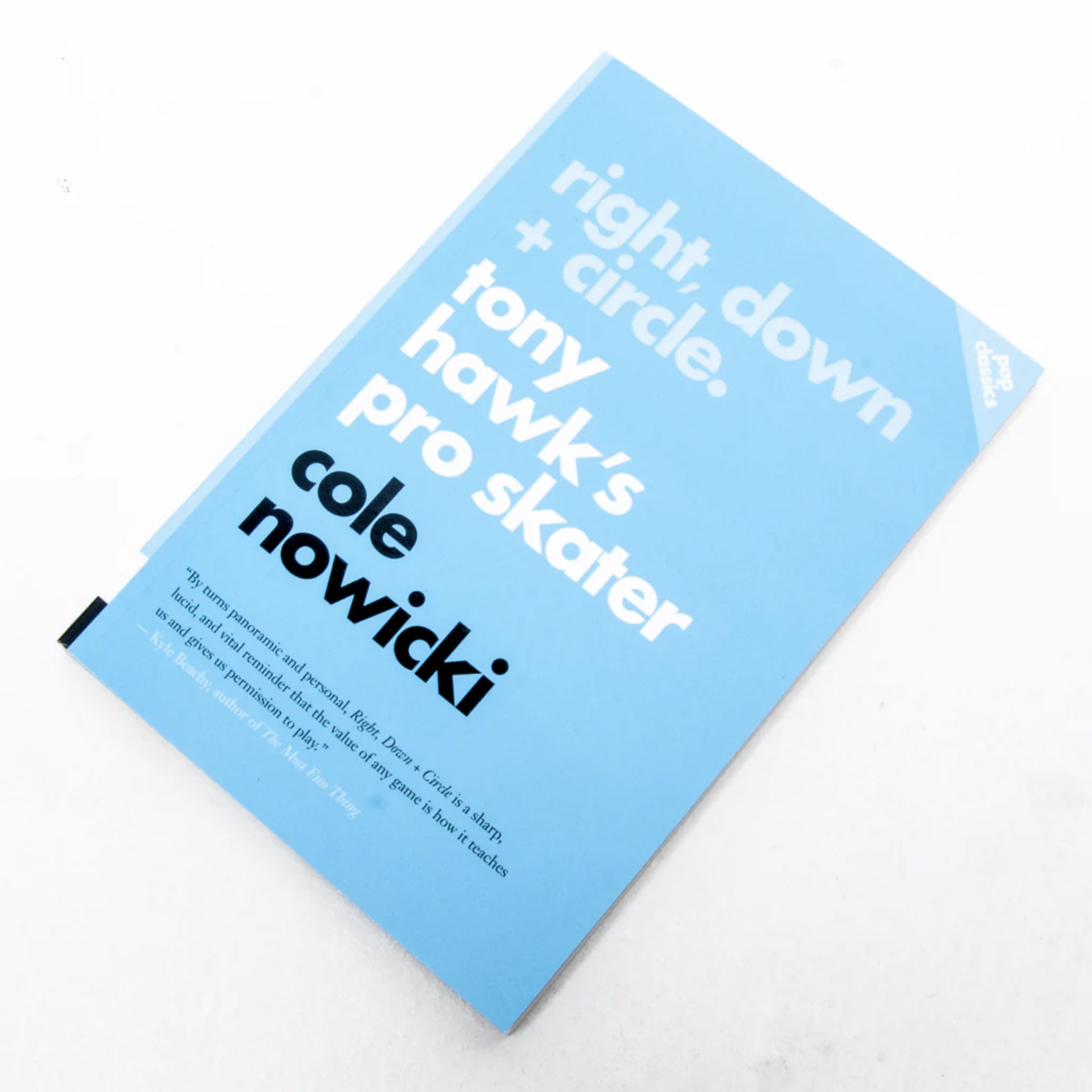
I wrote a book about the history and cultural impact of Tony Hawk’s Pro Skater that you can find at your local bookshop or order online now. I think you might like this one, too.
Photo via The Palomino.