The Setting Earth
Antwuan Dixon rises again, and so does Fallen Footwear, while the Earth sets and skateboarding uplifts with little bits of magic.

The definitive weekly ranking and analysis of all the skateboarding and other things online that I cannot stop consuming and how it makes me feel, personally.

Nothing changes if nothing changes
Rank: 1
Mood: 🥹
On August 10, 2005, a then-unknown Antwuan Dixon walked into a theatre in Hollywood, California, for the premiere of the soon-to-be seminal skateboarding video Baker 3. Dixon was a recent addition to the Baker Skateboards team and had gone out and filmed for the video over the previous couple of months, but given that limited timeframe, he was under the impression that he would be sharing a section with the other new recruits, Theotis Beasley and Rammy Issa. That made it a little confusing when Robin Fleming, then Baker's brand manager, approached and, per Dixon's telling, said, "Antwuan, after tonight, your whole life's going to change."
Soon, the theatre dimmed and the screen lit up. Some of the biggest stars in skateboarding flashed across it. Their names, in bold, red Impact letters, filled the screen. To have your name spelled out in that typeface carried a hard-to-quantify meaning outside of this small corner of the world. Success, sure. Proof of ability, yes. But also the supreme affirmation of belonging to one of the greatest dynastic brands in skateboarding history.
Erik Ellington, Jeff Lenoce, Brayden Szafranski: Big names in big red letters played one after the other. Then Dixon, sitting in the cool dark of the theatre, just days shy of his 17th birthday, saw his own name in those big red letters, and it brought him to tears.
Fleming was right: after that, everything did change. Dixon's section in Baker 3 contains less than two minutes of skateboarding, but was so impactful that two decades on, it's still spoken of with the reverence given to clutch World Series-winning plays and minor saints.
"I did not think they'd be talking about it 20 years later," Dixon says in Storied's mini-doc "The Antwuan Dixon Story," but the influence was clear to anyone who watched it in real time. A time when social media wasn't the domineering, critical thought-hobbling parasite it is now, when skateboarders all over the world had to pop a disc into a DVD player and watch and think and experience it on their own. It's a testament to Dixon's ability and sheer presence on a board that most came to a similar conclusion: has anyone ever looked that cool? Arms down, nollie-heelflipping Carlsbad gap. A casual flatground 360-kickflip that's routinely given the mantel of the best ever done.
In short order, Dixon was outfitted with sponsors and mobbed by fans as he travelled the world as a professional skateboarder. From there, his story is well known, if a bit muddy in the details. Dixon's success ran in parallel to his brother's incarceration and other troubles in his personal life. While he performed the duties of a professional skateboarder for a time, touring and filming another video part for Baker Has a Deathwish in 2008, the hard-partying lifestyle that was the norm for many in the profession caught up to him and came to a head with increasingly erratic and violent behaviour. That led to various run-ins with the law, several stints in prison, and what was effectively the end of his career.
Dixon's success helped him become one of skateboarding's premier attractions and greatest what-ifs.
A lot of life fits into 21 years. Most of the stars of Baker 3 have retired or faded out of the industry. A few are still skating at a high level. Of Dixon's cohort, Theotis Beasley is still holding on to a career in skateboarding. Rammy Issa didn't stick around much longer, eventually attending UC San Diego and earning a degree in computer science. He now works as a systems engineer.
And Dixon, after years of public and private struggle, has been sober since January of 2021. That's also when he started skateboarding with intent again. The rust took a while to knock off, but his trademark style was still very much there. Another testament to how much those almost two minutes of skateboarding in Baker 3 meant to the skateboarding world, and how beloved the person responsible for them had been, was the immediate excitement from fans and the support from the industry Dixon received.
He found new sponsors. New clips started circulating on social media. Over the next few years, rumblings of a comeback went from fanciful to believable to inevitable. In early 2026, Dixon was suddenly everywhere, from a headline event at this year's Slow Impact, the focus of a 30-minute Storied mini-documentary, to the cover of Thrasher Magazine. Last Friday, FTP Skateboards and Thrasher released Dixon's new video part, which borrows its title from the Alcoholics Anonymous mantra nothing changes if nothing changes.
Set to Cat Stevens' "Trouble," the video serves as a tribute to what Dixon has overcome and who he is as a person and a skateboarder: Dedicated, hard-willed, and determined to make the best of himself. Skating-wise, it is astounding that Dixon seems to have aged very little from 2005 to today. Most often, as skateboarders age, their styles — how they comport themselves on a board — grow old with them. They begin to look stiff. Finess hardens, turns functional.
Not Antwuan. While his trick selection has stayed much the same from the mid-aughts, so has his silhouette. He floats, he compresses, and rides away with that sleepy authority all his own (although Momiji Nishiya certainly exhibits its hallmarks).
There is something infantilizing about calling a person's life a "feel-good story," but to be a witness to Dixon's resurgence truly does feel good. If you've followed his career, you probably also had tears in your eyes as his latest video project played. There's no need to dance around how inspiring it is to see him arrive at this moment.
A life is always branching, defined by decisions both within and beyond our control. Each leads to something different. Those paths can diverge in a packed theatre in Hollywood, outside of a 7-11, or at the counter of your local skate shop that you've been going to since you were a kid.
There is no "correct" path per se — a life will be what a life will be — but there are paths that are healthier, more fulfilling for the body and the spirit. Those can be hard to find, strewn with obstacles, personal and systemic, and sometimes it will take everything a person has to clear the way and set a new course, but as Dixon has shown, nothing changes if nothing changes.

A Setting Earth
Rank: 406,771
Mood: 🌍🌎🌏🌑
My partner's sister has a very sweet dog who is stupid in the mostly charming ways that dogs are, like how he goes into a sort of stupor when a ball meant to be thrown is instead hidden under a t-shirt. His eyes widen, concerned: Where is ball? Was ball ever there? What does it mean that this thing I thought to be real, that I'd held in my own maw, has up and left, what appears to be, this entire plane of existence?
This game stops when object permanence is understood. Peek-a-boo doesn't have the same oomph when you know mommy is still there behind hands tenderly gatefolded for surprise.
Earlier this week, as the crew of Artemis II rounded the far side of the moon, a distance from Earth never before reached by any of its human inhabitants, for a short period, the slowly spinning dot that holds everything and everyone we've collectively ever known disappeared.
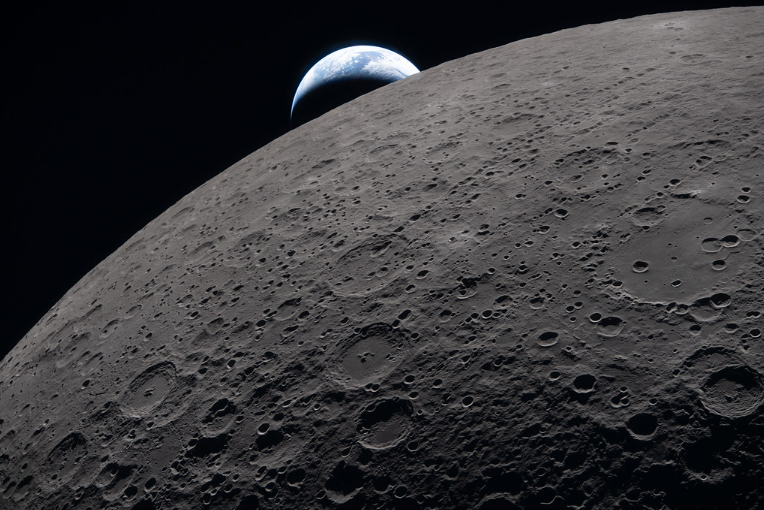
For those 40 minutes, communication between the spacecraft and Earth was disrupted. The crew on Artemis II, the learned bunch they are, knew that behind the moon, home remained. But there was also a not-insignificant chance that when the planet revealed itself, Armageddon would have taken hold. For weeks, the sundowning American president has waged an illegal war against Iran at the behest and with the help of Israel — a shove to an already dizzy world on the brink.
The morning after Artemis II made history (as well as subjecting its crew to a typically buffoonish bout of garbled grandstanding hours earlier), the American president issued a threat via social media post to erase Iran as a "whole civilization."
If the spacecraft had rounded out of darkness to a vision of Earth's surface blooming with ruptured pustules of nuclear warheads, it would have been surprising, but we all know what's going on with that ball under the t-shirt.
Still, it's hard not to fall into our own stupor given the gravity of things and that we live on that ball. For now, the Earth's still here, and despite everything to the contrary, so is our humanity, even 406,771 km away.

I'm not sure how to say this exactly...
Rank: 1... ?
Mood: 🧟
The new Fallen Footwear video is good. "Good" being relative to any one person's tastes, of course, but as someone who was prepared for Rise to be a mess, a limp projection of the past onto a present far removed, it is decidedly not that.
Anything that Fallen — or any other brand that has died, been sold off, and resurrected — produces is going to face scrutiny from fans and consumers. Zombie Lakai is known as Zombie Lakai because, despite the (often stumbling) efforts of its new owner, Marc Roca, and its co-owner(?) and brand lead, Luis Mora, their version of Lakai from 2024 onwards doesn't feel, in aesthetic or purpose, like the Lakai that the skateboarding world had been familiar with since 1999. And Zombie Lakai doesn't feel like anything at all. There's a hollowness to it that echoes — a Lakai x RipnDip collab? C'mon, man.
What Rise does well, and where present-day Fallen, at least in regards to authenticity, excels, is that the relaunched brand feels like the original brand. Fallen Footwear's owner, Ronnie Mazzei, acquired the company in 2018 and officially rebooted it in early 2019. Before that, he was an Argentina-based Fallen licensee from 2011 until the company closed its doors in 2016, so there's experience and appreciation for the brand at the top. But ultimately, the keystone is Chad Foreman.
Foreman was a co-founder of Black Box Distribution alongside Jamie Thomas. He helped steward Zero and Mystery Skateboards and Fallen Footwear in its original iteration. Foreman is back as a co-owner and marketing lead, which one imagines goes a long way toward the Fallen of 2026 resembling the Fallen of 2006.
Rise was filmed and edited by Kevin Marquez, who shared on Instagram, "I think we’ve created something special that feels right at home in the short catalog of Fallen videos." He's right, it does, from the production to the skating and the skateboarders doing it.
Tommy Sandoval has a part. It's hard to comprehend how he can still jump down such big things after so many years. The new team riders with full sections also fit the brand's ethos as we've come to know it: Nolan Miskell is a hairball all-terrain menace in the vein of Tony Cervantes (who is also in the video!), Christopher Hiett is like a screamo Franky Vilani in the best possible sense, and Dalton Dern, with his big rails, drops, wallrides, and flyouts, is about as Fallen Footwear as it gets, for better and worse.
Your mileage on this sentiment may vary, but for what it is and trying to achieve — an on-brand showcase of a particular style of high-level, life-threatening skateboarding directed at a specific subsection of skateboarders — it achieves that. That's good video.

Little bits of magic
Rank: 2
Mood: ✨
Skateboarding, for all that we think it is and want it to be, is above most everything, a constant source of discovery. Maybe that's the wrong noun. Skateboarding is a vector of discovery. Through it, a person can discover new physical abilities, a sense of courage and purpose that comes from learning those new abilities, and thanks to skateboarding's sundry cultural tendrils, one can also develop a sense of taste, a personality, friendships, community, lovers, and debilitating injuries, psychic, physical, and otherwise.
Open any social media application with video capabilities and you'll see someone doing something with a skateboard that has never been done before. At this point, decades into those digital firehoses flooding our knowledge infrastructure with what we've come to call "content", we've become desensitized to just how far people have taken skateboarding. The handrails are kinked and curved and never end. People and boards are colliding with objects and reacting in ways that are difficult to put words to. Any unknown person from the internet is likely to have figured out how to manipulate the skateboard in previously unknown ways.
Like @jimmyjamsimi. For however long I've been following him on Instagram, I haven't been able to decipher how the hell he does that thing. If you follow him, you know what I'm talking about. On a quarterpipe, to go from rock position to popping the board up into any other trick on the coping doesn't make a lot of sense. To take what should be the beginning of the end of a base-level maneuver and turn it into the beginning of a sequence of headspinning others.
It's a struggle to think of a parallel, but let's try: someone dunks a basketball, and when the ball goes through the hoop, they catch it and bring it back up for a layup. And catch it again for another dunk while still holding onto the rim. I don't know, man.
Anyway, that's the magic of skateboarding: you can get that piece of wood with wheels to do just about anything. Earlier this week, while skating my local Courts spot, Chris Haslam (subtle name drop, no big deal) started doing the Jimmyjam thing — a rock-to-backside-disaster. I asked how in the hell, and he graciously explained in great detail how the trick works. It's simple but also... not. Get into rock position and scoop a back disaster. For any non-skateboarder reading this, that sentence means nothing. For any skateboarder, it still kind of reads like gibberish until you try it. It took me a while, but eventually things clicked, and it felt like what I viewed @jimmyjamsimi's as — magic.
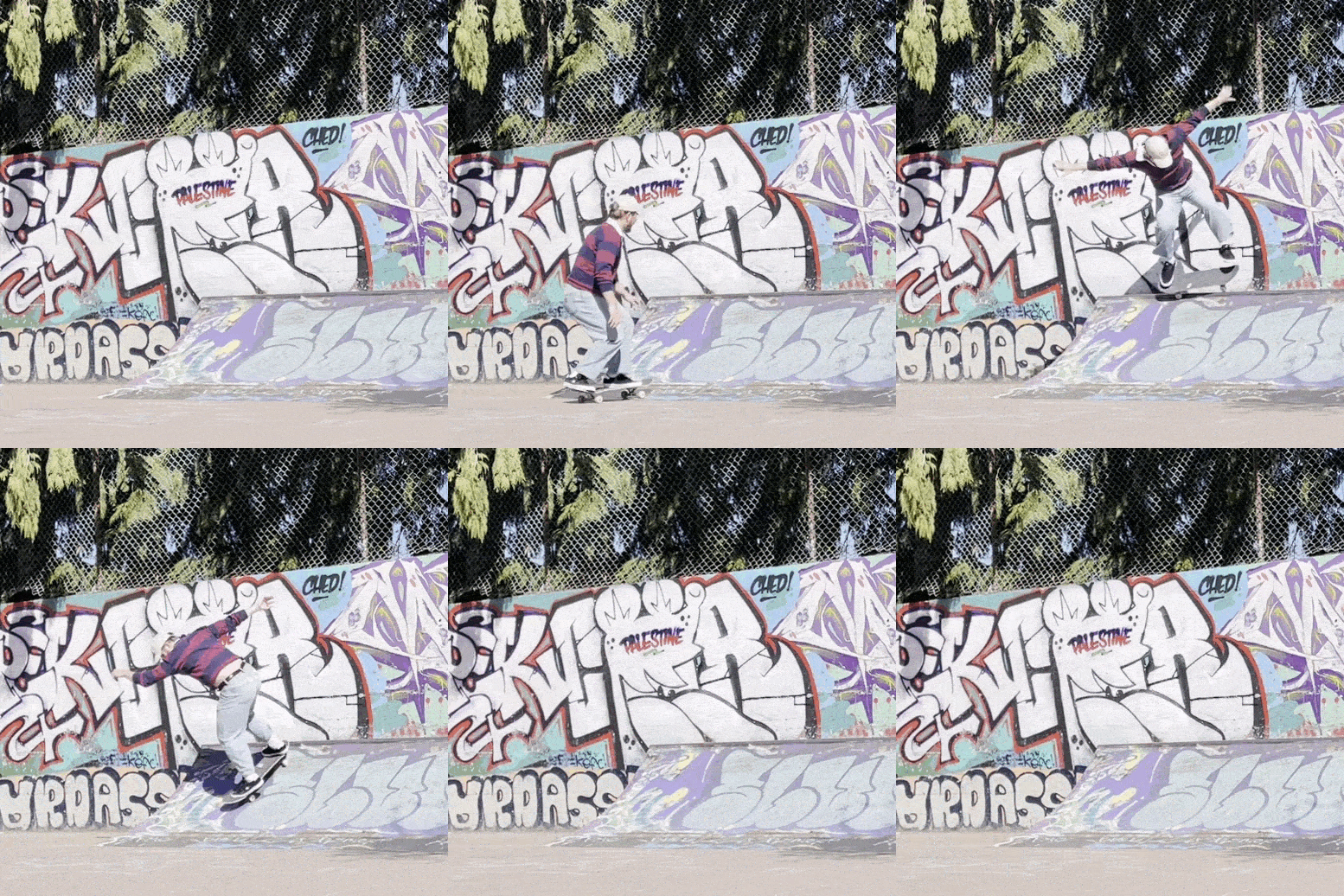
As risible and embarrassing as it is to spotlight your own little trick in your own personal blog like this, after nearly 30 years of skateboarding, these are those moments that remain the greatest gift skateboarding has given: discovery.

Something to consider: The history of concrete.
Good thing:
 Tracy Kawalik
More things about writing in the age of A.I.:
 Max Read
 Niko Stratis
Another good thing:
A Slow Impact field report:
 Joshua Stewart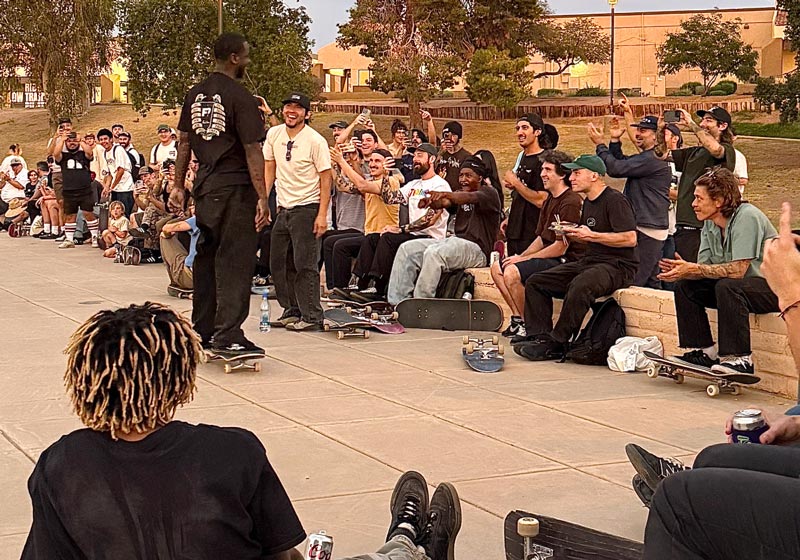
Good thing about a bad thing:
 Zach Rabiroff
A new Willy thing:
Ben Lerner things, new and old(er):
 Andrew Marantz
 Ben Lerner
A thing from the other day: I was back in The Tyee last weekend with a piece about the communal magic of sport, the deleterious effect of sports gambling, and David Macfarlane's new book On Sports.
More from The Tyee: It's awesome to be reading Infinite Jest for the first time as extreme right-wing Albertan separatists are trying (again) to secede from the country.
Unprecedented is good, right?
 Frank Landymore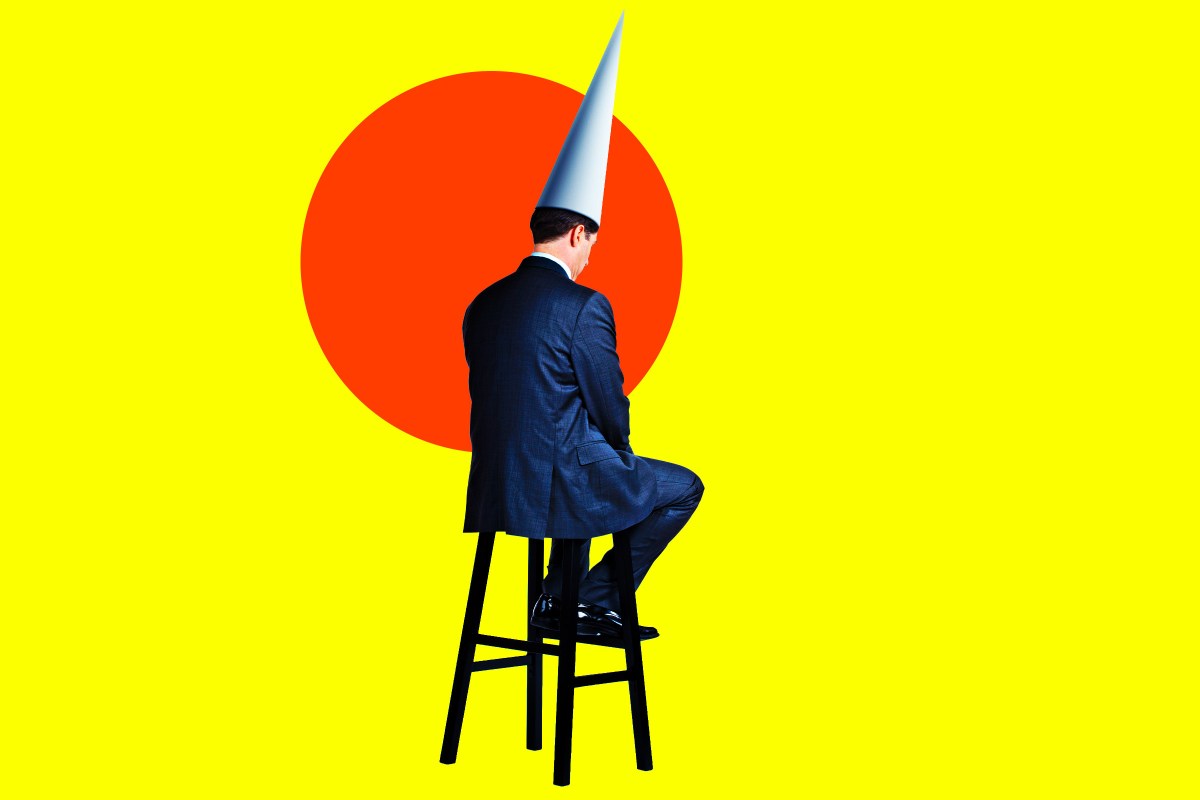
A good thing from a few weeks back:
Slobs rise up, a new Quinn Slobodian book nears:
 Matt Stieb
Blind item: Sources say that a certain shoe sponsorless Sci-Fi Fantasy star will soon be clipping up in Callicuts.
Until next week… take a big bite of a big juicy apple. Let that juice dribble down your chin. Look up into the sky. What is that? It's getting closer. Don't look away.


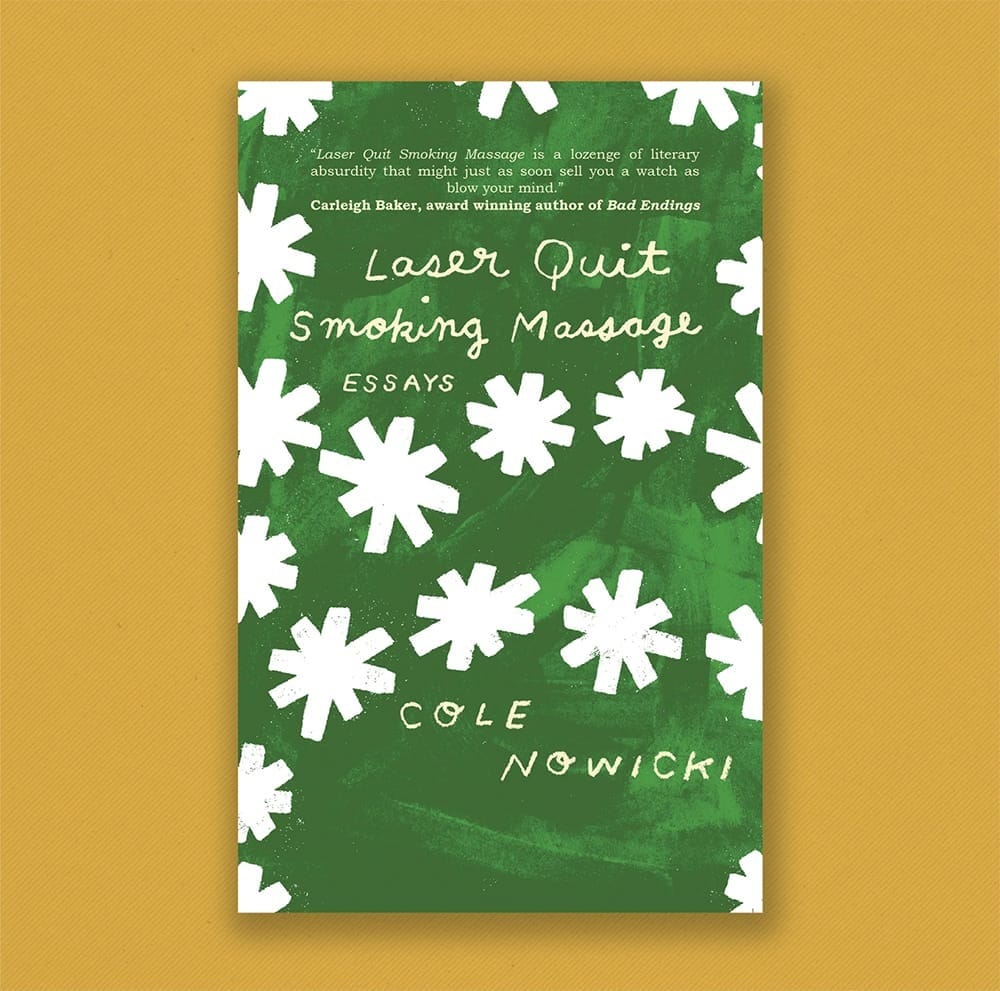
Laser Quit Smoking Massage
NEWEST PRESS
--------------------------------
A collection of essays that I think you might like. The Edmonton Journal called it a "local book set to make a mark in 2024," The CBC said it's "quirky yet insightful" (lol), and it won Trade Non-Fiction Book of the Year at the 2025 Alberta Book Publishing Awards.
Book cover by Hiller Goodspeed.
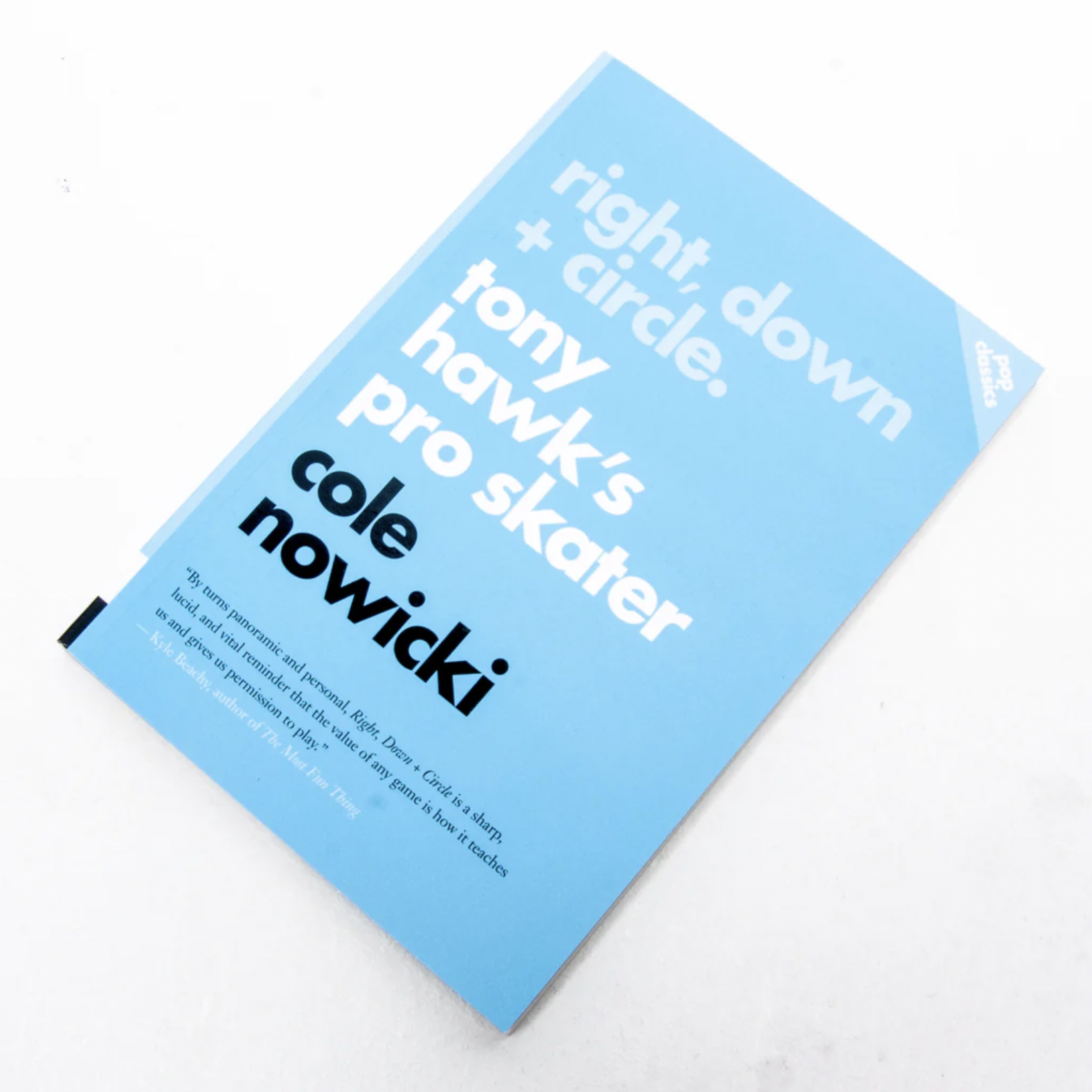
Right, Down + Circle
ECW PRESS
--------------------------------
I wrote a book about the history and cultural impact of Tony Hawk’s Pro Skater that you can find at your local bookshop or order online now. I think you might like this one, too.
Photo via The Palomino.