Ratatouillied by the worm
Tampa Pro 2026, Dalton Dern and the worm, the ick and wonder of a promotional campaign, is a skateboarding trick ever yours? and more.

The definitive weekly ranking and analysis of all the skateboarding and other things online that I cannot stop consuming and how it makes me feel, personally.

Who do you think you are Jagger is
Rank: 1!!!
Mood: 🎳
Whatever you may think of his Permanent State of Earbuds, the haircuts, or the Pete Weber-esque self-congratulatory fistpumps that slice through the air with enough force to bruise the liver of god themself, Jagger Eaton sure knows how to put a contest run together.
He proved as much again over the weekend, winning Tampa Pro for the second time (his first coming in 2018, building on a Tampa Am victory from 2014), edging out Yuto Horigome and Kelvin Hoefler on the podium. What Eaton does best is make the most of the space around him. He drifts across the entirety of the course, hitting all of the primary obstacles, while rarely letting a quarterpipe go to waste (Horigome, uncharacteristically, filled one transitional wall in his second-place run with a limp switch-rock). That isn't to say that Eaton's runs are some free-flowing improvisational jazz number. They're exactly the opposite: a cold, calculated sequence meant to check off all the boxes of a judge's scoring criteria.
Eaton's winning effort started big, with a backside leap over the tabletop to 180-nosegrind down the rail on its far side, before surfing into a switch-backside-50-50 through the corner pocket of the quarterpipe. That is both physically impressive and an impressively tasteful display of trick selection, setting Eaton up for a switch-frontside-bluntside down the rail on his return, before a kickflip-backside-lipslide through the corner pocket on his way back around.
There were also lofty airs, more flip tricks, and a pair of technical rail maneuvers, both switch and regular, before Eaton added a bit of symmetry to the series with a switch-backside-180-nosegrind down the rail opposite the one he started the run on. From there, a blunt-kickflip-to-fakie on the QP is perfunctory, as he punctured the air with fists clenched, a confidence experienced enough to know that this was not just his best one-minute of skateboarding, but the best of the field. Stylish, diverse, difficult — a run that makes the judge's job easy.
It's a strange position Eaton finds himself in, career-wise. A top competitor, yet he remains on the outside of "popular" professional skateboarding. Sponsorships with Red Bull, Samsung, and Branded Bills(?) likely help pay the bills, but Eaton is without a shoe sponsor. The Heart Supply, the board company that pumps out signature Eaton pro models, is more geared toward providing low-cost equipment to children — an admirable mission, to be sure — than promoting its team of "role models" or being, in any sense of the word, "cool."
When you look at the field of Tampa Pro 2026 finalists, you see a selection of elite-level skateboarders in similar positions, many taking whatever branded partnerships they can to make ends meet or maximize the earning potential of their often short career window. It is, in its own way, captivating to look at the brands willing to (presumably) put money behind these athletes. Some are regional skateboarding concerns, others are products you've likely never heard of, and there are a few big-time Blue Chip companies that support these skaters who can't find support elsewhere.
Let's take a look at the finalists for my favourite Tampa Pro 2026 finalists' sponsors:
🥈 Gorilla Clinic (laser hair removal?)
🥉 Skechers
4. Conectyco (eSims)
5. Revomax (insulated waterbottles)
6. SpookRider (skateboards)
7. Tampa Bay Rays (professional baseball team)
8. Venture (socks)
9. Deez Nuts Hardware

Ratatouillied by the worm
Rank: 1
Mood: 🙏🪱🙏
Within each one of us is a worm. Hungry and wriggling, mostly allegorical, it burrows into those lumpy, tender, and coercive parts of the prefrontal cortex that, if nuzzled against, pressed upon, or nibbled in such a way, will drive a person to take things further. Incrementally, and then if given enough leash, to the extreme.
Don't be put off by such a vision. Ambition is a daemon, slimy and segmented. Without the worm, nothing would get done. Scientific breakthroughs, the courage to start a small business or ask your crush out for coffee, Sha'Carri Richardson pushing past the rest of the field for gold, the collective effort required to take a lap around the moon — worm.
Some of us are more worm-forward than others. In skateboarding, an activity where one of the driving functions is pushing yourself and others to try new and more, that is especially apparent. You might first encounter it in your local Skatepark Hero, who cannot help but fly out, off, and down the biggest available features. But they are merely apeing the Professionals. The career skateboarders whose worms you can see working away behind the brow.
There is currently no professional skateboarder as wormed as Dalton Dern, which is a compliment of the highest order. What else drives a skateboarder to launch off of a giant alligator, or attempt and land what is now known as Dalton's Gap at Vancouver's Hastings Bowl in 2015 — a transfer that sent Raney Beres to the land of wind and ghosts in frightening fashion the year previous — or really, anything in his section in Fallen Footwear's Rise.
Dern's worm is not just off-leash; it has him on-leash. He is being Ratatouillied by the worm. Look closely, and you can see it working the levers — an impressive feat for a creature without limbs — as Dern climbs up to the top railing of the spectator section at last weekend's Tampa Pro, to do a taildrop from several storeys up into an embankment so mellow he nearly comes to a stop upon impact.
Video via Dalton Dern on Instagram
That's pure worm. Thank the worm. Bless the worm. Love the worm.

A supposedly fun video I'll definitely watch again
Rank: 1
Mood: 📼
A promotional campaign comes together. If it comes together well, it doesn't so much feel like promotion, but entertainment.
Before Quasi Skateboards' excellent Hard Reset premiered and was subsequently uploaded to the internet last month, most wondered if their rumoured new recruit, one Dylan Jaeb, who had left Primitive Skateboards last year, would be introduced. While he was at the premiere, he didn't have a section in the video. Speculation abounded. Perhaps he didn't have enough time to film a full part or maybe there was a separate solo project on the horizon. Something that would shine a spotlight firmly on Jaeb, who is somehow still in the class of Amateur, despite being one of skateboarding's top talents who has felt on the verge of superstardom for the last several years.
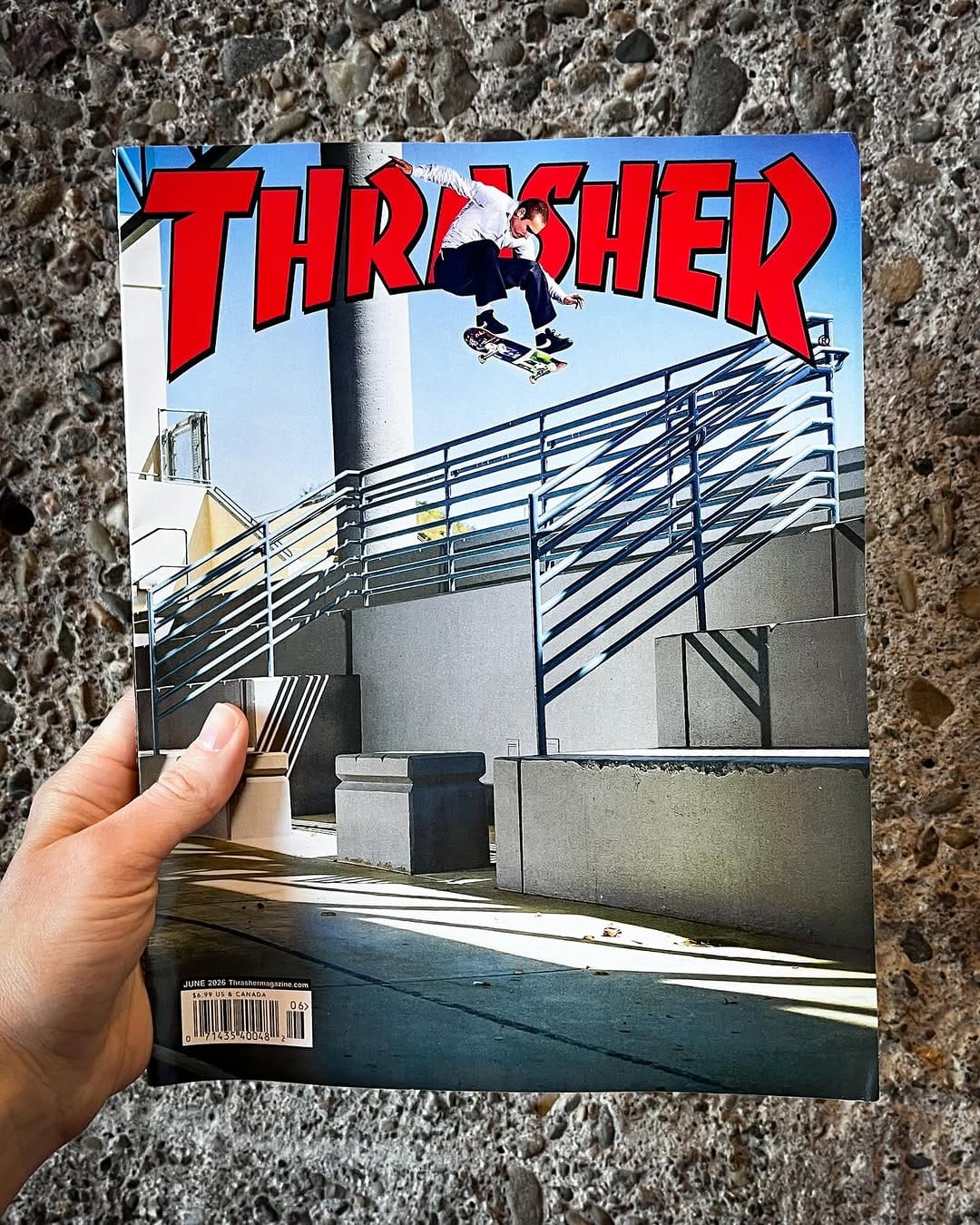
The latter turned out to be true. Jaeb's debut part for Quasi premieres this Saturday. That announcement was followed by Jaeb getting the cover of the latest Thrasher Magazine. A criminally delayed PRO turn now seems imminent.
That's a promotional campaign coming together well, whether all the details were explicitly coordinated or not (though one assumes they were). Above all, it's entertaining, as skateboarding most often is. I am now looking forward to watching the video, to flipping through the magazine.
The promotional campaign, as a concept, found itself in the news this week. A recent Wired article published on Monday with the buzzy, misrepresentative headline, "The Fanfare Around the Band Geese Was a Psyop," looks at the practices of the digital marketing outfit Chaotic Good Projects.
Essentially, the firm creates networks of social media pages (typically on TikTok) and uses them to drive the band’s music into the recommendation algorithm. Songs are dropped into the backgrounds of videos. Live clips are shared. Sometimes, burner accounts, comments, and whole ecosystems of interactions can be fabricated out of digital cloth, stoking—and in some cases, completely manufacturing—discourse around an artist. These ginned-up interactions push the songs and the discussion about them higher up a platform’s algorithmic rankings. And social media platforms like TikTok and YouTube are, increasingly, where (real) fans discover new music.
It's a seedy model that is embarrassing for the bands, labels, and so on who partake in it. Especially since there is no evidence of its efficacy, as Ryan Broderick of Garbage Day noted on Wednesday:
There are a lot of companies out there that claim they can manipulate The Algorithm and impact how users behave. And, in my experience, the majority of these companies cannot do that. The companies that own the algorithms can barely do that!
...at no point did WIRED ask Chaotic Good for proof that any of this even works. There are no links to the accounts Chaotic Good is operating, no examples of them successfully hijacking video platforms, no metrics that prove their alleged army of Geese video clippers have accomplished anything at all. Across all the reports on Chaotic Good, the only firm example I’ve found of anything they’ve done is from this Billboard interview from March. The company’s founders bragged that they were able to get Yellowjackets fans to make “40,000 creates” featuring a song from folk musician Kevin Atwater. Very cool! I’ve never heard of him. Seems like it worked.
The extent to which the attention economy has bent us — as individuals, artists, marketers, and professional organizations writ large — to its whims, or more accurately, what we often pathetically divine as its whims, has been opined about at excruciating length (by myself and many others), but if I may continue to do so, it is fascinating to watch a minor scandal like this erupt and, at least for myself, feel a certain warmth toward the quaintness of a traditional skateboarding promotional campaign.
The algorithms that power social media have, of course, drastically impacted the skateboarding media ecosystem, but its promotional skeleton is still there, ready to hang muscle and flesh off when the time comes, as exemplified in this week's Total Jaebness.
It's also a bit bizarre to feel an affinity for that, as it's another reminder that most media we consume in skateboarding is in promotion of a company producing hard and soft goods. But if you've grown up in it and are familiar enough with that environment, it feels natural, organic. Right.
I'm currently taking part in 'sletter friend and contributor Kyle Beachy's Infinite Jest reading group (if you get the chance, do take a course with Kyle; it's been such a great experience #NotSponCon), and during this week's class, Beachy brought up Geese's minor promotional dust-up in relation to David Foster Wallace's Harper's essay "Shipping Out: On the (nearly lethal) comforts of a luxury cruise."
In Wallace's piece, he describes with increasing horror what essayist Frank Conroy's (proto-SponCon) contribution to a promotional Celebrity Cruiseline brochure means for the audience absorbing it aboard that Celebrity cruise.
Its full implications don't hit me until I reread it supine on Deck 12 the first sunny day. Conroy's essay is graceful and lapidary and persuasive. I submit that it is also completely insidious and bad. Its badness does not consist so much in its constant and mesmeric references to fantasy and alternate realities and the palliative powers of professional pampering...
Rather, part of the essay's real badness can be found in the way it reveals once again the Megaline's sale-to-sail agenda of micromanaging not only one's perceptions of a 7NC [seven night cruise] but even one's own interpretation and articulation of those perceptions. In other words, Celebrity's P.R. people go and get a respected writer to pre-articulate and -endorse the 7NC experience, and to do it with a professional eloquence and authority that few lay perceivers and articulators could hope to equal.
But the really major badness is that the project and placement of "My Celebrity Cruise ... " are sneaky and duplicitous and well beyond whatever eroded pales still exist in terms of literary ethics. Conroy's "essay" appears as an inset, on skinnier pages and with different margins than the rest of the brochure, creating the impression that it has been excerpted from some large and objective thing Conroy wrote.
But it hasn't been. The truth is that Celebrity Cruises paid Frank Conroy up-front to write it, even though nowhere in or around the essay is there anything acknowledging that it's a paid endorsement, not even one of the little "So-and-so has been compensated for his services" that flashes at your TV screen's lower right during celebrity-hosted infomercials. Instead, inset on this weird essaymercial's first page is a photo of Conroy brooding in a black turtleneck, and below the photo an author bio with a list of Conroy's books that includes the 1967 classic Stop-Time, which is arguably the best literary memoir of the twentieth century and is one of the books that first made poor old humble yours truly want to try to be a writer.
That is more or less the Chaotic Good Project's promotional model, just substitute the famed literary icon with sock puppet social media accounts. Wallace goes on with concern about what prolonged exposure to advertising that doesn't present itself as advertising will do to a person.
An ad that pretends to be art is — at absolute best — like somebody who smiles at you only because he wants something from you. This is dishonest, but what's insidious is the cumulative effect that such dishonesty has on us: since it offers a perfect simulacrum of goodwill without goodwill's real substance, it messes with our heads and eventually starts upping our defenses even in cases of genuine smiles and real art and true goodwill. It makes us feel confused and lonely and impotent and angry and scared. It causes despair.
I begin to see this essaymercial as a perfectly ironic reflection of the mass-market cruise experience itself. The essay is polished, powerful, impressive, clearly the best that money can buy. It presents itself as being for my benefit. It manages my experiences and my interpretation of those experiences and takes care of them for me in advance. It seems to care about me. But it doesn't, not really, because first and foremost it wants something from me. So does the cruise itself. The pretty setting and glittering ship and sedulous staff and solicitous fun-managers all want something from me, and it's not just the price of my ticket — they've already got that. Just what it is that they want is hard to pin down, but by early in the week I can feel it building: it circles the ship like a fin.
Twenty years after Wallace's essay was published, we cannot go outside without stepping on a fin. When a music label attempts to astroturf a client's fandom, even if it's not entirely surprising given our obsequiousness to The Algorithm, it still feels nefarious on a deep and unsettling level.
The skateboarder is unfazed. To be a skateboarder for any period of time is to accept or understand that its promotional campaigns and cycles and tricks are something akin to the righteous or natural way of things. They are baked into the culture, not hidden, just rarely spoken of directly.
The times when that seal leaks or breaks are when, paradoxically, too much promotional effort is put in, i.e. Mark Suciu's 2021, Tyshawn Jones' 2023, or even Tom Schaar's 2025 Thrasher Skater of the Year runs, which approached the tenor of a political campaign, endorsements and all. Or the promo cycle for Andrew Reynolds' debut signature model shoe for New Balance Numeric, which sent "The Boss" out on a media tour unlike anything skateboarding had seen before.
So why does a Reynold's profile in High Snobiety, that is, in essence, an advertorial for his shoe, feel different than Conroy's essaymercial? Well, for one, Wallace's revulsion is itself quaint in light of our current age, where sponsored content has invaded nearly every corner of our waking life. But also, those are simply skateboarding's bones.
"Shipping Out" was featured in the January 1996 issue of Harper's. The January 1996 issue of 411VM opens with Tom Penny doing a gap-to-kickflip-backside-tailside in an indoor skatepark, followed by a wash of other tricks done by other skaters in a sea of logos, they themselves covered in branded product.
To appreciate skateboarding on any deeper level has always required an understanding of the market and its promotional practices before you get to the flashes of beauty therewithin. Is that good or healthy? Likely not, but it's almost like an inoculation against the now, that future built on the empty promises of glossy brochures that Wallace worried about, which we now find ourselves in.
"...after reading Conroy's essay on board, whenever I'd look up at the sky, it wouldn't be the sky I was seeing, it was the vast lapis lazuli dome of the sky."
Where the main difference lies, when it comes to skateboarding at least, is that Dylan Jaeb has to fakie-kickflip through the vast lapis lazuli dome of the sky, over the top bar at Rincon, and ride away. There is no false promise there. We know his Nike shoes didn't do the trick. That leaves us only to admire the feat, imagine the pleasure in riding away, or the horror of the alternative.

What's mine is... not mine?
Rank: -360
Mood: 🤕
At what point does something become yours? If possession requires an exchange of money or a contract, that's an easy benchmark for ownership. But what if it's something that can't be claimed with cash and signature? If you purse your lips and push air through them until a lovely little sound emerges, you've learned how to whistle. That new ability, accessible on demand, is yours. Pioneer a notable new take on potato salad and people will be asking for Cole's Famous Potato Salad Recipe (proprietary information, cannot be shared publicly).
Title and deed become a little muddier in skateboarding. If you can kickflip damn near every try, sure, you own that shit. However, if you're Bob Burnquist doing a switch-front-foot-impossible-lipslide on the Mega Ramp, a trick that he'll reasonably only ever do once in his life, there's an argument to be made that he doesn't own that trick; he's simply done it. If your whistling career lasted all of four notes before your pursed mouth could no longer make the sound, you can no longer whistle. Ownership rescinded.
Personally, I would like to disavow that line of thinking. Earlier this week, I landed a switch-360-kickflip for the first time in many years, which brings my total of switch-360-kickflips landed throughout life up to, fittingly, three.
Unfortunately, when I tried to do one later that same day (in an attempt to capture it with my phone and send it to the group chat, of course), I couldn't. Does that mean the switch-360-kickflip isn't mine? Yeah, probably. But! But. I did do one, and a couple last decade, so really, doesn't that offer ownership of something, if only in memory? Is it legal to say that I can switch-360-kickflip, or does it then need a qualifier like "infrequently" or "every leap year"? Does two not make it true?

Something to consider: "I Bought a House and Became Part of the Problem," by David Moscrop for The Walrus.
Good thing: 'sletter friend and contributor, Christian Kerr, with an excellent profile of Tyshawn Jones for Hypebeast.
Tyshawn intuitively recognizes how hard it is for skateboarding to compete in the modern attention economy. “I feel like everybody is looking for the next dopamine hit, and things move a lot faster than skateboarding — streams and social media, there’s a basketball game every night. It’s hard to drop a video part every three years if you’re trying to create a quality batch of work.”
To keep up, he’ll perform and post the sort of stunts that are sure to wow anyone — he’ll hurdle over a sports car, fling tricks over the subway tracks, 180 over Samuel L. Jackson. But even those clips, engineered for maximum virality, run into a deeper visibility problem. Pop can only get you so much popular appeal. TikTok metrics evidence the issue: the clip of Tyshawn jumping a Ferrari Monza SP2 has drawn only half the views of a vid where he dances with the actress Tracee Ellis Ross.
Another good thing: If you think about it, I share a part with Daewon in this.
 Cole Nowicki
A Ryan and Oria double-feature:
Good thing about a bad thing:
Corey Pein
NBA playoffs start this weekend. As they say, LFG:
Patrick Redford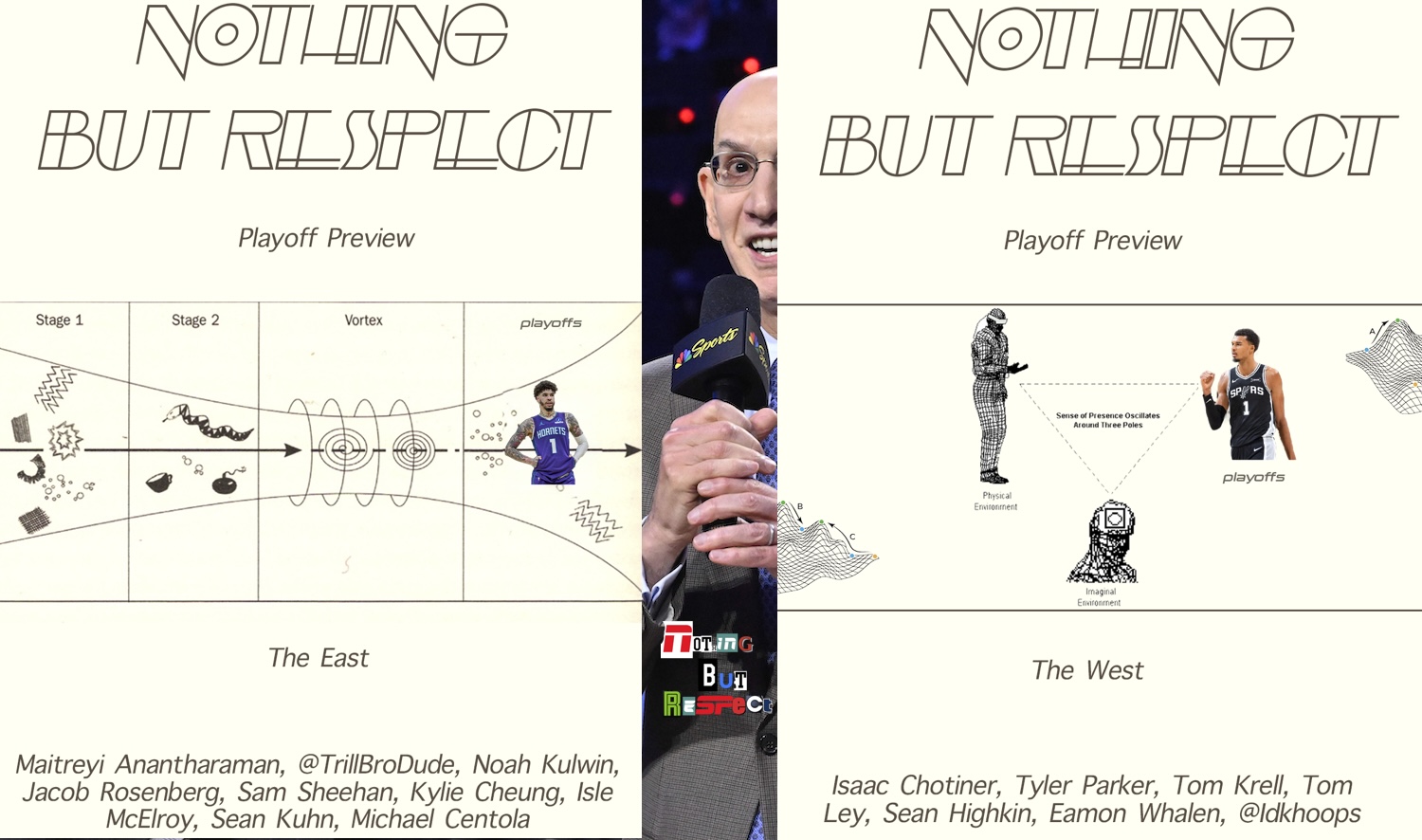
Good pod round-up:
 Justin
Until next week… depending on where you are, you might be approaching sit-on-a-park-bench-and-read-for-a-few-hours weather. That means it's also time to support your local bookshop and pick up a new read. Enjoy.


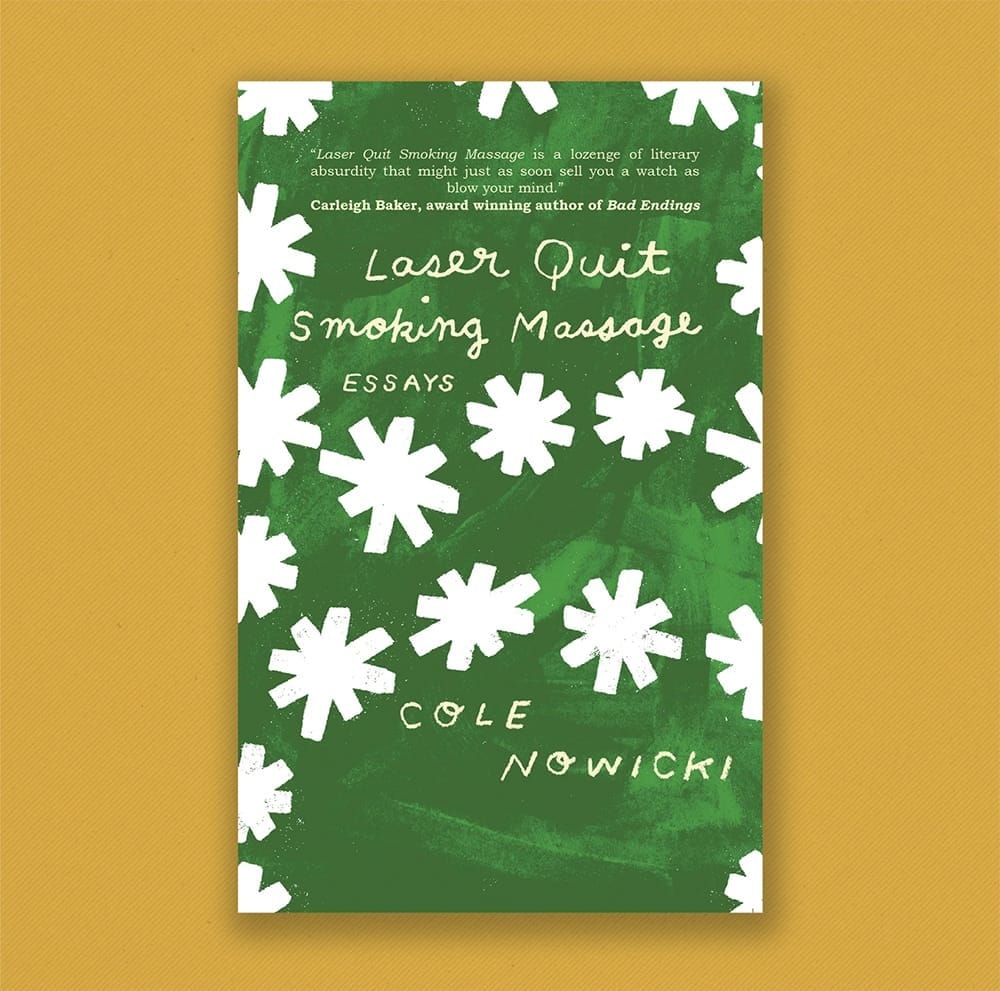
Laser Quit Smoking Massage
NEWEST PRESS
--------------------------------
A collection of essays that I think you might like. The Edmonton Journal called it a "local book set to make a mark in 2024," The CBC said it's "quirky yet insightful" (lol), and it won Trade Non-Fiction Book of the Year at the 2025 Alberta Book Publishing Awards.
Book cover by Hiller Goodspeed.
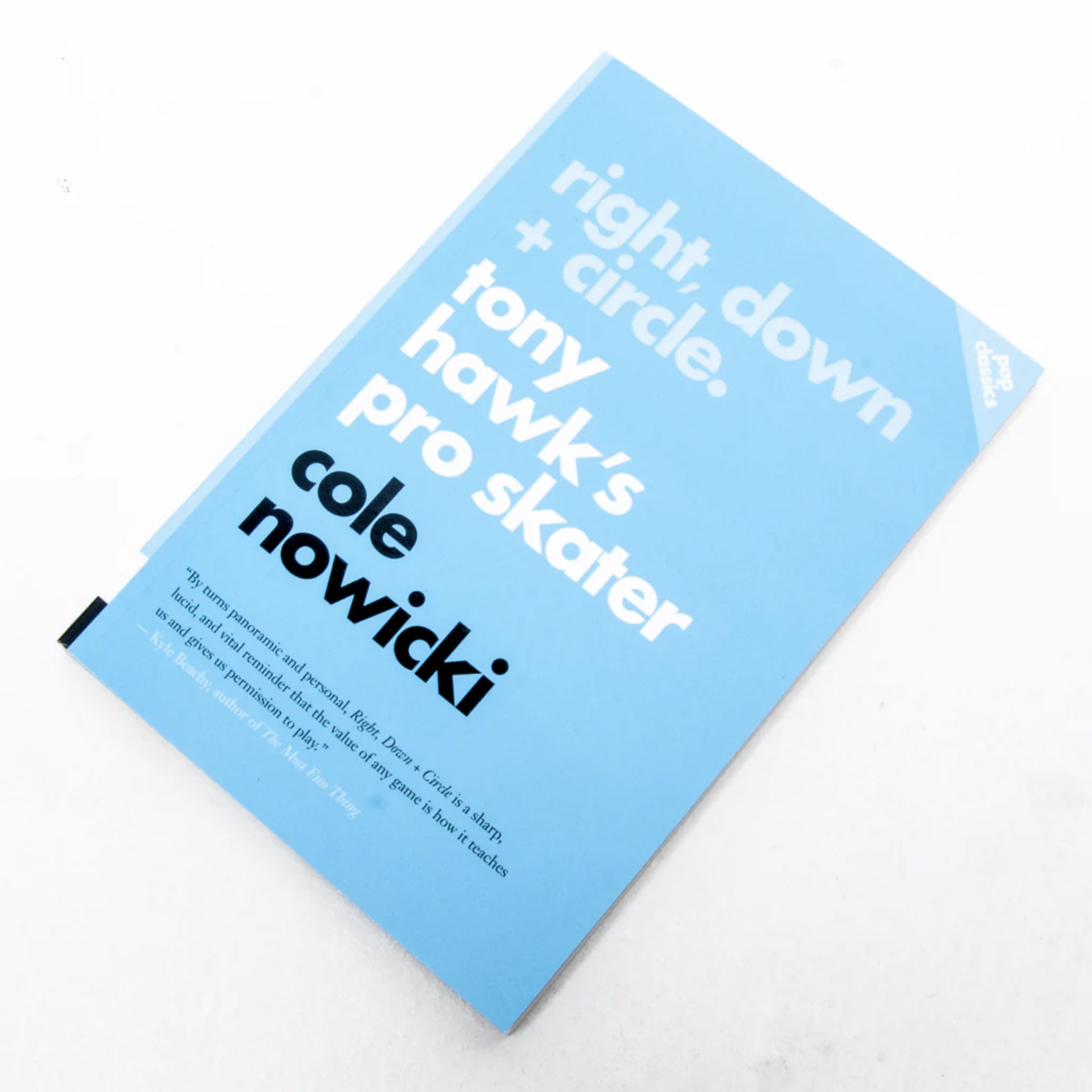
Right, Down + Circle
ECW PRESS
--------------------------------
I wrote a book about the history and cultural impact of Tony Hawk’s Pro Skater that you can find at your local bookshop or order online now. I think you might like this one, too.
Photo via The Palomino.