Just a lemon
Feel-good features from Element Europe and Vans Europe, Palace x World Industries x huh? The Homer Paradox, and more.


The definitive weekly ranking and analysis of all the skateboarding and other things online that I cannot stop consuming and how it makes me feel, personally.

Feels good, man
Rank: 1
Mood: 🫂
Longtime readers of this newsletter know that a significant piece of the Simple Magic rubric for what constitutes a great skateboarding video is Does It Make You Feel Something? That generally speaks to an emotional pitch rather than judgment of the "quality" or level of skateboarding on display.
That doesn't mean creative or high-level skateboarding on its own can't stir something in the wriggly centre of one's being — Josh Douglas' Seed of Doubt part for Opera Skateboards, published by Thrasher this week, is an incredible watch and I now know that he is someone to keep an eye on.
It's just more technically thrilling rather than emotionally resonant. These are not mutually exclusive, mind you, and there are different ways to strike that chord. It can be through the craft of an edit, a storyline burbling underneath, or a simple reminder of what it means to spend time skateboarding with your friends, as filmmaker and Genesis Skateboards' head Ian Ostrowski told LVL3 this week:
"I think hanging out is one of the most important parts of skating! And there is no one I would rather do it with than my friends. I try and document these moments as much as possible because of how fleeting they are and how we often long for them when we can’t skate."
Apart from the great skateboarding, what makes something like Blood Moon, a new video project by Vans Europe and Dolores Magazine, so enjoyable is that it's presented simply and earnestly as a group of friends on a skate trip.
Which, presumably, it really is. You can feel that in the edit, b-roll, and overall lo-fi aesthetic. The viewer just so happens to be lucky enough to tag along with Adelaide Norris, Helena Long, Tania Cruz, Emilie Alexandre, Jechu Corvalán, Moa Zander, and Vanessa Konte as they trek around the South of France. It's not overly polished and it's all the better for it.
That said, the extremely polished also benefits from simple injections of humanity. New Balance Numeric's recent tour video Running Numbers is about as Professional-Grade as it gets, from its plentiful HD cameras to multiple vans full of the world's best-known skateboarders, but barely a minute goes by without us getting to see those stars enjoying each other's company.
Element Skateboards' latest full-length, Search, also succeeds at this. Element is a company that felt like it was lurking on death's stoop a little more than a year ago after its former North American licensor, Liberated Brands, had its many brand licenses pulled by their owner, Authentic Brands Group, and went bankrupt. That led to hundreds of stores closing and thousands of people losing their jobs. Element itself restructured, laid off a good portion of its team, and eventually split, with European Element, which is responsible for Search, now a fully separate entity from whatever comes out of Authentic Brands' North American and Australian licensors.
Confusing, yes, but even through all of that, it's not difficult to watch Vincent Milou, Brandon Westgate, Vitória Mendonça, Jaakko Ojanen, Alexis Lacroix, and many more amazingly talented skateboarders (Vinicius Costa! A new drop-in guy!) travel to untouched, visually stunning spots, perform sensational tricks, and appreciate one another and their shared experience along the way, and get something more out of it as a viewer.
Of course, it helps that it's a beautifully constructed video, as all Element projects have been under the guidance of Phil Zwijsen. In this instance, the vision of Jim Craven, along with Jérémy Hugues in the editing booth, makes Search sing. How often can you call a skate video uplifting? That's what watching Search achieves. It makes the viewer feel part of something — a journey into the woods, a hang at a centuries-old ledge spot, a group of friends. There's a warmth to it, whether through the charming antics of Element's "content coordinator" Brendan Murray or the scads of b-roll, which tend to follow the Ostrowski rule.
"Another important part of this is capturing moments before they go away. Sometimes I think people put too much emphasis on polished b-roll and everything looking fancy and nice but I actually strive for the opposite. I end up using a lot of iPhone and handycam footage because if I were to take the time to set my real camera up, I would’ve completely missed the moment as it’s happening."
And it feels good, man. Get it before it goes away.

Thinking small
Rank: 1998
Mood: 👿🔥💧🍋
Irony is a standard marketing language. Consuming ironically — say, wearing Ed Hardy in the year of our lord 2026 — is common practice. Irony's promotional use and utility have, by this point, matured. When employed, it usually involves a few recognizable components: a premise that appears outside of a brand's norm, a tacit acknowledgment of the absurdity of said premise, and some form of embrace of that premise, whether through earnest engagement, a wink to the audience, or by leaning further into that incongruity.
You can find early traces of it in Volkswagen's famous and analyzed-to-death "Think Small" campaign from the 1960s, the most notable of which is its "Lemon" ad.
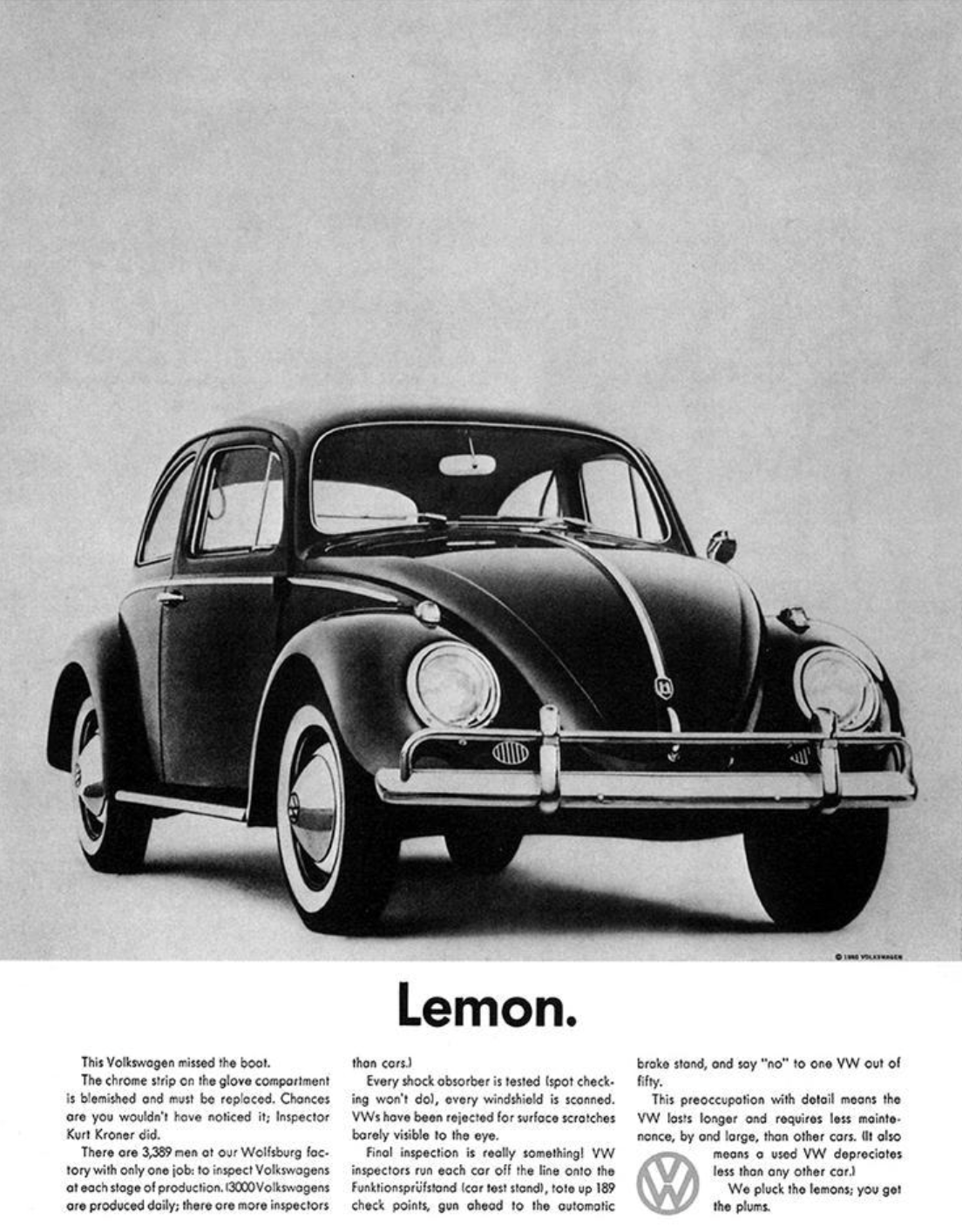
It's an advertisement that, by the then-absurd premise of advertising a single product's "faults," actually sells the reader on Volkswagen's quality control: "We pluck the lemons; you get the plums." That irony, if you can even call it that, isn't as caustic or detached as we know it to be now. It doesn't go any deeper than it being a twist to promote a car by first calling it a lemon.
By the 1990s, the roiling frustrations and angst of younger generations, which had largely expressed themselves through various countercultural movements, were already accustomed to those flashes of authentic feeling and purpose getting co-opted and flipped back on themselves, ready-made for consumption. In 1993, OK Soda branded itself with detached irony in hopes of speaking to that increasingly cynical, disillusioned Gen X demographic. One of MTV's breakout hits was Beavis and Butt-Head, Mike Judge's animated series following a pair of aimless teenagers concerned only with pursuing a crude, solipsistic existence, one shaped by the decaying society around them. A pointed New York Times article from '93 described the process of churning that malaise into profit.
Every few years a show comes along that connects with some dark urge in the adolescent unconscious and becomes almost immediately a force in popular culture. After less than six months on the air, MTV's "Beavis and Butt-head" seems to be such a show. The delinquent duo already have their own line of marketing paraphernalia, including, of course, underwear. They have been taken up by David Letterman, who quotes them liberally. Their first book is coming out next month. A movie seems inevitable.
At the time, "selling out" was still a very real concern, but for many, it wasn't so much integrity that was at stake, but the protection of one's image, of a personal brand. (That concept would gain traction a few years later, thanks to proselytizing works like Tom Peters' widely-cited "The Brand Called You," published by Fast Company in 1997.)
When trying to maintain your brand while engaging in corny corporate partnerships or while attempting to sell corny products to dissaffected youth, irony proved itself an effective tool. It creates a penumbra around the subject of ridicule; a shadow to exist and be seen in, but not become a target of. However, for it to actually work, there needs to be tension, taught and believable, between that irony and your appreciation for the audience and their understanding of it.
Palace Skateboards has played with that tension, often with success, for over a decade. Mixing acid-tongued commentary on the skateboarding industry with an endless barrage of collaborations with endemic, luxury, and blue-chip brands that range from funny to nauseating to genuinely inspiring. They take on the feel of increasingly expensive inside jokes. The wink: Can you believe we're doing this?
However many dozens of collaborations in, we certainly can. Part of what has helped Palace maintain its own brand as it continues to do, what in another time would have been quickly labelled "selling out," is that in the age of social media and the contentization of everything, "selling out" is no longer a concern. It's now considered a privilege to use whatever-sized platform you have to hawk garbage.
In that vein, Palace has moved so far beyond selling out that they are now attempting to peel back an entirely new layer of irony by scraping away at splinters in the bottom of the barrel.
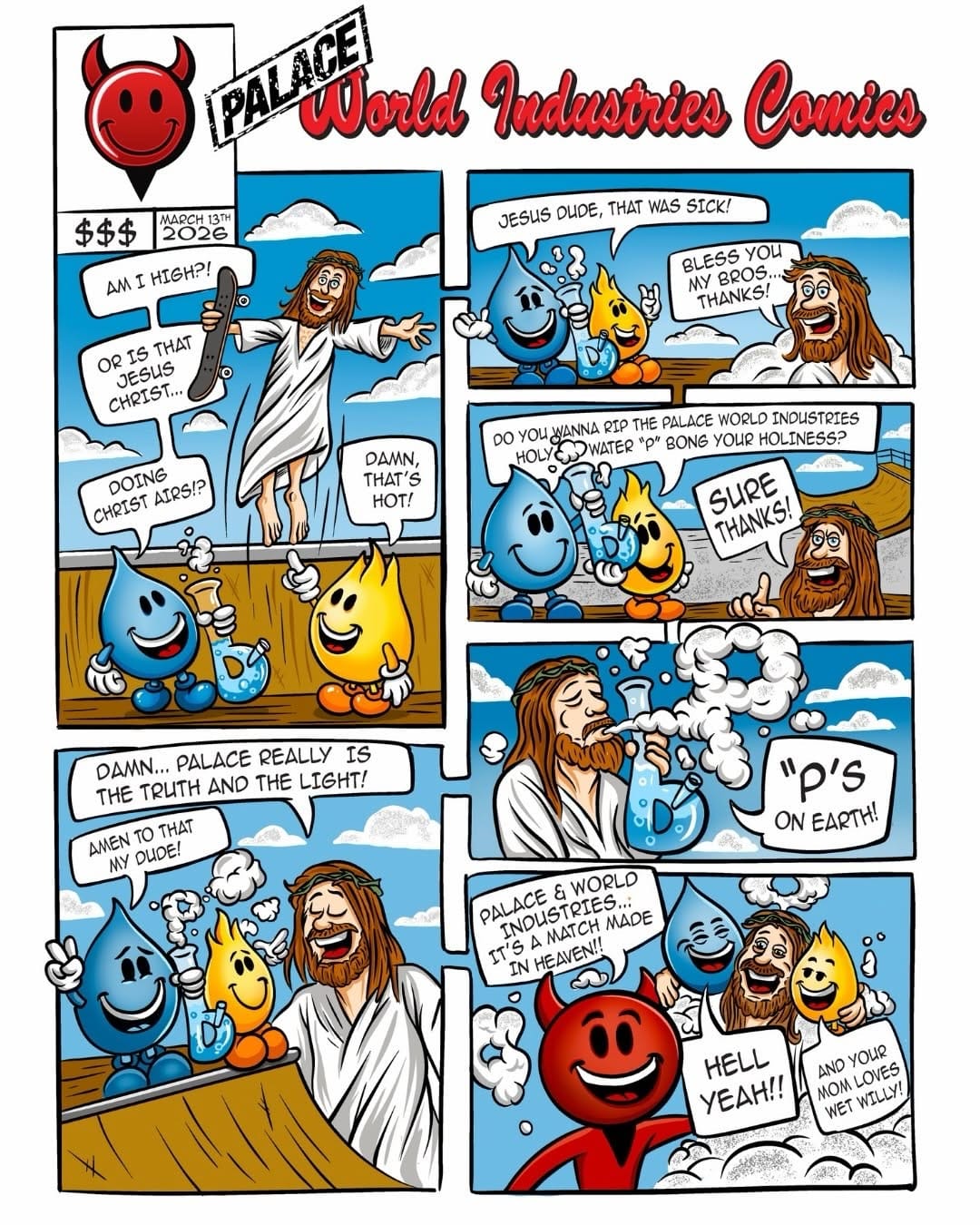
A collaboration with World Industries, a brand that had already lost its lustre by the time I started skateboarding in the late '90s, and that has since been picked up and tossed around by multiple private equity firms and conglomerates since its sale in 1998, its products found in more Walmarts than skate shops, is an odd but fitting choice for Palace.
There is something, on its face, subversive about aligning your brand that remains "cool" with one that is three decades removed from anything resembling that. This collaboration isn't even an embrace of the "cool" era of World Industries, when videos like Trilogy, 20 Shot Sequence, and Love Child were seminal events — this is the post-Steve Rocco era, when the brand thrived by lining the shelves of sporting goods stores with its Spy vs. Spy analogs in Flameboy and Wet Willy.
An era that the current World Industries brand director, R.P. Bess (of late-stage Dwindle fame), would recently describe to Boardsport Source as "heritage."
The characters are now close to 30 years old. Reaching heritage status in our world. We continue to release heritage products as well as create new fun situations for these guys. With the mid 90’s still trending there’s a lot of excitement around the brand and its history. We like to think the brand has an aura of nostalgia that Gen X and early Millennials are attracted to. Who doesn’t like remembering their best years? And we were a part of them.
Contrary to Bess' read, it's doubtful that people are purchasing World Industries products in 2026 because they're "remembering their best years." If anything, it's because Flameboy and Wet Willy reside in the same tier of brand recognition as the No Fear eyeballs. Brands to be consumed ironically by generations starved for anything that feels like something. Even if it's a joke.
That's where the tension runs slack for Palace. What presents itself as winking reverence for a bygone era, or just an elaborate piss-take, feels undercooked and underthought. A half-hearted grasp at a "still trending" '90s nostalgia or a jab at it. Doesn't matter, really.
At some point, irony, detached and deployed in such a way and for so long that it's integral to your own marketing language, will become detrimental. Eventually, difficult existential questions arise: If this is your primary mode of communication, do you believe in any of it? Because if you don't believe in anything, you can't actually say anything. And without the subtext, a "Lemon" loses its twist and becomes just a lemon.

The Homer Paradox
Rank: 36
Mood: 🍩
It is a rite, not so much of passage, but of the simple passing of time, when a person comes to realize that they are 36 years old, the same age as Homer Simpson.
Homer, a caricature of American excess, has been portrayed throughout his decades on television as a slob, a dullard, and unmotivated to pursue anything beyond his own dimwitted pleasures. It's a good life. The golden pocket of seasons 3-11 of The Simpsons proves as much. He owns a home, has a good job in the energy sector, and an ever-expanding friend group. He loves his family in his own way, even if he doesn't seem to like or respect them. He'd rather go to space, strike it rich, lose it all, lose his job, take on countless others, and cause significant infrastructural damage to the city he calls home and trauma to those he shares it with.
Last year, Homer, perpetually 36, celebrated 36 years on television. (The showrunners celebrated this odd and remarkable alignment of time by killing off Marge, his wife.) I turned 36 this year, and while it's a good life — no complaints, really — owning a home and being able to afford raising three children is about as fantastical an idea as going to space. Call it the Homer Paradox: this cartoon character, a send-up of how consumerism, endless Entertainment, and a culture of single-minded selfishness make for a laughable, risible existence, now has the baseline ingredients of a life that many would rightly envy. Benchmarks that shrink ever smaller on the horizon as economic disparity grows.
Every 36-year-old must contend with the Homer Paradox. And now, to compound things, every 36-year-old skateboarder has something else to contend with — we "have nothing, buddy."

What we do have
Rank: 1!
Mood: ❤️!
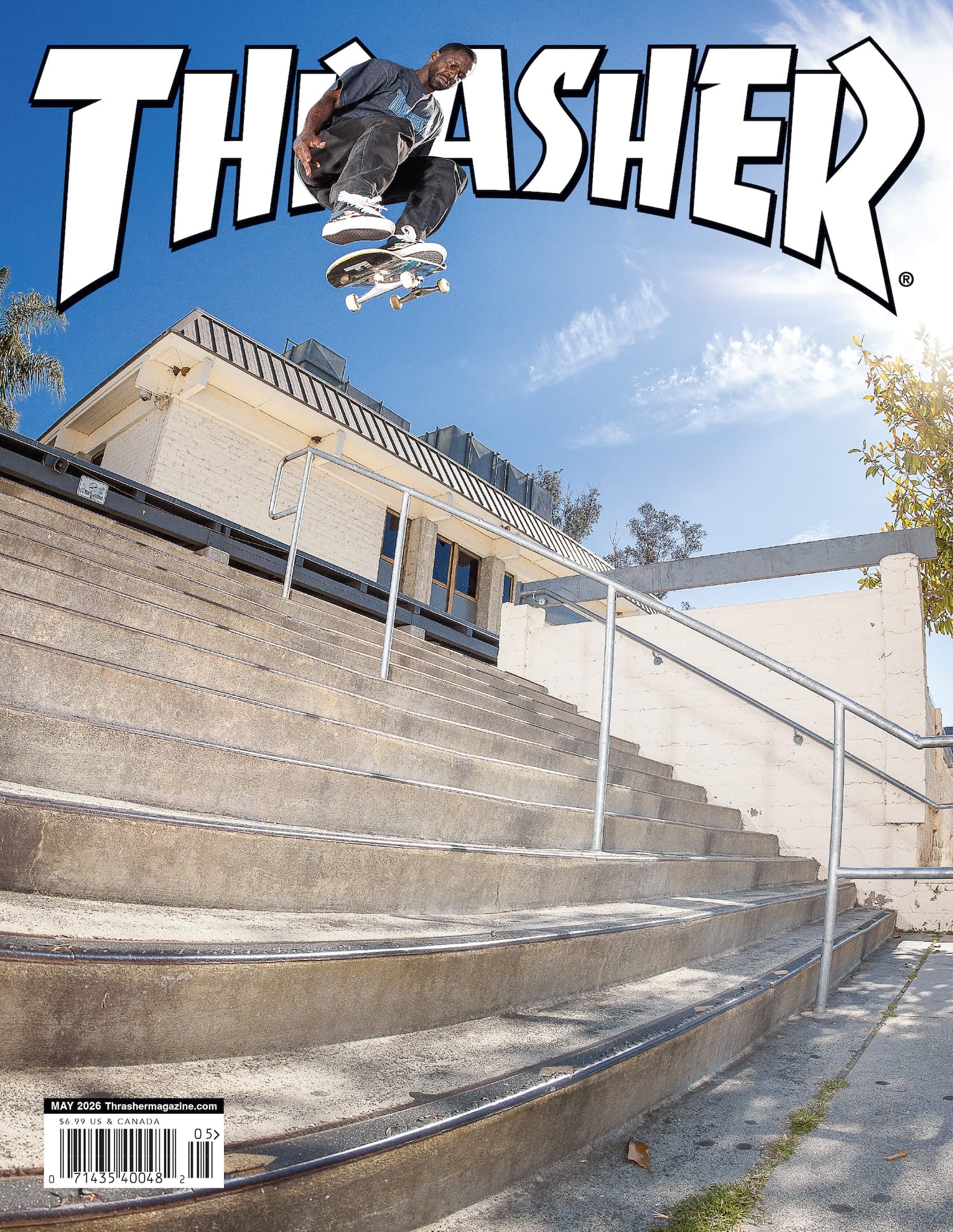
Feels good, man.

Something to consider: This new Cameron Winter song.
Good thing: "The Joyful Wrath of the Skater Librarian" by Natalie Porter for The Tyee.
Another good thing: Joe Allen's latest heater.
A good thing to register for:

Good thing about a bad thing:
 Jason Koebler
Sometimes it's just nice to read good writing about terrible people:
 Andrew O’Hagan
Architectural Digest is pro skate shop:
A fuck FIFA update:
 Amir Ali
A good filmic longread thing: "Benny Maglinao – Skateboarding’s Faceless Visionary" by Seb Field.
A good thing about reading and writing:
 Luke O’Neil
A good thing about basketball:
 Ben Peterson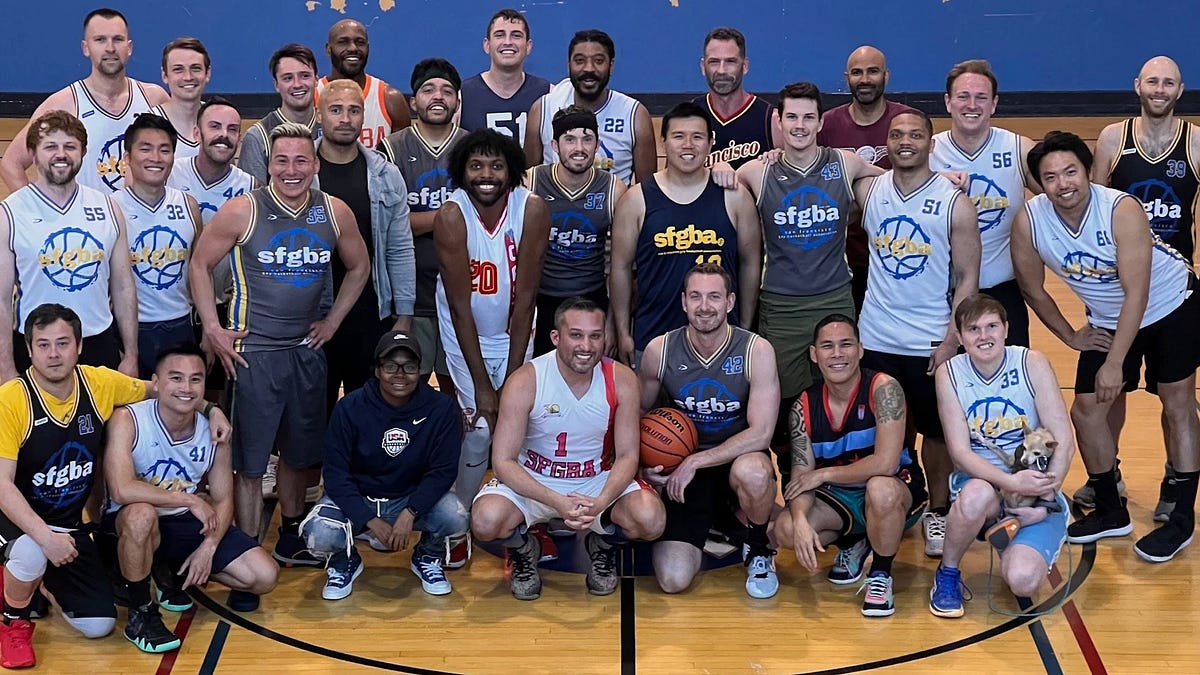
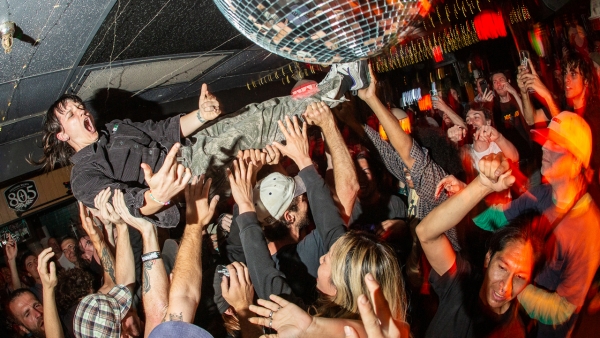
A Slow Impact recap round-up:

 Posted by
Templeton
Posted by
Templeton
 THE WAR REPORT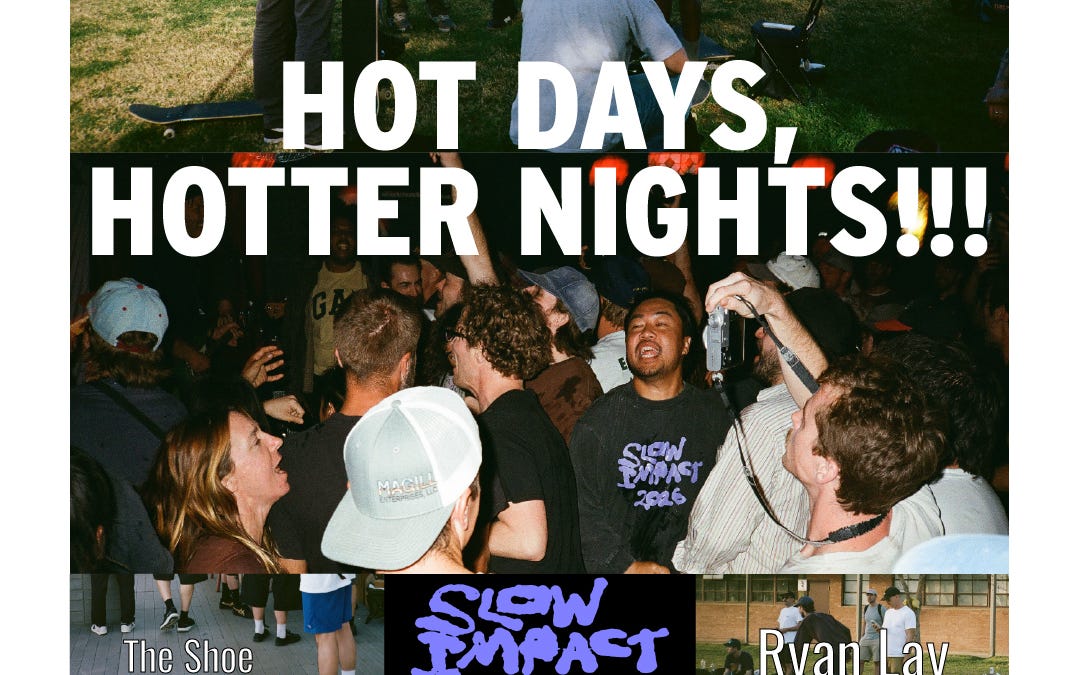

A novel newsletter thing: Writer, comedian, and 'sletter friend Mort Burke has been releasing a "psychedelic novel," chapter by chapter, via his newsletter.
 Morton’s Substack
A Kerry Getz name drop in Time Magazine thing:
 AnneLise Sorensen
A Ted(x) talk thing: I haven't had a lot of nice things to say about Ted Talks in this newsletter, but John Gardner's is an exception.
Until next week… being 36 years old is awesome, actually.


Laser Quit Smoking Massage
NEWEST PRESS
--------------------------------
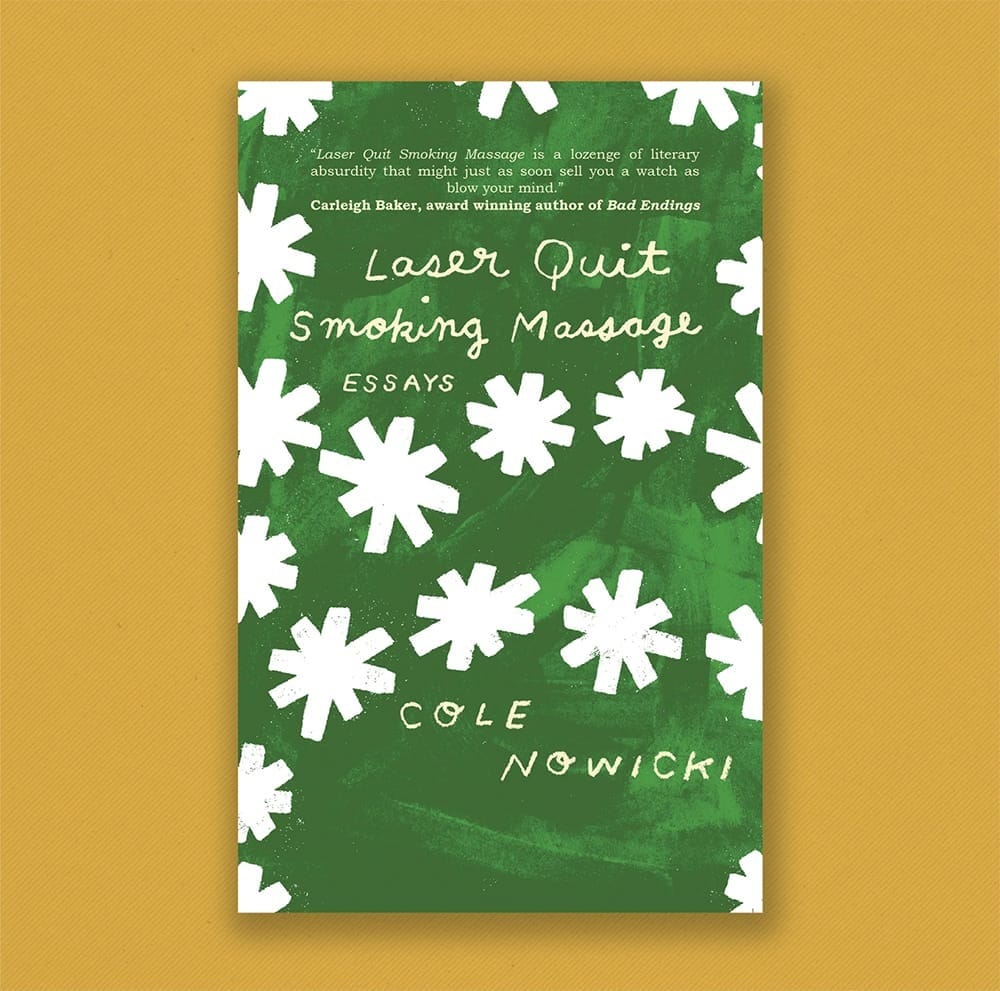
A collection of essays that I think you might like. The Edmonton Journal called it a "local book set to make a mark in 2024," The CBC said it's "quirky yet insightful" (lol), and it won Trade Non-Fiction Book of the Year at the 2025 Alberta Book Publishing Awards.
Book cover by Hiller Goodspeed.
Right, Down + Circle
ECW PRESS
--------------------------------
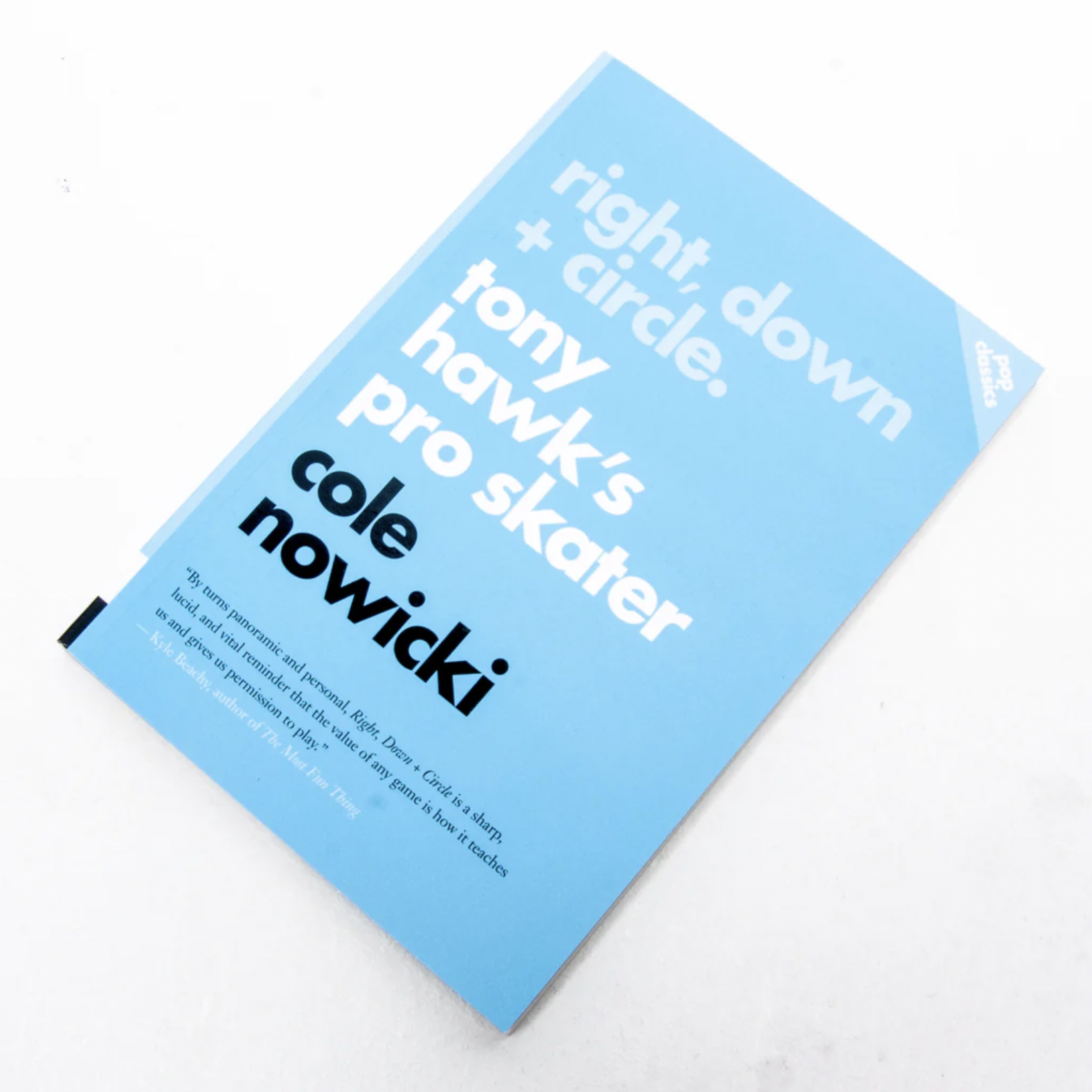
I wrote a book about the history and cultural impact of Tony Hawk’s Pro Skater that you can find at your local bookshop or order online now. I think you might like this one, too.
Photo via The Palomino.