Doubles: skateboarding as ritual
A tête-à-tête with Andrew Murrell.
All that it takes to turn an activity into a pastime, a pastime into a habit, and a habit into a ritual is dedication. Dedication can be borne of genuine interest and enthusiasm, or it manifests from some darker region of our psyches. It’s typically a bit of both.
Since skateboarding requires significant dedication, it is thus rife with ritual. The personal and the cultural. From how a person grips their board, the compulsions that diverge into “madness” while they use it, how we digest skateboarding through the creation and consumption of physical and digital media, to the ways skateboarding manifests in our personal lives. In this edition of “Doubles,” Andrew Murrell and Cole Nowicki pick at, pull apart, and examine some of these shared sacraments and why they compel us so.
RITUALIZED PLAY
COLE: At the risk of starting us off on the corniest of feet: skateboarding is personal. The size of board you use, how you dress while on it, what tricks you do, the media you prefer to consume — all of it is yours. Together, these preferences create an individual profile. Taste, you might call it, but it’s also the result of a shared ritual.
If you started skateboarding as a kid, maybe this day looks familiar to you:
2. Skate to school.
3. Skate at lunch with your friends.
4. Skate home after school.
5. Watch a skate video while eating an impromptu and disgusting after-school snack (a tortilla wrap with only French's Classic Yellow mustard at its centre).
6. Go outside and skate with your friends.
7. Come home, eat dinner, read skate magazines in your bedroom until lights out.
That was more or less my Monday-to-Friday routine, with a few steps added or subtracted as time went on, from age 9 to 17. I did that of my own volition, compelled by an obsession. This practice became ritualized — or, as Dr. Paul O’Connor calls it in his book Skateboarding and Religion, “ritualized play” — and fine-tuned as my tastes and ability developed, eventually influencing my skateboarding.
At the time, I never considered what I was doing a routine, let alone a “ritual.” I was just skating. But it was all of that: rigid, driving, and all-consuming. It shaped who I was as a young person and even into adulthood.
What was your first encounter with skateboarding as a ritual, if that’s how you see it?
ANDREW: I never thought of skateboarding as a ritual until very recently — really, only once I was faced with the possibility of life without it after re-re-re-re-re-re-rolling my ankle last year did I start to think about its oversized presence in my life and how it didn’t fit neatly into the oft-argued “sport” or “art” boxes. Really, we should credit Ian MacKaye for referring to skateboarding as a “discipline.” Anyways! In 2025, I really started to think about the ritual of skating — going to the skatepark every Wednesday and doing X tricks before hitting the streets on Saturday — but also the rituals around skating, like going to the skateshop every second week of the month to buy the latest issues of a magazine. I’ve been doing this for close to 15 years, ever since I let my subscriptions lapse. Is the magazine good? Not really, no. Am I seeing anything I can’t access online? Again, no. Do I enjoy going to the shop and saying what’s up to everyone? Definitely. Would I feel weird not doing it? Yes, absolutely.
COLE: About once a week, I stop in at Antisocial here in Vancouver to say hello to whoever’s working and pet Blue, the shop dog. Those scritches behind the ear? Ritual.
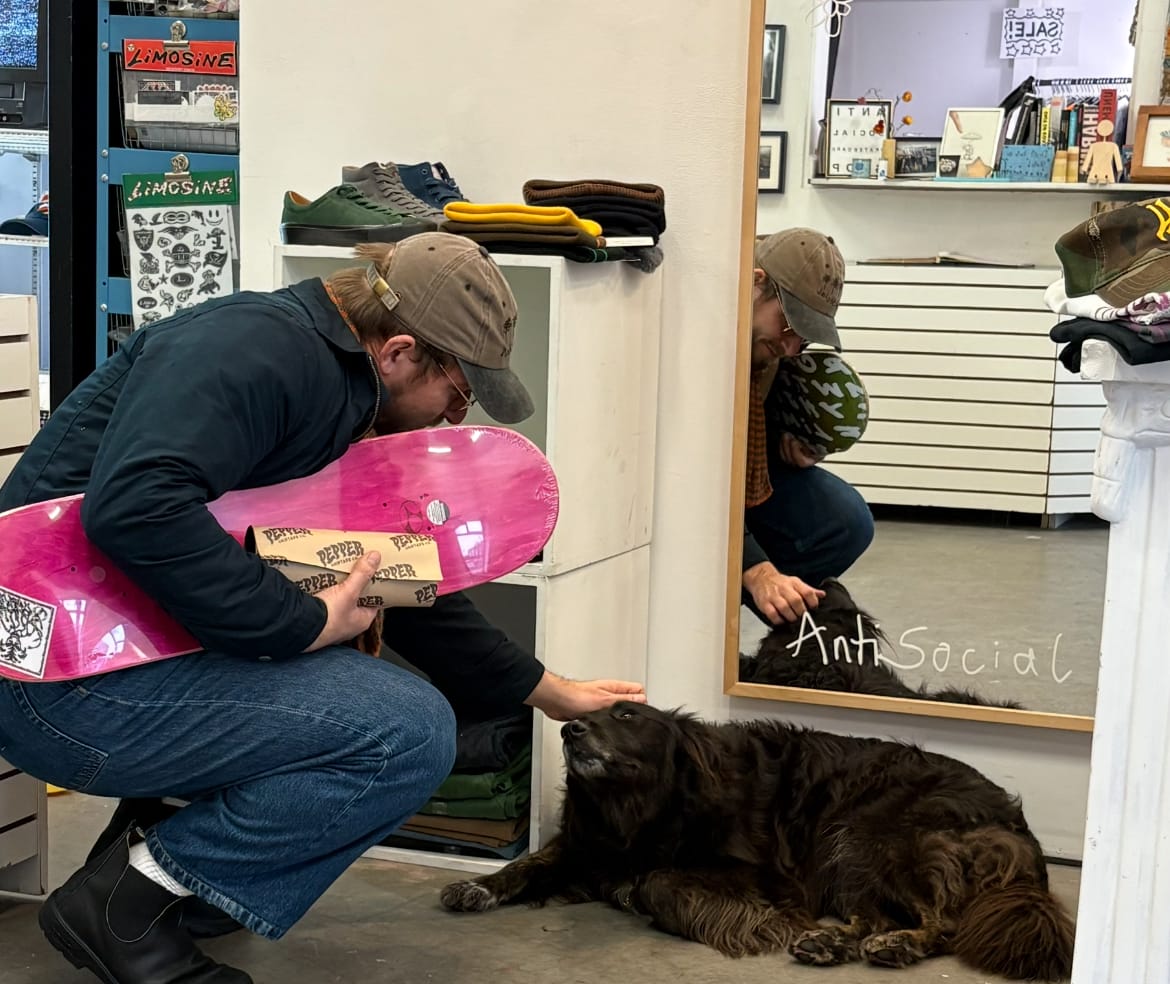
ANDREW: And that reminds me of all the things around the skateshop visit — the bike ride, grabbing film from a nearby store, running into pals, etc, etc. We don’t have shop dogs up (down for you, I guess) this way, but I’m still optimistic that one day, I’ll meet a skateshop cat.

HALLELUJAH, SKATE IS BOARD
COLE: Jumping back to skateboarding and religion, skateboarding as a practice can come to feel downright spiritual, especially when done with others. Oh, you’re meeting up with your friends at a spot every Sunday to chant hymns (“let’s fucking go”), show your devotion (trying a trick 100 times), and ask for mercy (“can I just land this shit already”)? I’ve got news for you.
The Barrier Kult’s whole deal is a rip on that truism taken to its most metal and crusty extreme. Does skateboarding and its various quirks ever feel like some sort of communion with a higher power?
ANDREW: On a day-to-day level, a good session evokes the relief you feel after a workout combined with the mental satisfaction of knowing everything’s still in the bag (hopefully), but I really think that feeling of transcendence comes from creating something out of nothing. You see a trick in a video that looks cool, you say, “I want to do that,” you take the time and energy to learn it on a skatepark ledge, you get better at it, you take it to a street spot, you film it, you do it regularly. Congrats! You completed the journey from “impossible” to “second nature,” and it was mostly you, but it’s still crazy to think that a few years ago, something of that nature would be impossible.
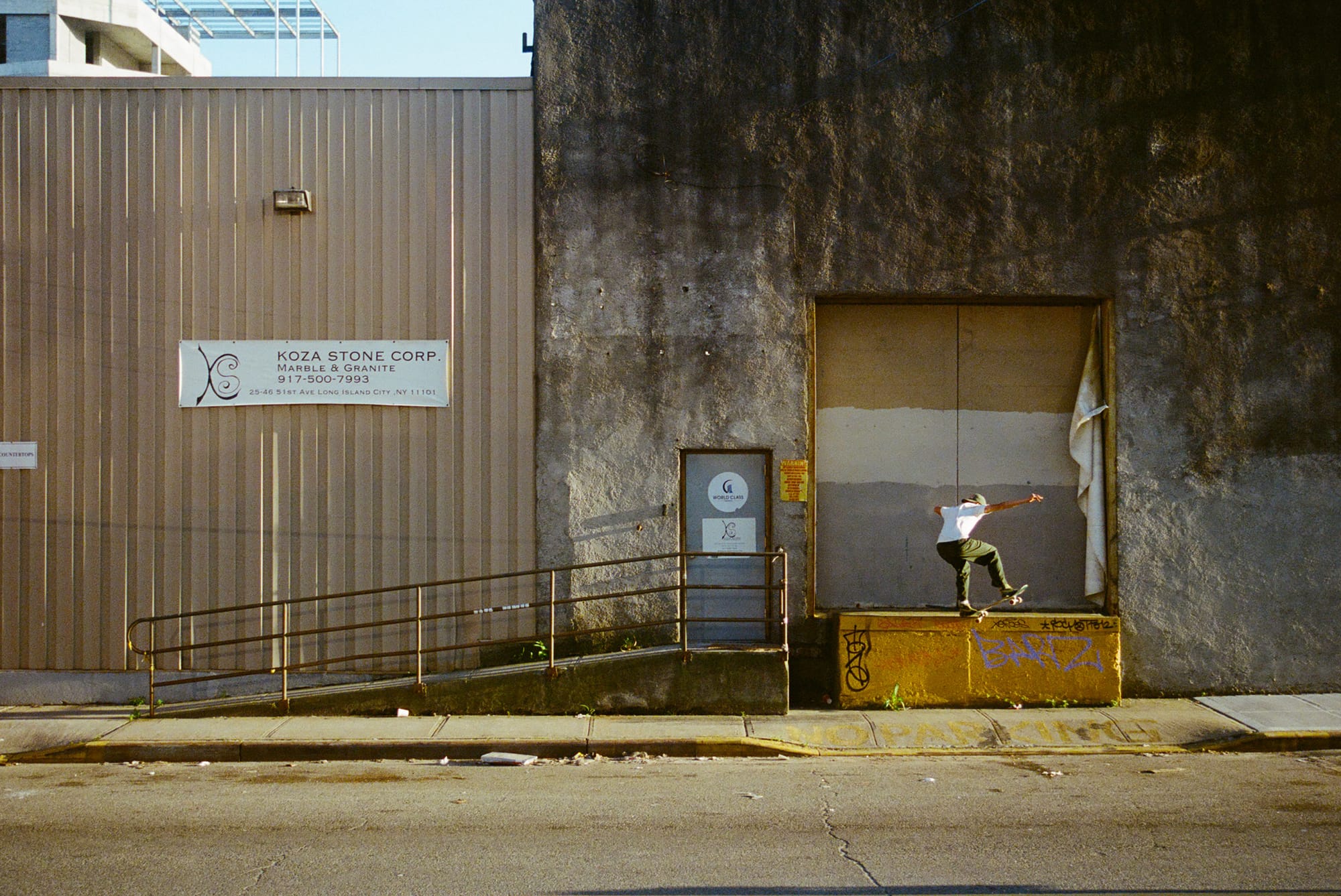
Sometimes, the process doesn’t even involve stepping on a skateboard. When I couldn’t skate last year, I was biking around with friends, camera in tow, and we wound up watching our hyper-talented friend skate a picturesque spot as the golden-hour light was shining down on him, and I shot one of my favourite photos to date, totally unplanned. If you asked me that morning what the day held, I’d have never guessed that! All these factors just came together in perfect harmony. It’s not the exact same as rolling away, but that sense of satisfaction, of “holy shit! That happened” was still there.
COLE: Sounds divine!

IÓS VÉRITÉ
COLE: A few weeks ago, while I was at the gym Getting My Fitness On, I watched a guy set his iPhone against a waterbottle to film his sets on the bench press. My immediate thought was “that is so wack,” before getting immediately slapped with the realization that I’ve done the same thing countless times before with my own phone and waterbottle to film my little tricks at the skatepark. To the point that it’s part of my lunchtime routine.
Documenting skateboarding has long been part of its cultural practice, but self-documentation has evolved and expanded dramatically in such a short time, and, at least to me, really highlights the distinct form of vanity that’s central to skateboarding’s many, many rituals. Is skateboarding unique in that way or is centring the self above all else just the norm nowadays?
ANDREW: It’s funny you mention someone filming a set at the gym. There are definitely kooks there whose selfie setups take up way too much room, but I’ve been in PT long enough that I know the way to ensure you’re activating the correct muscles is to just film your exercises. That mentality actually made me way less cagey about filming myself while skating and being forced to confront your own failures–like, yeah, that is how I look when I try that trick. Bend your knees more and you got it!
Anyhow, I reject your entire premise.
Skate videos, at their best, are a communal effort, now more than ever. The skateboarder is giving it his/her/their all in every clip, but those are merely “content” without fellow skateboarders to play off one another–arguably, to inspire one another at ground level–and a filmer’s grand vision to give each their own unique edge. I’ve been watching a lot of local videos lately (ask me for some recommendations!), all of which contain some fantastic parts that could stand alone, but the power of group and scene is the rising tide that lifts all boats… not to mention all the multitalented filmers out there with a vision who are willing to sacrifice their own skating to document others. (Yes, I am thinking about Jake Harris in Casper Brooker’s Epicly Later’d, how astute of you.) Even the modern solo part isn’t a completely solo effort; there’s still someone pressing record and splicing the clips in Final Cut.
COLE: Wholeheartedly agree when it comes to going out with the pals and those collective projects (and my back does hurt, maybe I should start filming my deadlifts). But this morning, I went to my local Courts spot by myself and spent an hour and a half trying to film a trick with my iPhone tripod setup, video app running, all so I could share the clip in an ephemeral Instagram Story for a max of 42 likes. Personally, every one of those “likes” hits like a 5-hour Energy and I WON’T STOP, but it does feel different in practice and intent. And to be clear, not in a bad way.
The self-filmed (mostly) solo efforts of Brad Cromer, Ryan Lay, and Oria are among the most enjoyable skateboarding I regularly take in, and it’s an exclusive product of the individual. This style of SkateTubing has almost become a new genre of skateboarding film. IÓS Vérité.
ANDREW: Yeah, I get it — it’s less “what’s the best use of my ‘talents’ (for lack of a better word) in this environment” and more “switch backside flips are working really well today, let me set my phone up really quick and see if lightning will strike twice.” More pure documentation than anything.
The past few months have been my first time properly linking up and sessioning in at least a year, maybe two if we’re being honest, three plus if we’re being bleak… and I gotta say, as tired as I get of the same handful of spots, I don’t have that dog in me right now to go find new ones and film tricks on them completely by myself, so much respect to all the SkateTubers for doing that. Maybe I’ll follow their lead if I can keep this spring’s momentum going.

IN COMMUNION — ERR, CONCLUSION
COLE: Okay, so, we’ve hammered it home and maybe stretched the premise a little thin that skateboarding functions as a ritual. To close this out, I’m curious about your thoughts on what that means for the individual to really commit themselves to it, like what does this ritualization teach a person, beyond the acquisition of skill or clips? For me, the consistency that skateboarding demands shows how important it is to be present. To show up and be there.
ANDREW: Don’t doubt yourself or what you’re capable of. Be open to new things and experiences. Make the most of every opportunity.
COLE: And always scritch the shop dog behind the ears.